 Trip.com










 Klook

 KKday






November is the gap between two seasons
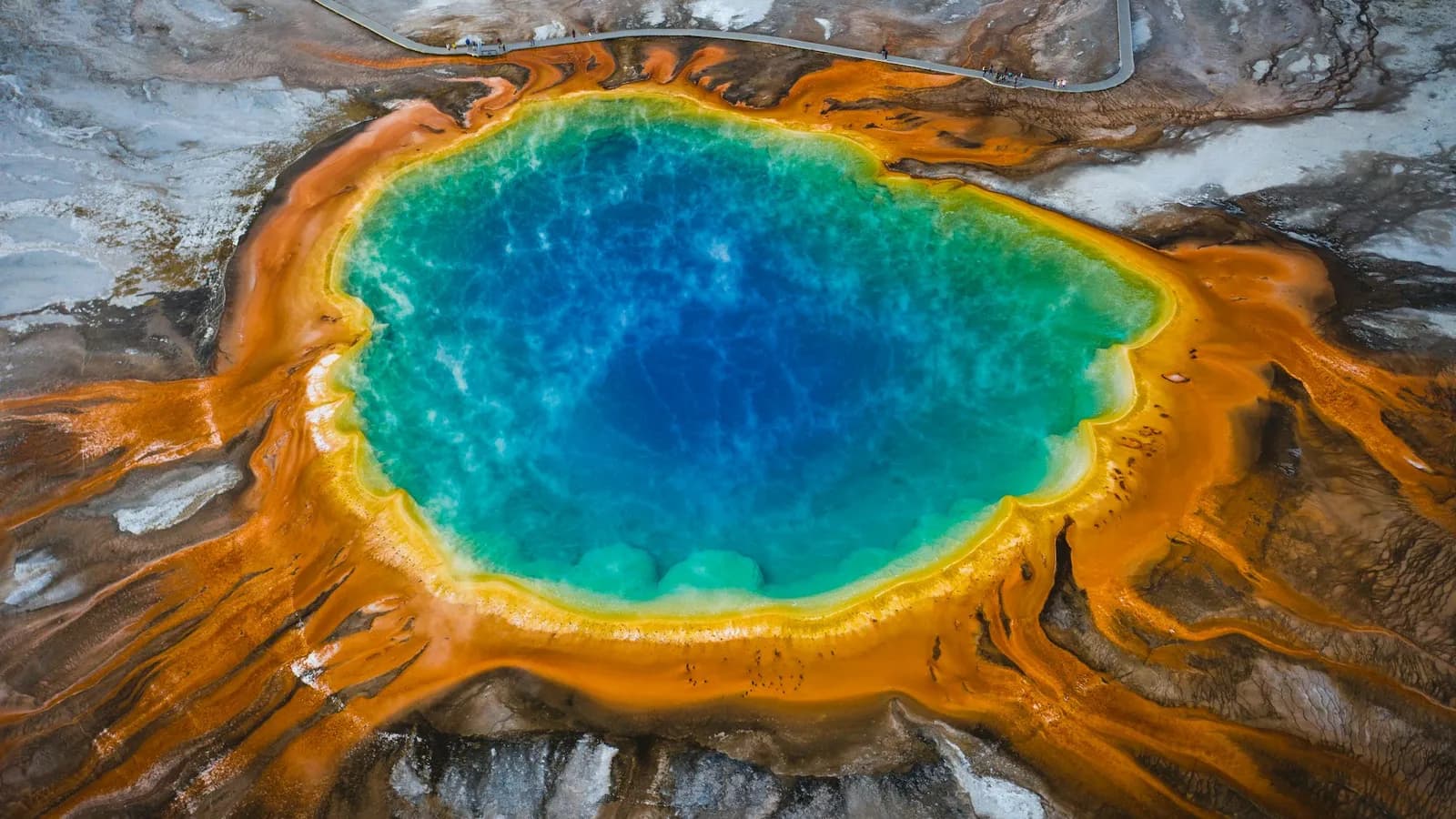
Yellowstone has a problem that a weather chart will not show you. Most park roads close to regular vehicles in early November so snow can build up, but groomed roads do not open to snowcoaches and guided snowmobiles until mid-December. For about six weeks, almost nobody can reach Old Faithful, Grand Prismatic Spring or the Grand Canyon of the Yellowstone.
November is also the quietest month, at about 14,000 visits, against 948,000 in July. The National Park Service lists few facilities open, with winter storms bringing snow and freezing temperatures. At Mammoth, highs average about 39°F (4°C) and lows about 19°F (-7°C).
What still works in November
If your dates are fixed, the northern road from Gardiner to Cooke City stays open. The park suggests hiking and wildlife watching in the north at this time of year, with wolves in Lamar Valley and the bighorn sheep rut. Base yourself in Gardiner, where to stay on that road, and check the Yellowstone weather forecast before you drive.
Late March and April: the second gap
The same gap opens in spring. Groomed roads begin closing for plowing from early March, and the first roads do not reopen to cars until mid-April, weather permitting. In 2026, the West Entrance to Old Faithful road opened on April 17, but the East and South entrances followed only in May. Few facilities are running, and snow is still likely in many areas.
It does have rewards for the well prepared: bison calves in Lamar Valley, bears leaving their dens and very few people. It is just not the trip most first-time visitors picture.
July is the worst time for crowds
If your worry is people, not closures, the worst month is July. An average July brings about 948,000 visits, close to a quarter of the year. August follows at about 840,000. Expect full parking areas at Old Faithful, Grand Prismatic and the canyon from mid-morning, and traffic that stops when bison cross the road.
It is still a good month in every other way, as all facilities are open and it is the warmest time of year. Reach an entrance before 7 am, as the park advises, and stay away from the main sights between 10 am and 4 pm.
Other things to watch for
- Afternoon storms. Thunderstorms are frequent in July, so get off exposed trails by early afternoon.
- Wildfire haze. The park warns of haze in July and August, which can spoil views and photos.
- Mid-October. Dunraven Pass usually closes, cutting the direct road between Canyon and Tower, and more services shut each week.
- Road work. Construction runs every year once the snow clears, so check for delays on the park roads page.
When to go instead
September is the best swap: roads are typically all open, days are mild and visits run about 30% below July. See the best time to visit Yellowstone for all twelve months. If you were hoping for snow, move your trip into Yellowstone's winter season, from late December to early March, when oversnow routes reach the geyser basins.
Your Yellowstone cheat sheet
One email with the whole year in it — and the questions that actually change a trip there, answered.
- All 12 months scored 0–100
- The months to skip, and when it turns good again
- The questions that change the plan, answered
- Plus the Travel Timing Calendar 2027: every destination, every month (PDF)
We'll email you your cheat sheet with the Travel Timing Calendar, plus occasional travel-timing guides. Unsubscribe anytime; see our privacy policy.
The year at a glance
Twelve months, three seasons
Each cell is one month. Lemon means peak, sky means shoulder, gray means avoid. The outlined cell is the current month.
Atlas Ranger Score · proprietary
When Yellowstone scores best, month by month
Our transparent 0–100 score blends weather comfort, crowds, value and festivals into one number per month. How it's calculated →
- Best monthSeptember 79
- Best valueMay 62 off-peak
- ToughestNovember 20
See how Yellowstone ranks against every destination on the Best Time to Travel leaderboard →
Explore the map
Every city, every month
Drag the month scrubber, hover any city, read the headline for that window.
United States vs Nearby Destinations
vs Iceland
Both are geothermal trips, but they suit different travelers. Yellowstone has far more geysers and big wildlife, and it is best from June to September. Iceland adds waterfalls and sea coast, and winter brings the northern lights. Pick Yellowstone for bison, wolves and boardwalk geyser basins, and Iceland for a road trip with a coastline.
vs Hawaii
Two very different US national park trips. Hawaii is warm all year, with volcanoes and beaches, so it stays open when Yellowstone is snowbound. Yellowstone is a cold-climate summer trip built around geysers and wildlife. For a winter getaway pick Hawaii; for a summer one with bison and geysers pick Yellowstone.
Airport transfers, money, water, connectivity and which areas to stay in are covered once, on the Yellowstone best-time guide. Choosing a neighborhood? See the where to stay in Yellowstone.
Frequently asked questions
What is the best month to visit Yellowstone?
What is the worst month to visit Yellowstone?
When does it rain and snow the most in Yellowstone?
How many days do you need in Yellowstone?
Is Yellowstone safe to visit?
What should I pack for Yellowstone?
What is the closest airport to Yellowstone?
Should I combine Yellowstone with Grand Teton?
Keep planning
Plan your United States trip
Sources
Every claim on this page is backed by an authoritative source. Atlas Ranger synthesizes data from multiple references so you can see exactly where each fact came from.
- National Park Service: Yellowstone seasonsUsed for: Visitation level, facilities, road access and wildlife by month.
- NOAA NCEI: Mammoth, 1991-2020 normalsUsed for: Monthly temperature, rain and snow normals.
- National Park Service: Yellowstone safetyUsed for: Thermal area rules and wildlife distances.
- National Park Service: visitation statisticsUsed for: Average visits by month, 2014-2018.
- National Park Service: park roadsUsed for: Projected 2026 road dates and 2026-27 oversnow dates.
- NOAA: Billings, Montana sunshine, 1961-1990Used for: Sunshine hours, from the nearest station that records them (via Wikipedia).