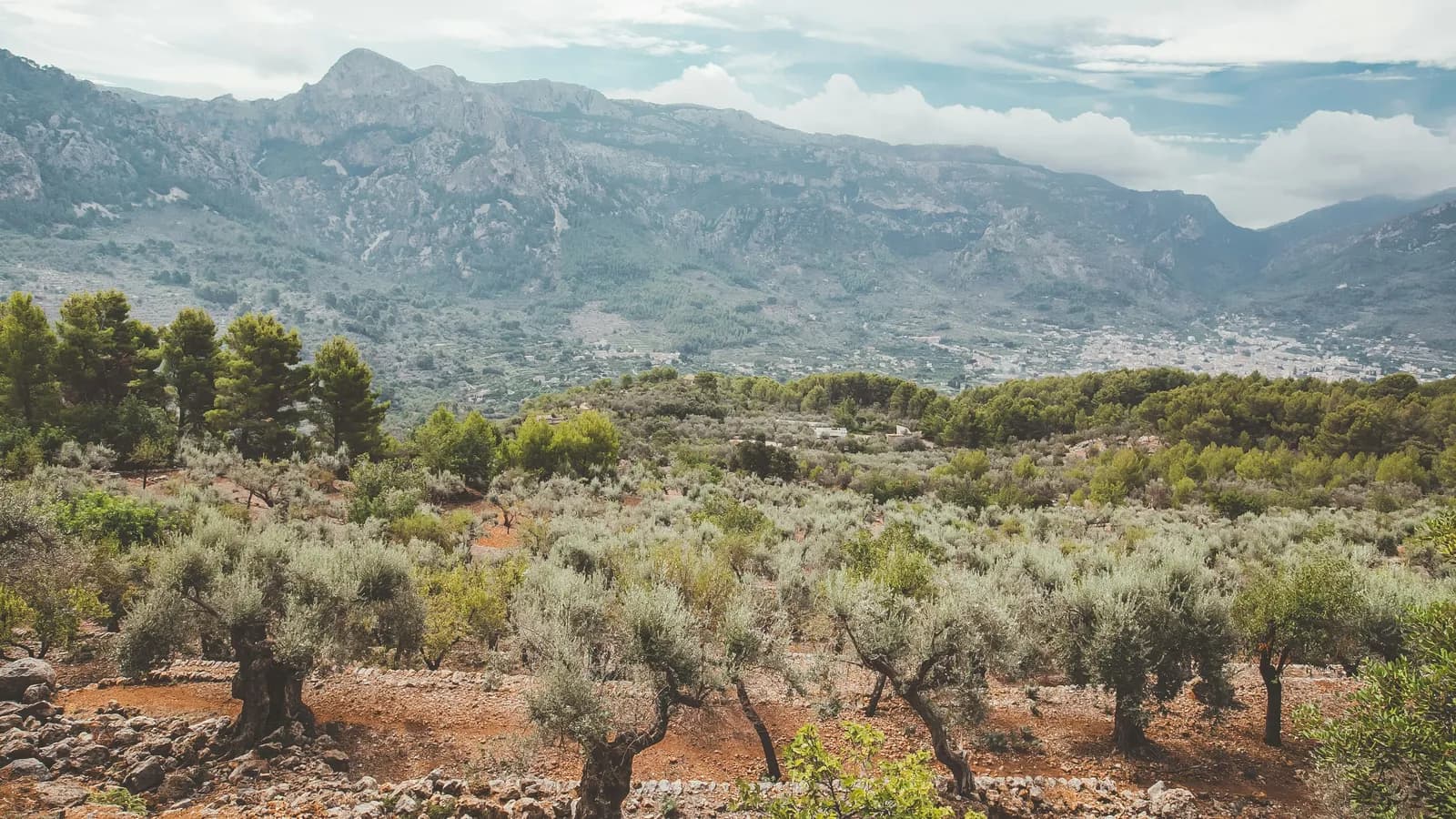
Best months for weather in Mallorca
Mallorca's best window is May through September. Daytime highs run 25°C in May to 32°C in July–August, rainfall stays under 70mm per month (just 13mm in July), and the full tourism economy — beach clubs, mountain restaurants, ferries to Cabrera Island, the Sóller train — is fully open.
June and September are the smartest individual months.June pairs warm-but-not-extreme temperatures (29°C) with the year's second-driest month (21mm) and the run-up to Sant Joan bonfires on June 24. September brings the warmest sea of the year, sharp crowd drops after European school holidays end, and 25–35% lower hotel rates than the July–August peak.
When to visit Mallorca to avoid crowds
Crowds peak in July and August — European summer holidays, hottest weather, every beach restaurant booked. Hotel rates double from June. Ses Salines and Es Trenc beaches need early-morning arrival. Magaluf is at maximum capacity.
For weather + access without crowds, target:
- Mid-May or early June— full season is open, but European summer holidays haven't started
- Mid-September into early October — sea is warmest, families are home, rates drop sharply
- February for almond blossom + cycling — quiet Tramuntana, dramatic inland scenery, 16°C highs. It is low season and most beach hotels are still closed, so this is a hiking and cycling trip, not a beach one
Cheapest time to visit Mallorca
November through April is genuinely cheap — flights to Palma de Mallorca Airport drop 50–70% from peak, and hotel rates fall to a fraction of summer prices. The catch is that most beach hotels close, so you're visiting Palma plus the Tramuntana mountains, not the resort coasts.
The smarter price-to-experience tradeoff is May or late September. A 4-star coastal hotel that costs €280/night in July drops to roughly €170 in late September — same warm sea, better swimming, and around 40% lower price. May is the cheapest month with the full tourism economy fully open.
The cycling exception: November through February
Mallorca has a different rhythm for cyclists. The Tramuntana mountains — Sa Calobra, Cap de Formentor, Sóller — are at their best November through February: cool temperatures (16–19°C highs), light traffic, and the pro winter training calendar bringing professional teams to the island. November is the wettest month of the year (81mm); December to February is drier, at 37–53mm a month.
Bike-friendly hotels in Pollença, Port d'Alcúdia, and Cala Bona open specifically for the cycling season. The Mallorca 312 (a 312km amateur sportive in late April) is the season-closing event drawing 8,000+ cyclists. If your trip is built around cycling, the normal “avoid winter” rule reverses entirely.
When to avoid Mallorca
November is the wrong month for a typical beach trip.It's the wettest month of the year (81mm — still mild by global standards but the highest on Mallorca), most beach hotels are closed for winter, and many resort restaurants have shuttered. Palma stays open and the Tramuntana is cycling heaven, but the classic Mallorca beach experience is essentially shut.
December through February work for cyclists, hikers, Palma city breaks, and Christmas market visitors — but not for the beach-and-pool holiday most travelers think of when they think of Mallorca.
Things to know before visiting Mallorca
5–7 nights is the sweet spot for a full Mallorca trip — enough to base in Palma for a few nights, day-trip to the Tramuntana (Sóller, Valldemossa, Cap de Formentor), and add a beach stretch on the north or east coast. Cyclists often plan 7–10 days to ride the major Tramuntana climbs.
Getting there:Palma de Mallorca Airport (PMI) is one of Europe's biggest summer airports — direct flights from most major European cities April–October, reduced schedules October–March. The A1 airport bus reaches central Palma (Plaça d'Espanya) in about 15–20 minutes; rental cars are essential for exploring the Tramuntana and the east coast.
Money: Euro (EUR). Cards accepted everywhere except some rural chiringuitos and small village cafes. ATMs are widespread.
Safety:Mallorca is generally very safe — low violent crime, friendly locals, well-policed tourist areas. Exception: Magaluf in summer (the British party district) sees higher rates of drink-related incidents and pickpockets. Family resorts like Alcúdia and Cala d'Or are reliably calm. See the U.S. State Department travel advisory for Spain for current entry requirements.
The honest verdict
Mallorca is the most rounded Balearic Island — beaches, mountains, cycling, hiking, Palma's old town, boutique villages. The dry-season window (May–September) is genuinely excellent, with June and September as the smartest individual months. Cyclists get a parallel year-round island; everyone else should visit between May and October.
For a more party-focused Balearic alternative, see our Ibiza best-time guide. For a quieter, smaller sister island, Menorca is a 30-minute flight away and offers the calmest Balearic experience.
Your Mallorca cheat sheet
One email with the whole year in it — and the questions that actually change a trip there, answered.
- All 12 months scored 0–100
- The months to book, and the ones to skip
- The questions that change the plan, answered
- Plus the Travel Timing Calendar 2027: every destination, every month (PDF)
We'll email you your cheat sheet with the Travel Timing Calendar, plus occasional travel-timing guides. Unsubscribe anytime; see our privacy policy.
The year at a glance
Twelve months, three seasons
Each cell is one month. Lemon means peak, sky means shoulder, gray means avoid. The outlined cell is the current month.
Atlas Ranger Score · proprietary
When Mallorca scores best, month by month
Our transparent 0–100 score blends weather comfort, crowds, value and festivals into one number per month. How it's calculated →
- Best monthJune 84
- Best valueOctober 89 off-peak
- ToughestNovember 71
See how Mallorca ranks against every destination on the Best Time to Travel leaderboard →
Explore the map
Every city, every month
Drag the month scrubber, hover any city, read the headline for that window.
Conditions right now
Right now in Mallorca: 23°C, partly cloudy, air quality good (US AQI 42), sea 26°C.
Updated Oct 7, 6:00 PM · Live data from Open-Meteo
Spain vs Nearby Destinations
vs Ibiza
Pick Ibiza for nightlife and beach-club culture; pick Mallorca for everything else — family holidays, hiking, cycling, mountain villages, broader beach variety, year-round Palma. Most travelers visit Mallorca first; Ibiza is a more specific, narrower trip.
vs Menorca
Menorca is Mallorca's smaller, quieter sister — UNESCO Biosphere Reserve, undeveloped beaches, the Camí de Cavalls coastal path. Pick Menorca for the calmest Balearic experience; pick Mallorca for variety. They're a 30-minute flight apart, so a 10-day trip can cover both.
Where to stay in Spain
- Palma (city center)$$$First-time visitors, year-round, walkability
Boutique hotels in the old town, walking access to the cathedral, La Lonja restaurants, and the marina. The only base that genuinely works year-round.
Check Palma (city center) prices → - Sóller / Tramuntana villages$$$Hiking, cycling, mountain views
Sóller, Deià, Valldemossa, and Pollença in the Tramuntana mountains. Famous narrow-gauge train from Palma to Sóller. Best for active travelers and couples wanting a slower pace.
Check Sóller / Tramuntana villages prices → - Alcúdia / Pollença (north coast)$$Family beach holidays, calm beaches
Long sandy beaches, family-friendly resorts, Roman-era old town in Alcúdia. Calmer than the south. Good base for the Cap de Formentor scenic drive.
Check Alcúdia / Pollença (north coast) prices → - Cala d'Or / Santanyí (southeast)$$$Boutique resorts, smaller coves
Series of small coves and boutique resort hotels along the southeast coast. Ses Salines, Es Trenc, and the natural park beaches are nearby. Quieter and more polished than Magaluf.
Check Cala d'Or / Santanyí (southeast) prices →
Before you go
Book the rest of your Mallorca trip
Tours and tickets
Day trips, attraction tickets and guided tours in Mallorca.
Browse Mallorca on KlookAirport transfer
A fixed-price car from Palma de Mallorca Airport (PMI) to your hotel, booked before you land.
Book a transfer on KiwitaxiMobile data
An eSIM for Spain installs before you fly, so you have data when you land. Check your phone supports eSIM first.
See Spain plans on AiraloCar hire
Compare rental car prices in Mallorca.
Compare cars on EconomyBookingsTravel insurance
Cover for medical bills and cancelled plans. Read what the policy excludes before you buy.
Get a quote from EKTA
Partner links. We may earn a commission, at no extra cost to you.
Things to do in Mallorca
Self-guided tours and skip-the-line tickets you can book ahead.
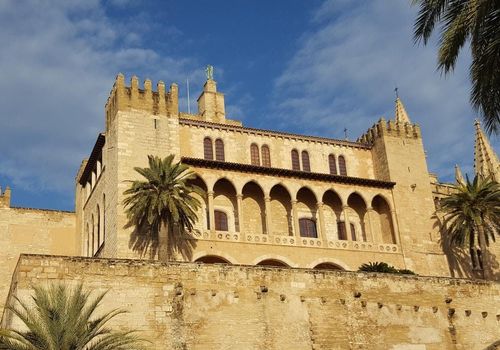

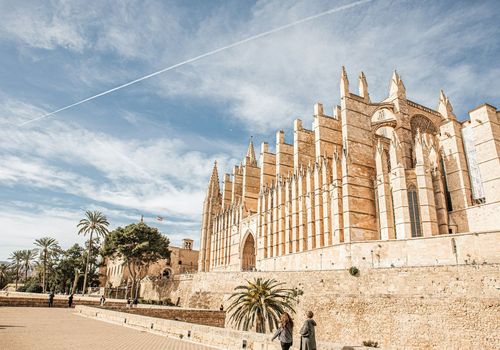
Tours & tickets via WeGoTrip — we may earn a commission, at no extra cost to you.
Frequently asked questions
What is the best month to visit Mallorca?
What is the worst month to visit Mallorca?
When is the rainy season in Mallorca?
How many days do you need in Mallorca?
Is Mallorca safe for tourists?
Should I visit Mallorca or Ibiza?
When is the cheapest time to visit Mallorca?
Keep planning
Plan your Spain trip
Sources
Every claim on this page is backed by an authoritative source. Atlas Ranger synthesizes data from multiple references so you can see exactly where each fact came from.
- Illes Balears Tourism (Official Balearic government)Used for: Official Balearic Islands tourism guidance, festival timing, regional information
- Open-Meteo Historical Climate Data (ERA5)Used for: Monthly temperature, rainfall, sunshine averages (2020–2024)
- U.S. State Department Spain Travel AdvisoryUsed for: Independent safety assessment + entry requirement reference
- AEMET (Agencia Estatal de Meteorología)Used for: Spain's national meteorological service — climate normals cross-reference