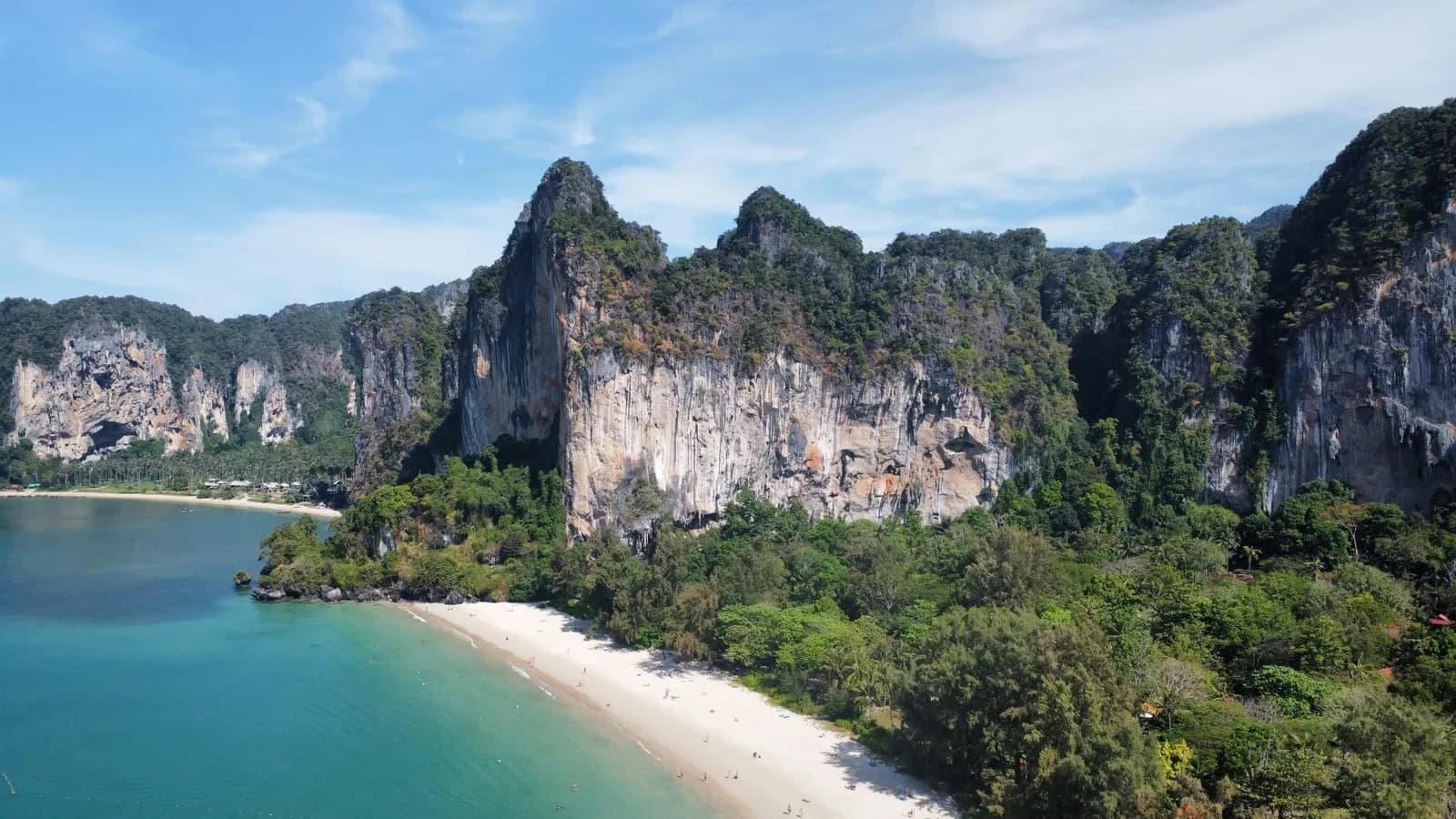
Best months for weather and Phi Phi day trips
Krabi's best window is January through March. Rainfall stays under 100mm per month (just 56mm in January), sun hours peak at 11+ per day in February–March, and the Andaman Sea is calm — making Phi Phi Islands day trips, Koh Lanta ferries, and the Hong Islands kayaking tours all reliable.
February is the single best month.70mm of rainfall, 11.1 hours of daily sun, calm seas, and Railay's rock climbing scene at peak operation. January is the close runner-up with even less rain (56mm) but slightly cooler temperatures. December (135mm and tapering) is also excellent if you don't mind the Christmas/New Year price spike.
When to visit Krabi to avoid crowds
Two crowd peaks: Christmas/New Year (Dec 23–Jan 3) when Western travelers arrive en masse, and Songkran (April 13–15, the Thai New Year water festival). Songkran is brief but intense — Krabi Town turns into a three-day water-fight battleground.
For minimum crowds with maximum weather, target:
- Mid-January (after New Year, before Chinese New Year, peak weather window)
- Mid-February (between Chinese New Year and Songkran, clear skies, low humidity)
- Late November / early December— wet season is tapering, prices dropping, but pre-Christmas demand hasn't arrived. Some risk of late storm systems.
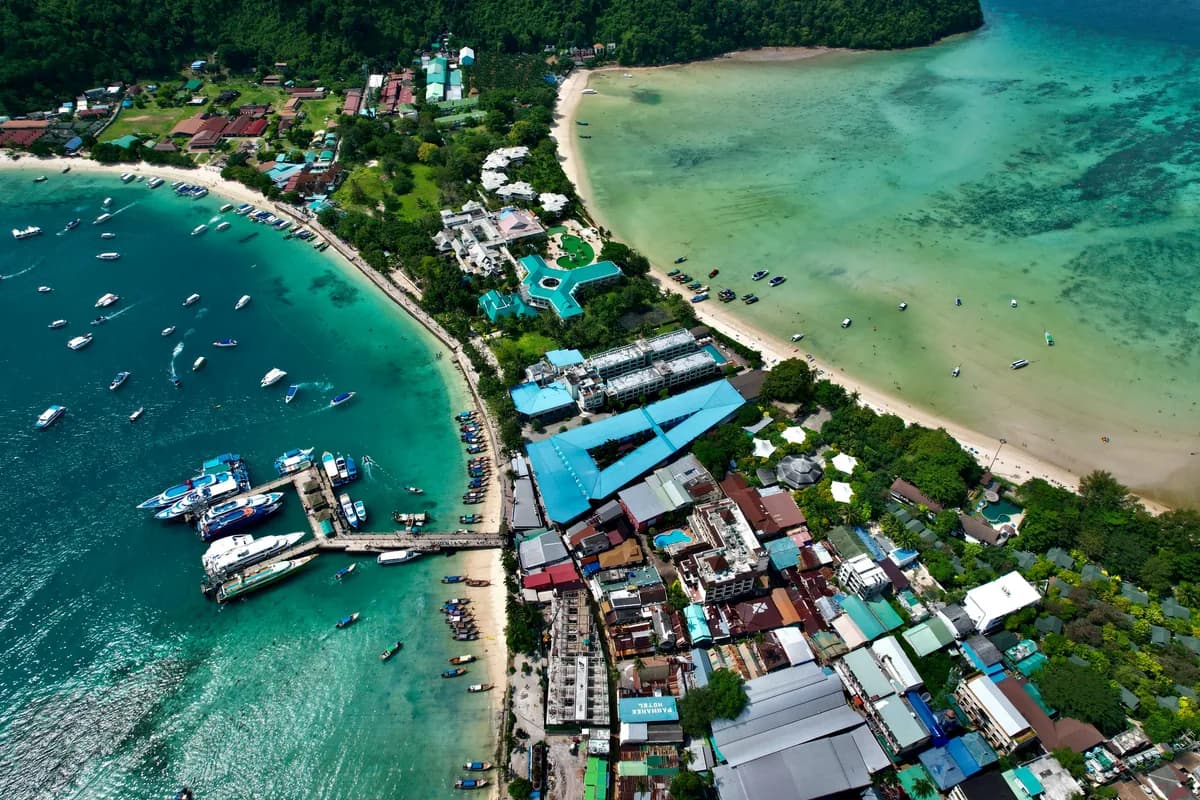
Stay on Koh Lanta (2-hour ferry south of Krabi Town) if you want a quieter base. Mainland Ao Nang is busier but more flexible for day trips.
Cheapest time to visit Krabi
September, October, and November are the cheapest months — the SW monsoon pushes hotel rates and flights to year-round lows, often 40–50% below peak. The catch is the rain, with November alone delivering 315mm — the year's wettest month — and rough seas cancelling Phi Phi day trips.
The smartest price-to-experience tradeoff is mid-December (rainfall has halved, prices are still lower than Christmas peak) or late April (last week before monsoon proper begins, post-Songkran lull). A 4-star Ao Nang beachfront room that costs $180/night in February drops to $110 in late April.
When to avoid Krabi
October and November are the wrong months.November is the year's wettest at 315mm, and October isn't much better at 275mm. Multi-day storm systems strip beaches of sand, ferries to Phi Phi cancel often, Railay's climbing routes are too wet to climb safely, and many beach restaurants reduce hours.
September (279mm) is just as wet but slightly more predictable. The full bad window is May through November — six months of SW monsoon — peaking at the back end. If your dates fall in this window and aren't locked, push them either earlier (April) or later (December).
Things to know before visiting Krabi
4–5 nights is the sweet spot for a Krabi-focused beach trip — enough for a Phi Phi Islands day trip, an evening at Railay (boat-only access), the Tiger Cave Temple climb, and beach time at Ao Nang. Add 2–3 nights if extending to Koh Lanta (quieter southern island, 2-hour ferry) or Khao Sok National Park inland (jungle floating bungalows).
Getting there: Krabi International Airport (KBV) sits 15km from Krabi Town. Direct flights from Bangkok, Singapore, and several Chinese cities; for Western visitors, most route through Bangkok. Phuket Airport (HKT) is about 2.5 hours away by minibus over the Sarasin Bridge — sometimes a cheaper alternative for trans-Pacific arrivals.
Money: Thai Baht (THB). ATMs widespread; cards accepted at hotels and tourist restaurants but cash preferred at street food and small bars. Currency exchange rates at hotels are often poor — use bank ATMs.
Safety: Krabi is generally very safe, but scooter accidents are by far the leading cause of tourist injury — narrow ring road, steep grades, unpredictable traffic. Use Grab or licensed taxis for longer trips. Riptide currents at Ao Nang during monsoon months are also a real risk; respect lifeguard flags. See the U.S. State Department travel advisory for Thailand for current entry requirements.
The honest verdict
Krabi is southern Thailand's scenery winner — limestone karsts, the iconic Railay cliffs, the boat ride to Phi Phi. The dry-season window (Jan–Mar) is excellent, peaking in February. December and April are the smartest shoulder months. Just don't fight the SW monsoon — May through November genuinely is the wrong half of the year, with November the worst single month.
For the opposite-monsoon Thai island, see our Koh Samui best-time guide — when Krabi is being rained out (May–Oct), Koh Samui is mostly dry, and vice versa (October–November). For Andaman vs Gulf trip planning, that contrast is the most important fact in southern Thailand.
Your Krabi cheat sheet
One email with the whole year in it — and the questions that actually change a trip there, answered.
- All 12 months scored 0–100
- The months to book, and the ones to skip
- The questions that change the plan, answered
- Plus the Travel Timing Calendar 2027: every destination, every month (PDF)
We'll email you your cheat sheet with the Travel Timing Calendar, plus occasional travel-timing guides. Unsubscribe anytime; see our privacy policy.
The year at a glance
Twelve months, three seasons
Each cell is one month. Lemon means peak, sky means shoulder, gray means avoid. The outlined cell is the current month.
Atlas Ranger Score · proprietary
When Krabi scores best, month by month
Our transparent 0–100 score blends weather comfort, crowds, value and festivals into one number per month. How it's calculated →
- Best monthFebruary 64
- Best valueFebruary 64 off-peak
- ToughestSeptember 48
See how Krabi ranks against every destination on the Best Time to Travel leaderboard →
Explore the map
Every city, every month
Drag the month scrubber, hover any city, read the headline for that window.
Conditions right now
Right now in Krabi: 27°C, drizzle, air quality good (US AQI 43), sea 31°C.
Updated Oct 7, 8:45 AM · Live data from Open-Meteo
Thailand vs Nearby Destinations
vs Koh Samui
Opposite monsoon seasons — Krabi (Andaman) wet May–November, Koh Samui (Gulf) wet October–December. Pick Krabi for limestone karsts, rock climbing, Phi Phi day trips. Pick Koh Samui for boutique hotels, calmer beaches, easier connections to Koh Phangan and Koh Tao. If November dates are locked, choose Samui.
vs Phuket
Same monsoon side, different vibes. Phuket is bigger, more developed, has more flight connections and bigger hotels. Krabi is quieter, more dramatic scenery (limestone karsts), and a better launchpad for Phi Phi/Koh Lanta. Pick Phuket for variety + nightlife; pick Krabi for nature + climbing + boats.
Where to stay in Thailand
- Ao Nang$$First-time visitors, beach + restaurants
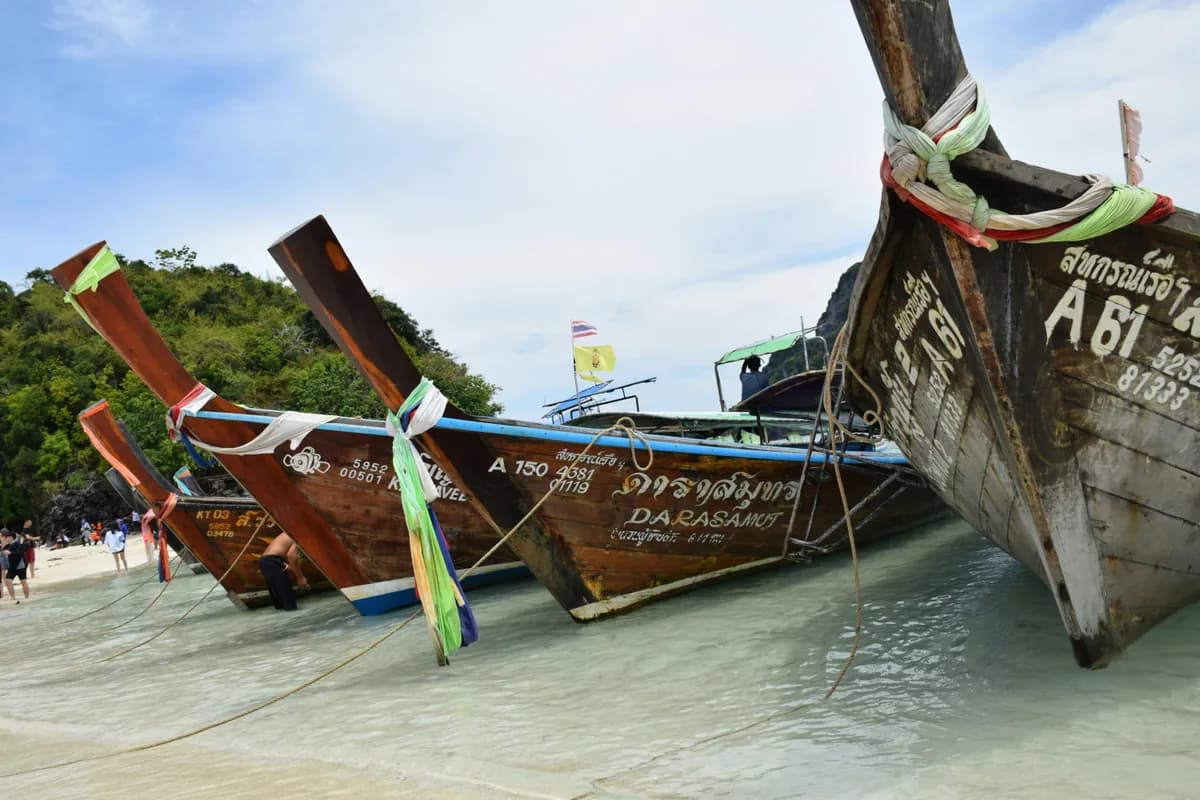
Main beach town — long sandy beachfront, dense restaurant strip, mid-range hotels. Walking distance to longtail-boat departures for Railay. Most flexible base.
Check Ao Nang prices → - Railay Beach$$$Climbing, dramatic scenery, no roads
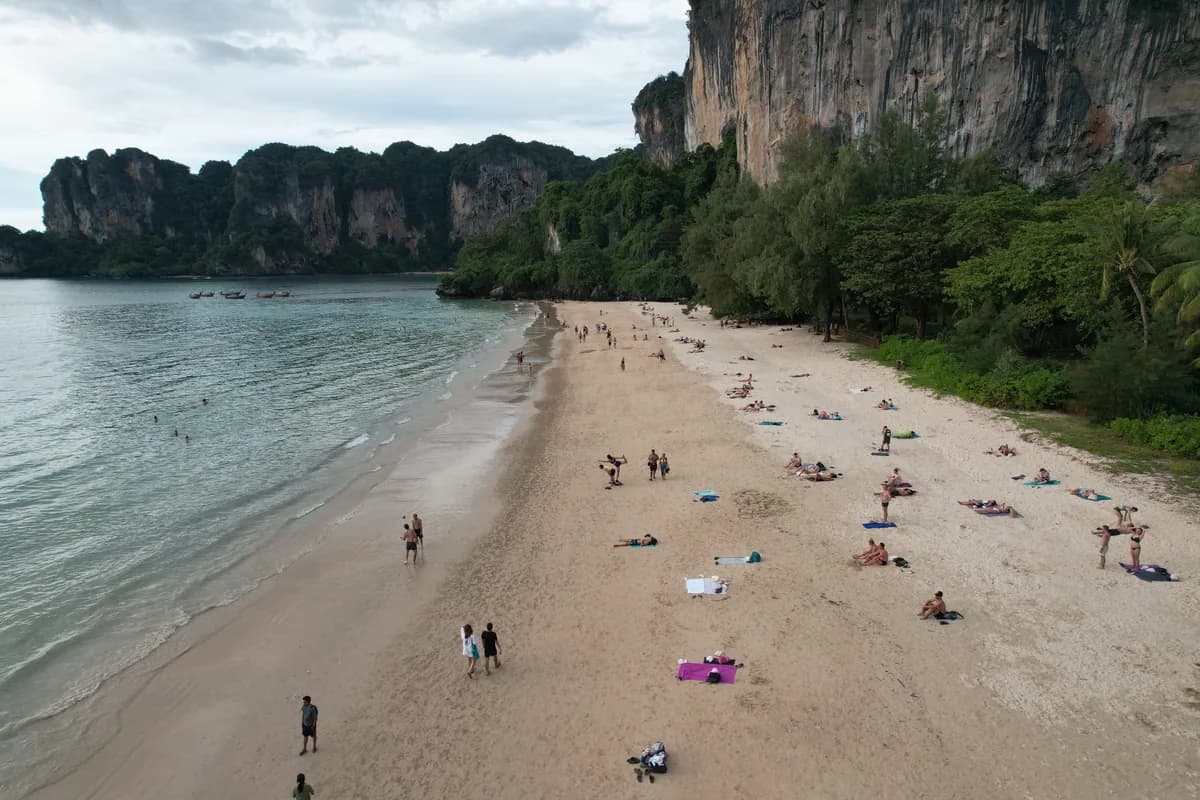
Boat-only peninsula — no roads, no cars. Iconic limestone cliffs, world-class rock climbing on Tonsai/East Railay. Smaller hotel selection but unmatched scenery. 15-minute longtail from Ao Nang.
Check Railay Beach prices → - Koh Lanta$$Quieter island stay, longer trips
Two-hour ferry south of Krabi Town. Long west-coast beaches, smaller crowds than Ao Nang, more local feel. Best for travelers wanting island calm rather than mainland convenience.
Check Koh Lanta prices →
Thailand in pictures
Frequently asked questions
What is the best month to visit Krabi?
What is the worst month to visit Krabi?
When is the rainy season in Krabi?
How many days do you need in Krabi?
Is Krabi safe for tourists?
Should I visit Krabi or Koh Samui?
When is the cheapest time to visit Krabi?
Keep planning
Plan your Thailand trip
Sources
Every claim on this page is backed by an authoritative source. Atlas Ranger synthesizes data from multiple references so you can see exactly where each fact came from.
- Tourism Authority of Thailand (TAT)Used for: Official Thailand tourism guidance, festival timing, regional information
- Open-Meteo Historical Climate Data (ERA5)Used for: Monthly temperature, rainfall, sunshine averages (2020–2024)
- U.S. State Department Thailand Travel AdvisoryUsed for: Independent safety assessment + entry requirement reference
- Thai Meteorological Department (TMD)Used for: Thailand's national meteorological service — Andaman vs Gulf monsoon timing