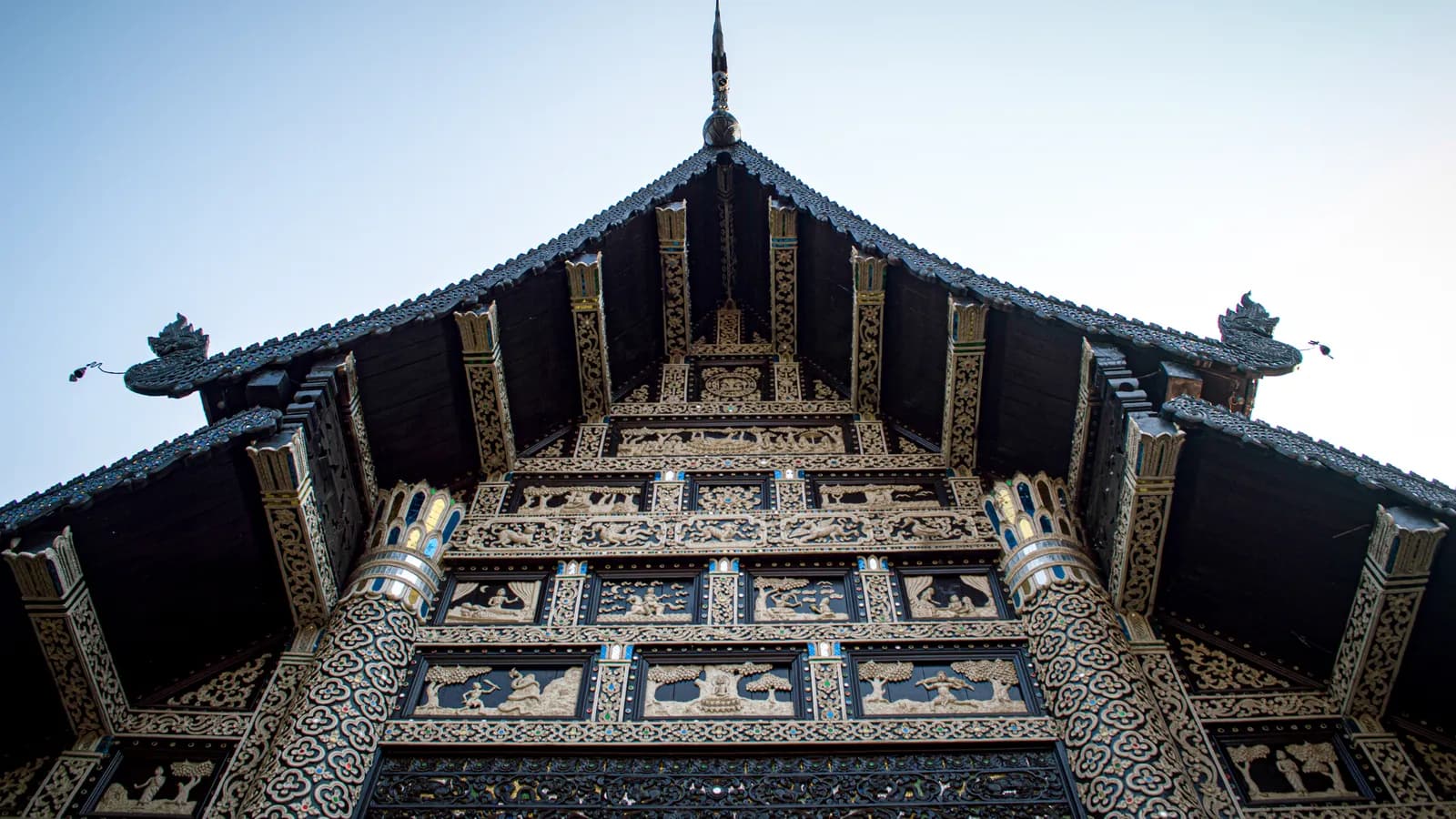
Thailand has two opposite monsoons — picking the wrong coast can ruin a beach trip
Most "best time to visit Thailand" guides treat the country as one weather system. That's wrong, and it's the single most expensive mistake you can make on a beach trip here. Thailand has two coasts and three climate zones, each running on a different calendar:
- Andaman coast (Phuket, Krabi, Phi Phi): southwestern monsoon May–October. Heavy rain, rough seas. Peak season November–April.
- Gulf coast (Koh Samui, Koh Phangan, Koh Tao): northeastern monsoon October–December, peaking in November. Dry pocket January–September — the opposite of the Andaman side.
- North (Chiang Mai): cool dry winters (Nov–Feb), brutal burning season (Mar–Apr) when agricultural fires push AQI past 200, and lush green wet season (Jun–Sep).
The country-spanning sweet spot is November through February — Bangkok and Chiang Mai are cool and dry, Andaman beaches are at peak, and the Gulf coast has recovered from its November wet peak by mid-December.
Best months for a Thailand-spanning trip
For a 10–14 day Bangkok + Chiang Mai + beach trip, target December through February. January is the single best month— Bangkok at its coolest (32°C high, 12mm rain), Chiang Mai pre-burning-season pleasant, Andaman beaches at peak, and Koh Samui fully dry. February is the close second, but Chinese New Year and the start of Chiang Mai's burning season nudge it down.
December is the third-best — same conditions as January, but Christmas/New Year prices spike sharply in beach destinations (Phuket, Koh Samui rates can double).
When to visit Thailand to avoid crowds
Three crowd peaks: Christmas/New Year (mid-Dec through early Jan — peak Western tourist surge plus price doubling on islands), Chinese New Year (late January or February — domestic and Chinese tourist surge for a week), and Songkran (April 13–15 — Thai New Year, transport gridlock, peak prices, and nobody stays dry).
For minimum crowds with maximum weather, target:
- Mid-January — past New Year, before Chinese New Year, peak weather everywhere
- Late February — past Chinese New Year, before Chiang Mai burning-season peak, Andaman still excellent
- Early November — past Andaman monsoon, before December price spike, Gulf coast still wet (skip Koh Samui)
Cheapest time to visit Thailand
May, June, September, and October see the lowest hotel rates and flight prices nationally — monsoon weather pushes demand to year-round lows. The catch is heavy rain in Bangkok (peaking at 339mm in September) and rough seas on the Andaman side.
The smartest price-to-experience tradeoff is mid-November on the Andaman coast (just past monsoon, before December price spike) or June on the Gulf coast(Koh Samui's dry pocket while the Andaman side is wet). Both windows give you near-peak beach conditions at 30–40% lower prices than peak January.
The wrong months — what goes wrong, and where
September is the worst month for a Thailand-spanning trip. Bangkok sees its wettest stretch (339mm), Andaman beaches are at their roughest, and the Gulf coast is starting to wet up. The only redeeming feature is northern Chiang Mai is at peak green-season scenery.
March–April in Chiang Mai is genuinely difficult.Burning-season air pollution from agricultural fires regularly pushes AQI past 200 — visible haze, masked locals, sore throats within a day. Multiple consulates issue advisories. If your dates fall here and aren't locked, skip Chiang Mai entirely or push the trip to May.
November on Koh Samuiis its single worst month — the opposite of the Andaman coast pattern. Many travelers don't realize this and book the wrong coast.
Things to know before visiting Thailand
Most travelers underestimate Thailand variety. 10–14 days is the sweet spot for a country-spanning trip:
- 3 nights Bangkok
- 3 nights Chiang Mai (Nov–Feb only — skip Mar–Apr for burning season)
- 4–6 nights beaches: Andaman in Nov–Apr (see our Krabi guide), or Gulf in May–Oct (see our Koh Samui guide)
- Add 2–3 nights for Sukhothai, Ayutthaya, or a Khao Sok jungle stay
Visa: 60-day visa exemption for most Western nationalities (extended July 2024). No advance application needed — entry stamp at the airport.
Getting around: Domestic flights are cheap and fast (AirAsia, Bangkok Airways, Thai Vietjet). Most travelers fly Bangkok → Chiang Mai, then Bangkok → Phuket or Krabi for beaches. Sleeper trains (Bangkok → Chiang Mai overnight) are a slower atmospheric alternative.
Money: Thai Baht (THB). Cards accepted at hotels, malls, and tourist restaurants. Cash strongly preferred for street food, tuk-tuks, and small shops. Use Grab for all city transport — metered taxis in Bangkok routinely refuse to use the meter.
Safety:Thailand is generally very safe for tourists. Real risks: scooter accidents (Thailand has the world's highest motorcycle fatality rate per capita — only rent if experienced), occasional drink scams in Pattaya and Bangkok nightlife, and burning-season air quality in Chiang Mai (Mar–Apr). See the U.S. State Department travel advisory for Thailand for current entry requirements.
The honest verdict
Thailand is Southeast Asia's tourism flagship for good reason — developed infrastructure, world-class beaches on two coasts, food density that punches above its budget profile, and a culture-trip north (Chiang Mai) that pairs naturally with the beach south. The right time depends entirely on your route. For a country-spanning trip, target December through February. For region-specific guidance, our city-level guides cover the local nuances:
Your Thailand cheat sheet
One email with the whole year in it — and the questions that actually change a trip there, answered.
- All 12 months scored 0–100
- The months to book, and the ones to skip
- The questions that change the plan, answered
- Plus the Travel Timing Calendar 2027: every destination, every month (PDF)
We'll email you your cheat sheet with the Travel Timing Calendar, plus occasional travel-timing guides. Unsubscribe anytime; see our privacy policy.
The year at a glance
Twelve months, three seasons
Each cell is one month. Lemon means peak, sky means shoulder, gray means avoid. The outlined cell is the current month.
Atlas Ranger Score · proprietary
When Thailand scores best, month by month
Our transparent 0–100 score blends weather comfort, crowds, value and festivals into one number per month. How it's calculated →
- Best monthJanuary 77
- Best valueJanuary 77 off-peak
- ToughestSeptember 42
See how Thailand ranks against every destination on the Best Time to Travel leaderboard →
Explore the map
Every city, every month
Drag the month scrubber, hover any city, read the headline for that window.
Conditions right now
Right now in Thailand: 29°C, overcast, air quality moderate (US AQI 74).
Updated Oct 7, 10:15 AM · Live data from Open-Meteo
Thailand vs Nearby Destinations
vs Vietnam
Pick Thailand for beaches, nightlife, and easier first-time logistics. Pick Vietnam for a culture-heavy north-to-south arc. Thailand has more developed beach destinations; Vietnam is slightly cheaper. Many travelers do both as a 3-week SE Asia loop.
vs Cambodia
Cambodia (Angkor Wat + Phnom Penh) pairs well with a Thailand trip — many travelers add 4 nights in Siem Reap from Bangkok. Cambodia is shorter and more concentrated; Thailand has wider variety.
Where to stay in Thailand
- Bangkok (Sukhumvit / Silom)$$Capital arrival, food, transit hub
Sukhumvit (Asoke, Phrom Phong) for sky-train access + nightlife. Silom for business + Lumpini Park. Khao San Road for backpackers and Songkran chaos.
Check Bangkok (Sukhumvit / Silom) prices → - Chiang Mai (Old City)$$Northern culture, temples, food
Old City inside the moat for walking access to temples. Nimman for cafes + cooking schools. Avoid March–April for burning-season haze.
Check Chiang Mai (Old City) prices → - Andaman beaches (Phuket / Krabi)$$Beach trips Nov–Apr
Phuket has more flight options + nightlife (Patong) but more developed. Krabi (Ao Nang, Railay) is quieter with better scenery. See our Krabi best-time guide.
Check Andaman beaches (Phuket / Krabi) prices → - Gulf coast (Koh Samui / Koh Phangan)$$Beach trips May–Oct (opposite monsoon)
Koh Samui (Bophut, Chaweng) for boutique resorts. Koh Phangan for Full Moon Party + yoga. See our Koh Samui best-time guide.
Check Gulf coast (Koh Samui / Koh Phangan) prices →
Things to do in Thailand
Self-guided tours and skip-the-line tickets you can book ahead.





Tours & tickets via WeGoTrip — we may earn a commission, at no extra cost to you.
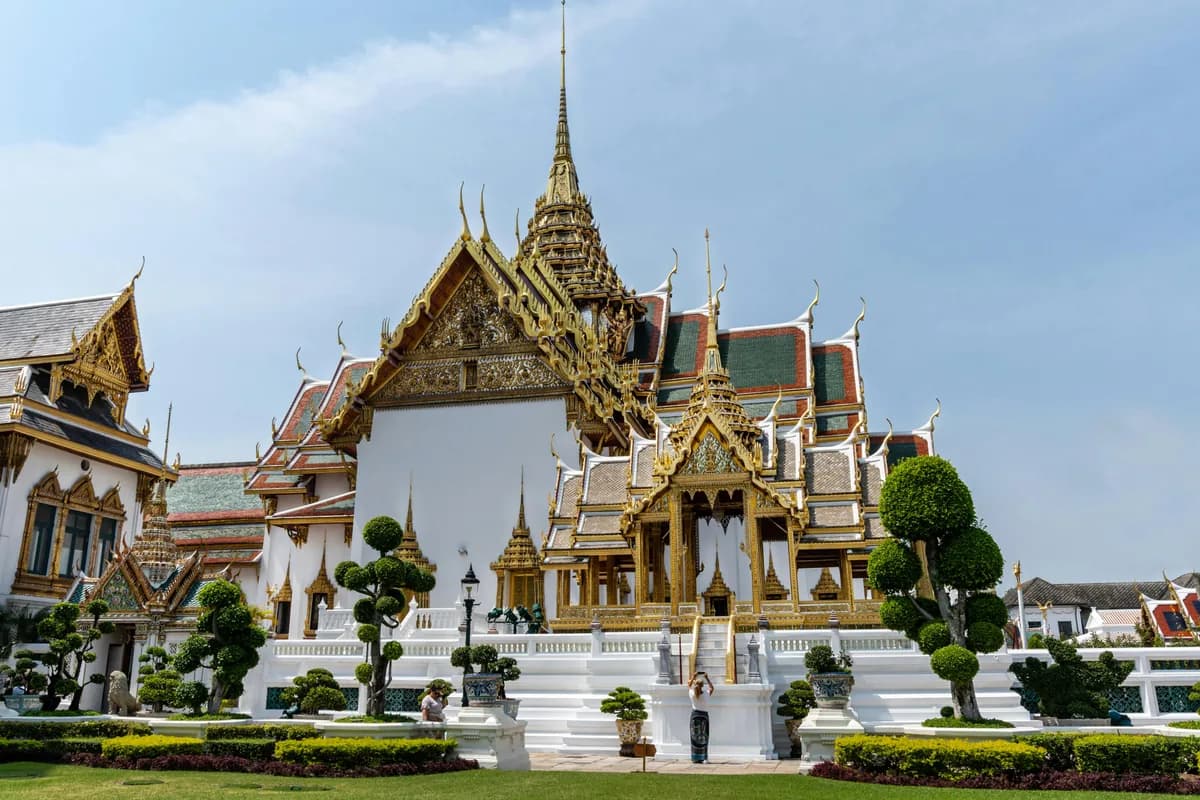
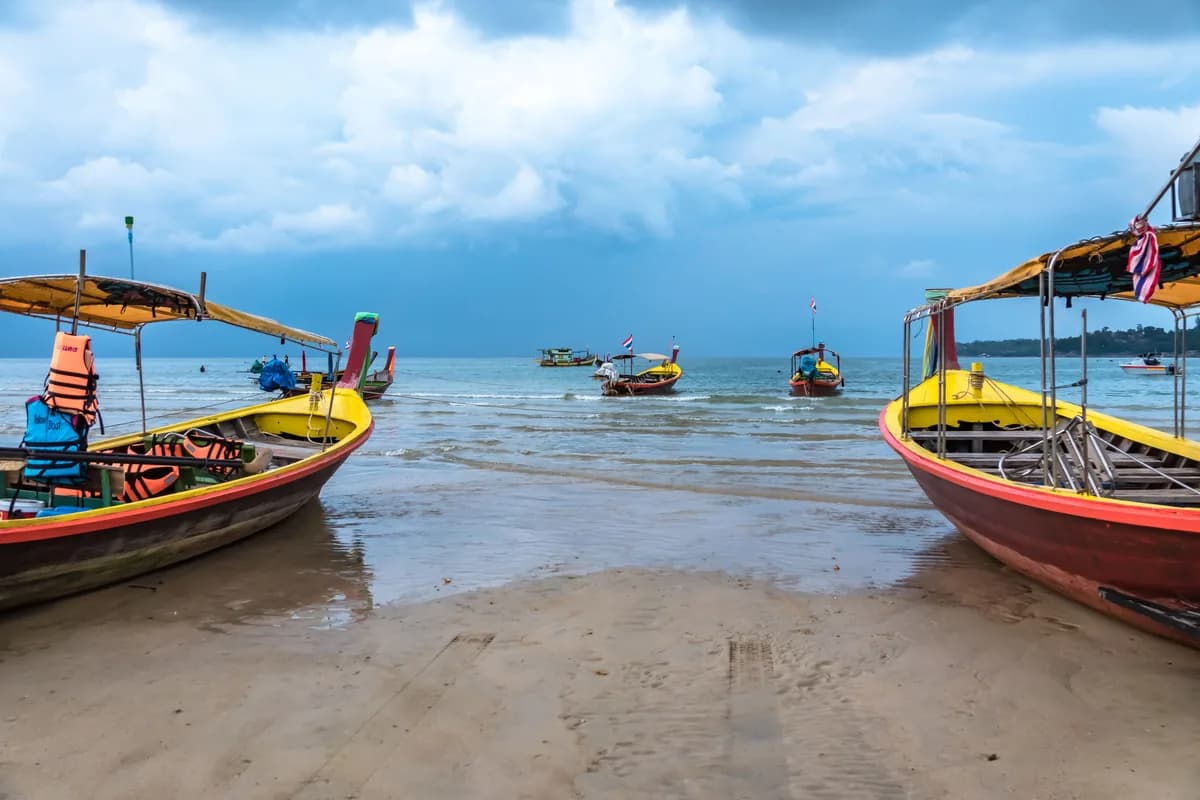
Thailand in pictures

Frequently asked questions
What is the best month to visit Thailand?
What is the worst month to visit Thailand?
When is the rainy season in Thailand?
How many days do you need in Thailand?
Is Thailand safe for tourists?
Should I visit Thailand or Vietnam?
When is the cheapest time to visit Thailand?
Keep planning
Plan your Thailand trip
Sources
Every claim on this page is backed by an authoritative source. Atlas Ranger synthesizes data from multiple references so you can see exactly where each fact came from.
- Tourism Authority of Thailand (TAT)Used for: Official tourism guidance, festival timing, regional travel intel
- Open-Meteo Historical Climate Data (ERA5)Used for: Monthly temperature, rainfall, sunshine averages (2020–2024) — Bangkok as national proxy
- U.S. State Department Thailand Travel AdvisoryUsed for: Independent safety assessment + entry requirement reference
- Thai Meteorological Department (TMD)Used for: Thailand's national meteorological service — monsoon timing per region