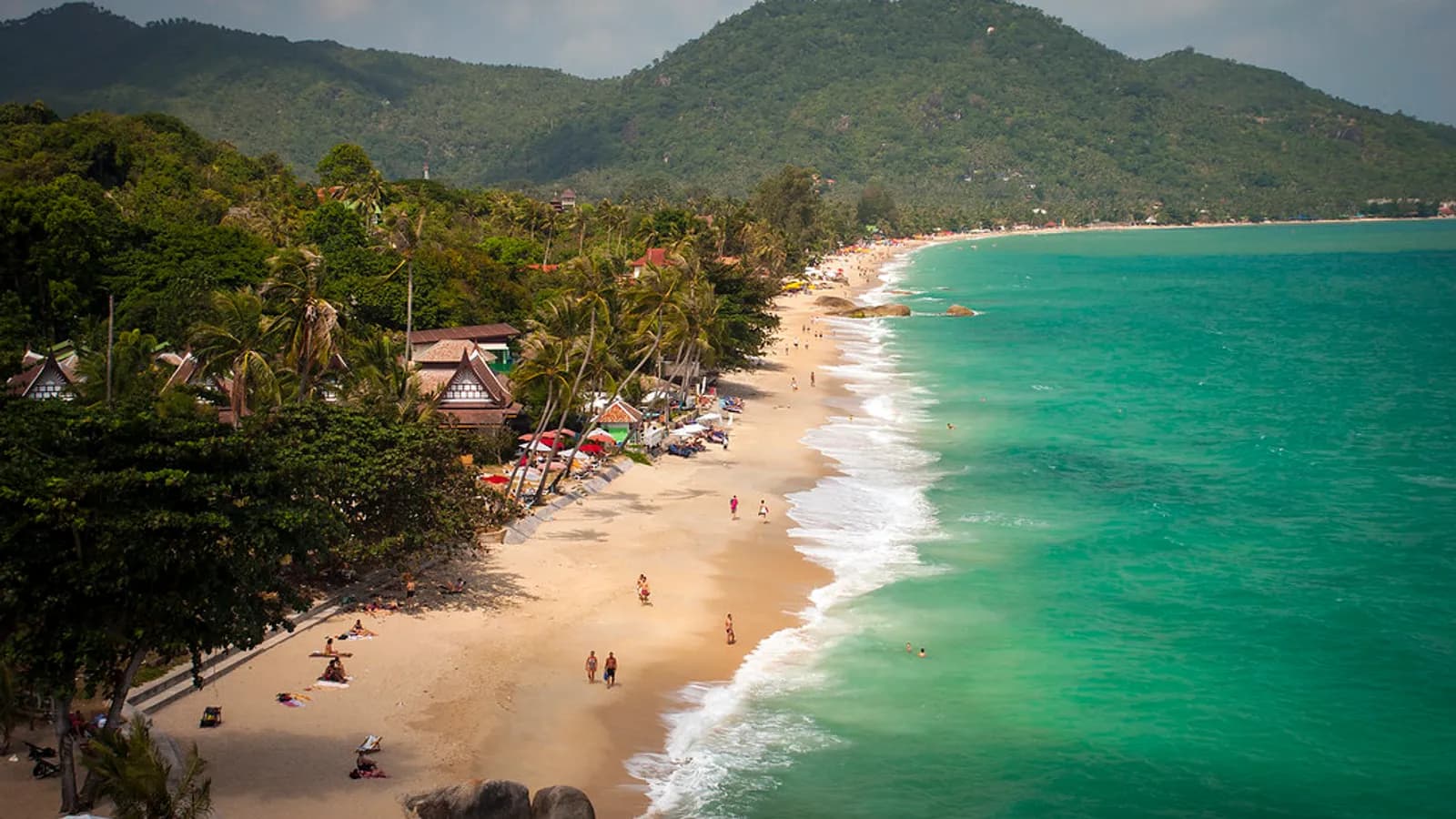
Best months for weather in Koh Samui
Koh Samui's best window is January through March. Rainfall stays under 80mm per month, sun hours peak at 11 per day in March, and daytime highs sit at a comfortable 26–28°C. The sea is calm and clear — snorkeling and diving day trips to Koh Tao are at their best.
March is the single best month.Just 47mm of rain — the lowest of the year — paired with the highest sun hours and the warmest sea. February runs a close second with 79mm of rain and slightly cooler temperatures. January is excellent too if you don't mind sharing the beach with the Western winter peak.
The hidden second window: June
Most generic Thailand guides treat the entire May–October stretch as “rainy season” — but that's the Andaman pattern (Phuket, Krabi). Koh Samui sits on the Gulf side and behaves differently. June drops back to 71mm of rain with 10+ hours of sun, hidden inside what looks like the regional wet season.
This is the smartest budget window of the year. While Phuket is being rained out and every Thailand-bound traveler assumes Samui has the same problem, the island sits in a secondary dry pocket with the year's lowest crowds. Hotel rates often run 30–40% below the January–March peak.
When to visit Koh Samui to avoid crowds
Two crowd peaks: Songkran (April 13–15, the Thai New Year water festival) and European summer(July–August). Songkran is brief but intense — Chaweng turns into a three-day water-fight battleground with peak prices and booked-out hotels. European summer is steadier — six weeks of high demand, but Samui's scattered geography means the island doesn't feel as packed as Phuket's Patong strip does.
For minimum crowds with maximum weather, target:
- Late January or early February — past New Year, before Chinese New Year, peak weather window
- Mid-May or June — post-Songkran lull, before European summer arrives, the secondary dry pocket
- Late September — last reliably-dry week before the wet season starts
Stay in Bophut (Fisherman's Village) or Maenam if you want a quieter base — Chaweng is the loudest by a wide margin.
Cheapest time to visit Koh Samui
The cheapest months are October and November — wet season pushes hotel rates to year-round lows. The catch is the rain: November averages 345mm, the worst single month of the year. Ferries to Koh Phangan and Koh Tao cancel often, beach days are unreliable, and many open-air restaurants close their dining areas.
The smarter price-to-experience tradeoff is May, June, or late September— all sit inside the European-summer-discounted regional pricing but Samui itself is still mostly dry. A 4-star beachfront room that costs $180/night in February drops to about $130 in June. Late September gives even better deals, with most hotels at Sept-October pre-monsoon clearance rates.
When to avoid Koh Samui
October and November are the wrong months. The NE monsoon arrives in October (234mm of rain, double September) and peaks in November (345mm). Multi-day storm events disrupt ferries and flights from Bangkok. Beaches strip back, and the famous white-sand stretches at Chaweng and Lamai temporarily turn brown with churned-up sand and seagrass.
December tapers fast (174mm, halving from November) but combines wet-season weather with Christmas/New Year price spikes. Late December is reasonable; early December is still wet.
Things to know before visiting Koh Samui
Most beach travelers need 4–5 nightsfor Koh Samui itself — enough for two beach areas, a day trip to the Ang Thong Marine Park, and an evening at the Fisherman's Village walking street. Add 2–3 nights if combining with Koh Phangan (Full Moon Party or yoga retreats — 30 minutes by ferry) or Koh Tao (90 minutes by ferry, world-class diving).
Getting there: Samui International Airport (USM) sits in Bophut on the north coast, about 15 minutes from Chaweng by car. Bangkok Airways operates most flights — limited competition keeps fares higher than Phuket routes. Ferry alternatives via Surat Thani (overnight train or short flight from Bangkok, then ferry) cost less but add the better part of a day to the trip.
Money: Thai Baht (THB). ATMs everywhere; cards accepted at most hotels and tourist restaurants but cash preferred at street food and small bars. Currency exchange rates at hotels are often poor — use bank ATMs.
Safety:Koh Samui is generally very safe, but scooter accidents are by far the leading cause of tourist injury. Samui's narrow ring road has steep grades and unpredictable traffic — only rent a scooter if you have prior experience and always wear a helmet (legally required, frequently checked). Use Grab or licensed taxis for longer trips. See the U.S. State Department travel advisory for Thailand for current entry requirements.
The honest verdict
Koh Samui is the boutique-island choice in Thailand — smaller, calmer, and more polished than Phuket. The dry-season window (Jan–Mar) is genuinely excellent, and June's secondary dry pocket is the best-value secret in southern Thailand. Just understand the regional reality: when the rest of Thai beach destinations are at their best (Nov–Apr), Samui follows the same pattern; but when Phuket is being rained out (May–Oct), Samui is often having a quieter excellent stretch.
For a more developed, busier Thai island, see our Krabi best-time guide — same Andaman monsoon pattern as Phuket but with limestone karsts and the Phi Phi day-trip scene.
Your Koh Samui cheat sheet
One email with the whole year in it — and the questions that actually change a trip there, answered.
- All 12 months scored 0–100
- The months to book, and the ones to skip
- The questions that change the plan, answered
- Plus the Travel Timing Calendar 2027: every destination, every month (PDF)
We'll email you your cheat sheet with the Travel Timing Calendar, plus occasional travel-timing guides. Unsubscribe anytime; see our privacy policy.
The year at a glance
Twelve months, three seasons
Each cell is one month. Lemon means peak, sky means shoulder, gray means avoid. The outlined cell is the current month.
Atlas Ranger Score · proprietary
When Koh Samui scores best, month by month
Our transparent 0–100 score blends weather comfort, crowds, value and festivals into one number per month. How it's calculated →
- Best monthMarch 83
- Best valueApril 75 off-peak
- ToughestNovember 56
See how Koh Samui ranks against every destination on the Best Time to Travel leaderboard →
Explore the map
Every city, every month
Drag the month scrubber, hover any city, read the headline for that window.
Conditions right now
Right now in Koh Samui: 28°C, drizzle, air quality good (US AQI 39), sea 31°C.
Updated Oct 7, 10:30 AM · Live data from Open-Meteo
Thailand vs Nearby Destinations
vs Phuket
Opposite monsoon seasons — Phuket is wet May–October, Samui is wet October–December. Pick Phuket for nightlife, more flight options, bigger resorts. Pick Samui for boutique hotels, calmer beaches, and a quieter scene. If your dates are October–November, Phuket; if May–October, Samui.
vs Koh Phangan
Pick Koh Phangan for the Full Moon Party scene or yoga retreats — it's quieter than Samui apart from party week. Pick Samui for a more polished resort base. Many travelers do both: 4 nights Samui + 2–3 nights Koh Phangan. They're a 30-minute ferry apart.
vs Krabi
Krabi (Andaman coast) has the dramatic limestone karsts and is the launchpad for Phi Phi Islands. Samui has the Gulf-coast beaches and easier ferry connections to Koh Phangan and Koh Tao. Pick Krabi for adventure and scenery; pick Samui for relaxation and boutique resorts.
Where to stay in Thailand
- Chaweng$$First-time visitors, nightlife, dining variety
Main beach — long sandy stretch, most restaurants and bars, biggest hotel selection. Loud at night near the central strip; quieter at the north and south ends.
Check Chaweng prices → - Bophut (Fisherman's Village)$$$Boutique stays, dining, walking
Restored fishing village on the north coast. Friday-night walking street, the island's best dining cluster, boutique hotels in restored shophouses. Walking-friendly, quieter beach.
Check Bophut (Fisherman's Village) prices → - Lamai$$Mid-range beach base, more local feel
Second-biggest beach area, south coast. More relaxed than Chaweng, smaller nightlife scene, mid-range hotels. Famous Hin Ta Hin Yai (Grandfather/Grandmother) rocks at the south end.
Check Lamai prices → - Maenam$$Families, longer stays, quiet base
NW coast — long, quiet beach with mid-range and family resorts. Small village center, less developed nightlife. Best for travelers wanting a calmer week.
Check Maenam prices →
Thailand in pictures
Frequently asked questions
What is the best month to visit Koh Samui?
What is the worst month to visit Koh Samui?
When is the rainy season in Koh Samui?
How many days do you need in Koh Samui?
Is Koh Samui safe for tourists?
Should I visit Koh Samui or Phuket?
When is the cheapest time to visit Koh Samui?
Keep planning
Plan your Thailand trip
Sources
Every claim on this page is backed by an authoritative source. Atlas Ranger synthesizes data from multiple references so you can see exactly where each fact came from.
- Tourism Authority of Thailand (TAT)Used for: Official Thailand tourism guidance, festival timing, regional information
- Open-Meteo Historical Climate Data (ERA5)Used for: Monthly temperature, rainfall, sunshine averages (2020–2024)
- U.S. State Department Thailand Travel AdvisoryUsed for: Independent safety assessment + entry requirement reference
- Thai Meteorological Department (TMD)Used for: Thailand's national meteorological service — Gulf vs Andaman monsoon timing