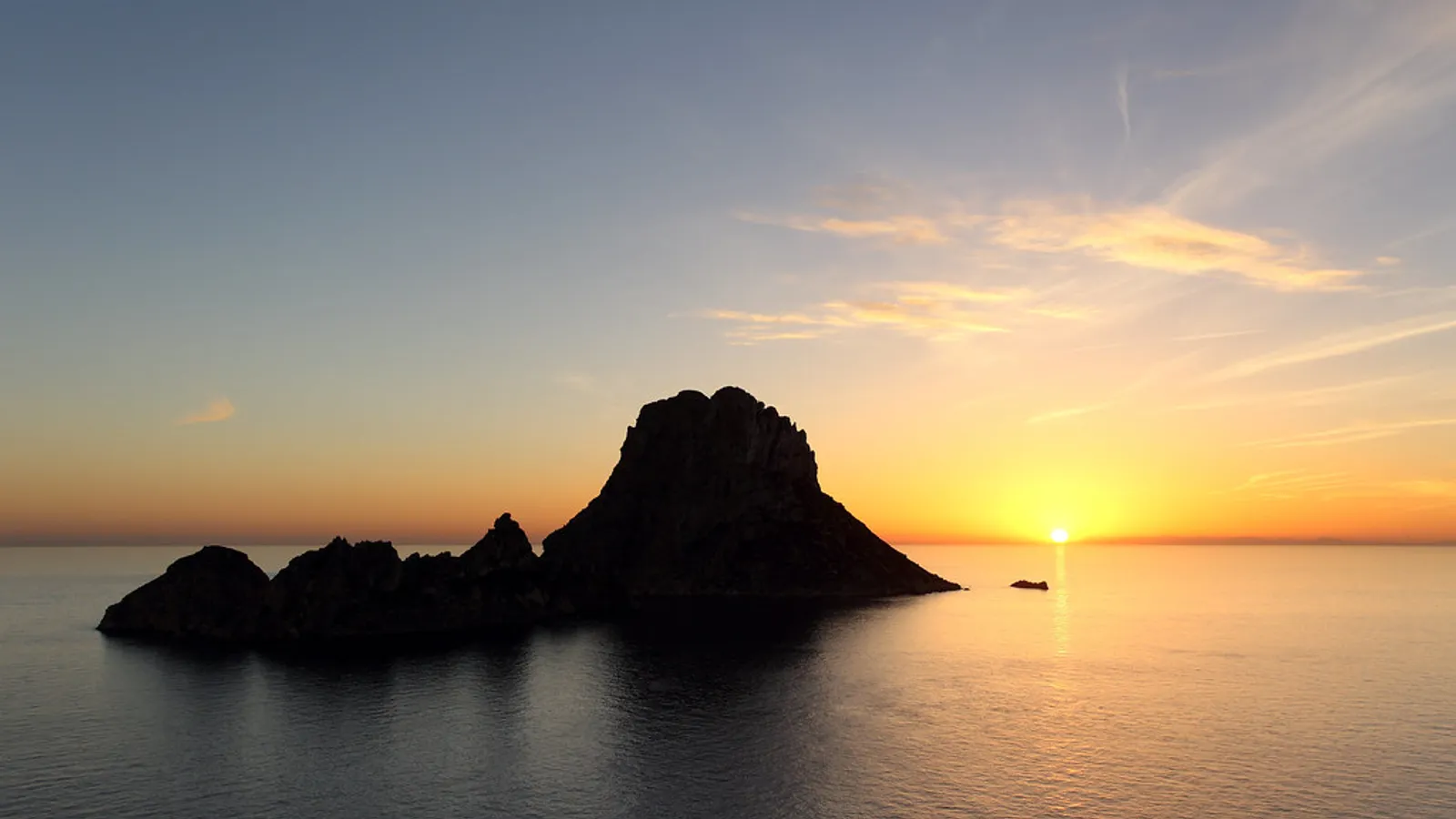
Best months for weather and the full Ibiza experience
Ibiza's best window is May through September. Daytime highs run 23°C in May to 31°C in July–August, rainfall stays under 75mm per month (under 15mm in June–August), and the entire club, beach-club, and restaurant ecosystem is fully open. That last point matters more than the weather: from November through March, most major clubs and beach venues close completely— you can visit, but you're not getting the Ibiza experience.
June and September are the smartest individual months.June pairs opening-party energy with the year's lowest rainfall (8mm) and crowds that haven't yet hit peak. September pairs the warmest sea of the year with the legendary closing parties and 30% lower hotel rates than the July–August peak.
When to visit Ibiza to avoid crowds
Crowds peak in July and August— European summer holidays, hottest weather, biggest DJ residencies. Hotel rates double from June, beach clubs need reservations days ahead, and Playa d'en Bossa is shoulder-to-shoulder day and night.
For a quieter version of full-season Ibiza:
- Mid-May through mid-June— clubs are open, beaches are warm enough, but the European holiday rush hasn't started.
- Last week of August into early September — families head home before school starts, prices begin dropping, but the season is still in full swing.
- Stay in the north (San Joan, Portinatx) or east (Santa Eulalia)rather than Playa d'en Bossa or San Antonio. The island feels totally different 20 minutes away from the club strip.
Cheapest time to visit Ibiza
The cheapest months are November through April: flights to Ibiza Airport drop 50–70% from peak, and hotel rates fall to a fraction of summer prices. The catch: most clubs and beach restaurants are closed. You're paying low prices for a completely different experience — Mediterranean island in winter, not party island.
The smarter price-to-experience tradeoff is May or late September. A beach club room that costs €280/night in July drops to roughly €180 in late September — and you get warmer sea, full club lineups, and noticeably less crowding. May is the cheapest month with full season access; mid-September is the cheapest with closing-party access.
When to avoid Ibiza
November through March is the wrong time for the classic Ibiza trip.Pacha, Hï, Ushuaïa, Amnesia, Eden, DC10 — all closed. Half of Playa d'en Bossa is shuttered. Beach restaurants run skeleton hours or close completely. Ferries to Formentera run reduced schedules.
Weather isn't the issue (16°C and dry is mild for Europe in winter). It's that the entire tourism economy is dormant. If you visit anyway, base in Ibiza Town — it's the only area that stays meaningfully open year-round.
Things to know before visiting Ibiza
Most travelers need 4–5 nights for a club-and-beach trip — enough for two big nights out, recovery days, and a Formentera day trip. Add 2–3 nights if you want to explore the quieter north or do longer hikes.
Getting there: Ibiza Airport (IBZ) sits 7km from Ibiza Town, with a regular bus service and a 15-minute taxi ride to most hotels. Direct flights from most major European cities April–October; from October through March most routes drop or run seasonally.
Money: Euro (EUR). Cards are accepted everywhere except some beach-shack chiringuitos. ATMs are widely available; club entry, beach beds, and bottle service are routinely paid by card.
Safety: Ibiza is generally very safe. The real risks are nightlife-adjacent: drink spiking, drug-related incidents, pickpockets in crowded clubs. Stick to licensed taxis, never accept open drinks from strangers, and use hotel safes for valuables. Family areas like Santa Eulalia are reliably calm. See the U.S. State Department travel advisory for Spain for current entry requirements.
The honest verdict
Ibiza has earned its reputation, but the reputation is narrower than it appears. The island is genuinely excellent May through September— warm, dry, with the kind of nightlife you can't find anywhere else in Europe. For the other half of the year it's a quiet Mediterranean island with mild weather and very little happening. Plan accordingly.
For a more family-oriented Balearic alternative, see our Mallorca best-time guide. For a smaller, quieter sister island 30 minutes by ferry, Formentera is the answer.
Your Ibiza cheat sheet
One email with the whole year in it — and the questions that actually change a trip there, answered.
- All 12 months scored 0–100
- The months to book, and the ones to skip
- The questions that change the plan, answered
- Plus the Travel Timing Calendar 2027: every destination, every month (PDF)
We'll email you your cheat sheet with the Travel Timing Calendar, plus occasional travel-timing guides. Unsubscribe anytime; see our privacy policy.
The year at a glance
Twelve months, three seasons
Each cell is one month. Lemon means peak, sky means shoulder, gray means avoid. The outlined cell is the current month.
Atlas Ranger Score · proprietary
When Ibiza scores best, month by month
Our transparent 0–100 score blends weather comfort, crowds, value and festivals into one number per month. How it's calculated →
- Best monthJune 88
- Best valueOctober 90 off-peak
- ToughestJanuary 72
See how Ibiza ranks against every destination on the Best Time to Travel leaderboard →
Explore the map
Every city, every month
Drag the month scrubber, hover any city, read the headline for that window.
Conditions right now
Right now in Ibiza: 24°C, overcast, air quality good (US AQI 50), sea 26°C.
Updated Oct 7, 3:15 AM · Live data from Open-Meteo
Spain vs Nearby Destinations
vs Mallorca
Pick Mallorca for family holidays, hiking, and a broader experience — bigger island, mountains, quieter villages, beach variety. Pick Ibiza for nightlife and beach-club culture. They're a 30-minute flight apart, so for a longer Mediterranean trip, do both.
vs Formentera
Formentera is Ibiza's smaller, quieter sister — 30 minutes by ferry, no airport, no big clubs, Caribbean-grade beaches. Pick Formentera for a slow, beach-only stretch; pick Ibiza for the full island experience. Most Ibiza visitors day-trip to Formentera at least once.
Where to stay in Spain
- Playa d'en Bossa$$$Clubbers + party-focused trips
Beachfront strip with the major clubs (Ushuaïa, Hï) and beach clubs. Loud day and night — the entire neighborhood is structured around the party scene.
Check Playa d'en Bossa prices → - Ibiza Town (Eivissa) — Marina or Old Town$$$Walkability + cultural balance
UNESCO old town, the island's best restaurants, walking distance to clubs via 5-minute taxi. The most rounded base — works for partygoers and culture travelers alike.
Check Ibiza Town (Eivissa) — Marina or Old Town prices → - Santa Eulalia$$Family + quiet trips
East-coast family resort — promenade, calm beaches, mid-range hotels, restaurants oriented to families. 20 minutes from clubs but feels like a different island.
Check Santa Eulalia prices → - San Joan / North Coast$$Quiet escape, hippie-market vibe
Boutique hotels and finca conversions in the rural north. Famous Sunday hippie market at Las Dalias. For travelers who want Ibiza scenery without nightlife.
Check San Joan / North Coast prices →
Spain in pictures


Frequently asked questions
What is the best month to visit Ibiza?
What is the worst month to visit Ibiza?
When is the rainy season in Ibiza?
How many days do you need in Ibiza?
Is Ibiza safe for tourists?
Should I visit Ibiza or Mallorca?
When is the cheapest time to visit Ibiza?
Keep planning
Plan your Spain trip
Sources
Every claim on this page is backed by an authoritative source. Atlas Ranger synthesizes data from multiple references so you can see exactly where each fact came from.
- Illes Balears Tourism (Official Balearic government)Used for: Official Balearic Islands tourism guidance, festival timing, regional information
- Open-Meteo Historical Climate Data (ERA5)Used for: Monthly temperature, rainfall, sunshine averages (2020–2024)
- U.S. State Department Spain Travel AdvisoryUsed for: Independent safety assessment + entry requirement reference
- AEMET (Agencia Estatal de Meteorología)Used for: Spain's national meteorological service — climate normals cross-reference