Japan · Where to stay
Best area to stay in Tokyo
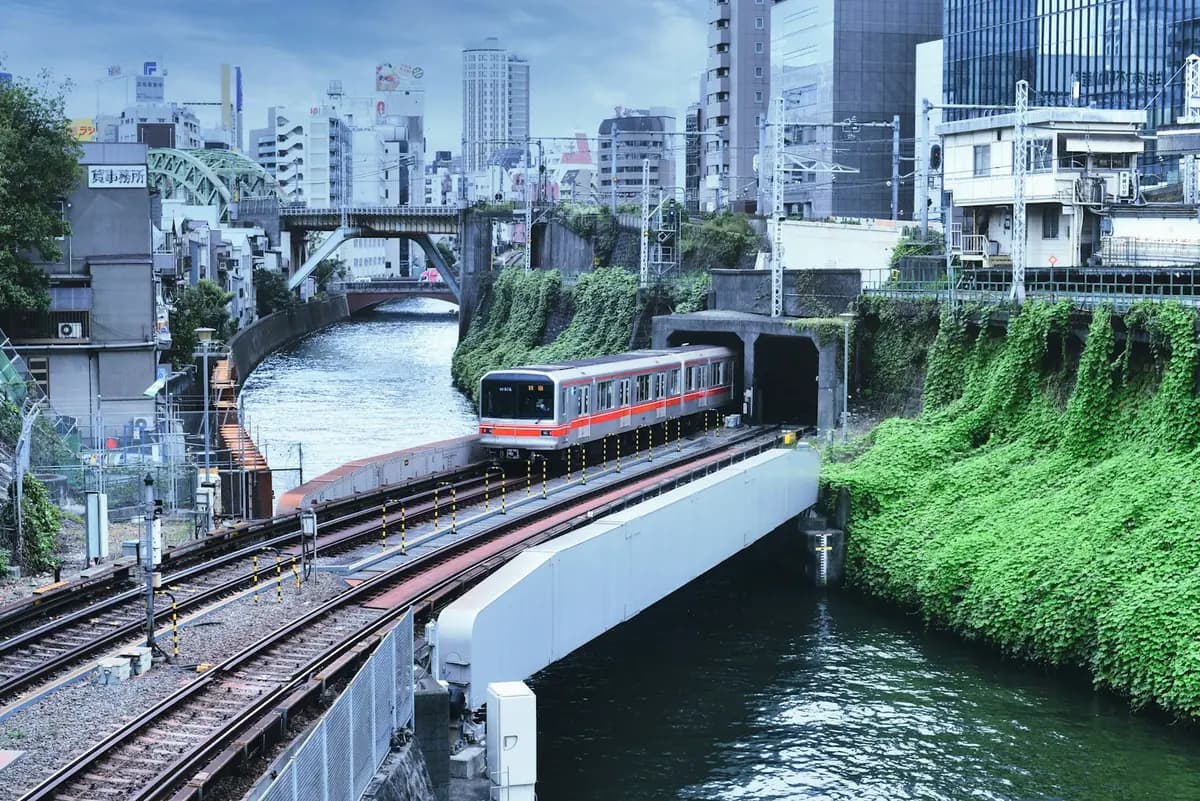
Where you stay in Tokyo decides how much of your trip is spent on trains. These six neighborhoods cover almost every kind of trip, compared here on airport trains, rail links and price.
Where to stay in Tokyo: the short answer
- First time in TokyoShinjukuMore train lines than anywhere else, and a direct Narita Express.Top pickKeio Plaza Hotel Tokyo
- Taking the bullet trainGinza / Tokyo StationShinkansen to Kyoto and Osaka from the doorstep, direct to both airports.Top pickDaiwa Roynet Hotel Ginza Premier
- On a budgetAsakusaLow prices and direct trains to both airports.Top pickAsakusa View Hotel
- Landing at NaritaUenoThe Skyliner reaches Narita in about 45 minutes.BookSkyliner tickets
- Food and shoppingShibuyaFood halls, Harajuku and Omotesando a short walk away.Top pickShibuya Excel Hotel Tokyu
- Traveling with kidsTokyo BaySpace, quiet streets and big rooms near Haneda.Top pickMitsui Garden Hotel Toyosu Premier
Tokyo neighborhoods compared
Typical fastest-train times from each area's main station, rounded. Check a route planner for your own hotel.
| Area | Price | To Narita | To Haneda | Hotels |
|---|---|---|---|---|
| ShinjukuFirst trips, day trips, late nights | $$ | ~80 min · directNarita Express | ~45 min · 1 changeOr the airport limousine bus | Hotels |
| Ginza and Tokyo StationBullet trains, both airports, a calmer center | $$$ | ~55 min · directNarita Express from Tokyo Station | ~30 min · directToei Asakusa / Keikyu from Higashi-Ginza | Hotels |
| ShibuyaFood, shopping, younger travelers | $$ | ~75 min · directNarita Express (some trains) | ~40 min · 1 changeOr the airport limousine bus | Hotels |
| AsakusaBudget, old-Tokyo atmosphere | $ | ~60 min · directKeisei Access Express | ~45 min · directToei Asakusa / Keikyu | Hotels |
| UenoNarita arrivals, museums, budget | $ | ~45 min · directKeisei Skyliner, the fastest airport train | ~40 min · 1 changeJR, then Keikyu or the monorail | Hotels |
| Tokyo BayFamilies, bay views, space | $$ | ~90 min · 1–2 changesVia Tokyo Station or Shinagawa | ~30 min · 1 changeOr a short taxi ride | Hotels |
Shinjuku
First trips, day trips, late nights$$
Shinjuku Station is the busiest railway station in the world, and that is the point: more lines meet here than anywhere else in Tokyo. The JR Yamanote loop, the Chuo line, three subway lines and the private Odakyu and Keio lines all stop here, so almost any sight is one train away. The Narita Express runs straight to Narita, and the bus terminal above the station has direct coaches to the Mt Fuji Five Lakes area. The Odakyu line runs to Hakone.
Hotels in Shinjuku
Scores and booking on Trip.com · November dates: 12–18 Nov 2026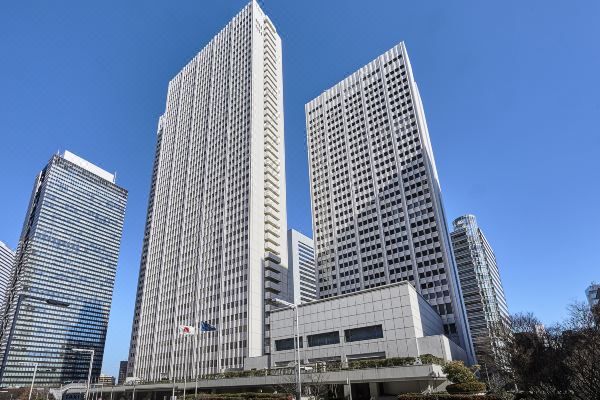 Top pickKeio Plaza Hotel Tokyo5 min walk to the free Tokyo Metropolitan Government observation deck; renovated 2025See rates on Trip.com →
 Hotel Gracery ShinjukuIn Kabukicho, the lively nightlife area; 15 min walk to Shinjuku GyoenSee rates on Trip.com →
 Shinjuku Washington Hotel3 min walk to Shinjuku Central Park; a big, well-priced classicSee rates on Trip.com →
 JR Kyushu Hotel Blossom ShinjukuSouth side, 12 min walk to Shinjuku Gyoen; opened 2014See rates on Trip.com →
 Tokyu Stay Shinjuku4 min walk to Shinjuku Gyoen garden; renovated 2026See rates on Trip.com →
- Narita ~80 min · direct Narita Express
- Haneda ~45 min · 1 change Or the airport limousine bus
- Bullet train ~15 min to Tokyo Station
- Yamanote loop Yes
Narita Express tickets →Haneda limousine bus tickets →
Why stay here
- More rail lines than any other area: the easiest base for a first visit
- Direct Narita Express trains and highway buses to Mt Fuji
- The biggest choice of hotels in the city, at every price
- Shinjuku Gyoen garden is a short walk from the south side
Worth knowing
- The station is a maze: pick a hotel near the exit you will use
- Kabukicho, north-east of the station, is the nightlife district; the west side (the hotel towers) and the south side are quieter
Ginza and Tokyo Station
Bullet trains, both airports, a calmer center$$$
Ginza is Tokyo's polished shopping district, and Tokyo Station is a 10-minute walk away. That station is where the Tokaido Shinkansen leaves for Kyoto and Osaka, and where the Narita Express starts. From Higashi-Ginza, trains on the Toei Asakusa line run straight through to Haneda. The Imperial Palace gardens and the Tsukiji outer market are both walkable. The streets go quiet after the shops close.
Hotels in Ginza and Tokyo Station
Scores and booking on Trip.com · November dates: 12–18 Nov 2026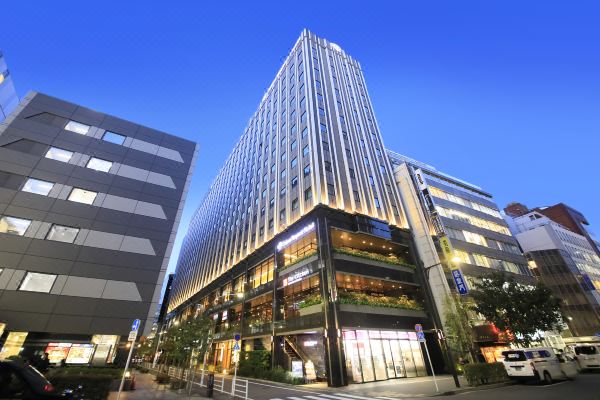 Top pickDaiwa Roynet Hotel Ginza Premier1 min to Ginza-itchome subway, 8 min to JR Yurakucho; renovated 2026See rates on Trip.com →
 Imperial Hotel, Tokyo2 min walk to Hibiya Park, 7 min to the Imperial Palace outer gardenSee rates on Trip.com →
 Mitsui Garden Hotel Ginza Premier9 min walk to the Tsukiji outer marketSee rates on Trip.com →
 The Royal Park Hotel Ginza 6-chome6 min walk to the Tsukiji outer market; opened 2024See rates on Trip.com →
 KOKO HOTEL Ginza-1chome2 min walk to Ginza-itchome subway; opened 2020See rates on Trip.com →
- Narita ~55 min · direct Narita Express from Tokyo Station
- Haneda ~30 min · direct Toei Asakusa / Keikyu from Higashi-Ginza
- Bullet train On the doorstep: Tokyo Station
- Yamanote loop Yes (Yurakucho, Tokyo)
Narita Express tickets →Private car from Haneda →
Why stay here
- Tokyo Station on the doorstep: the best base if you are taking the bullet train to Kyoto or Osaka
- Direct trains to both airports
- Walk to the Imperial Palace East Gardens and the Tsukiji outer market
- Calm, central and easy to get around in the evening
Worth knowing
- The highest hotel prices of the six areas
- Little nightlife: the area winds down after the shops close
Shibuya
Food, shopping, younger travelers$$
Shibuya is the scramble crossing, the department-store food halls and the most energetic streets in the city. It is on the Yamanote loop and the Ginza and Hanzomon subway lines, so Harajuku, Omotesando and Meiji Jingu are one stop or a walk away. Shinjuku is 7 minutes north. Hotels sit mostly in towers built over or beside the station, which makes the first night easy.
Hotels in Shibuya
Scores and booking on Trip.com · November dates: 12–18 Nov 2026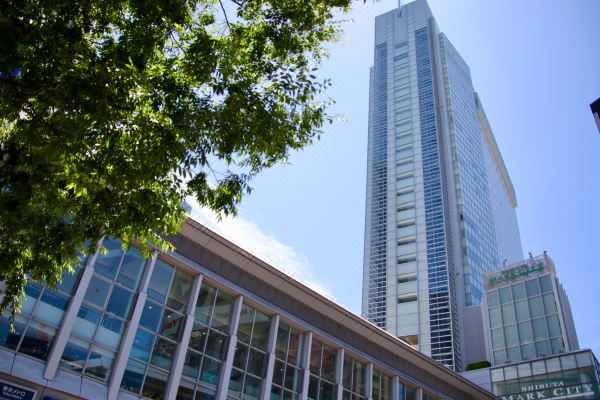 Top pickShibuya Excel Hotel Tokyu2 min walk to the Scramble Crossing, in the tower above the stationSee rates on Trip.com →
 Cerulean Tower Tokyu Hotel8 min walk to the Scramble Crossing; renovated 2024See rates on Trip.com →
 Shibuya Stream Hotel7 min walk to the Scramble Crossing; opened 2018See rates on Trip.com →
 Hotel Indigo Tokyo Shibuya2 min walk to Center-Gai; opened 2023, with a rooftop terraceSee rates on Trip.com →
 Shibuya Tokyu REI Hotel4 min walk to Miyashita Park; renovated 2019See rates on Trip.com →
- Narita ~75 min · direct Narita Express (some trains)
- Haneda ~40 min · 1 change Or the airport limousine bus
- Bullet train ~25 min to Tokyo Station
- Yamanote loop Yes
Narita Express tickets →Haneda limousine bus tickets →
Why stay here
- Harajuku, Omotesando and Meiji Jingu shrine a walk or one stop away
- The best area for food halls, shopping and cafés
- Newer hotels built directly over the station
Worth knowing
- Crowded at almost every hour, especially on weekends
- A longer ride to Tokyo Station and the bullet trains
Asakusa
Budget, old-Tokyo atmosphere$
Asakusa is the old merchant quarter around Senso-ji, Tokyo's oldest temple, with Tokyo Skytree across the Sumida River. Rooms here are some of the cheapest in central Tokyo. The Toei Asakusa line gives it direct trains to both airports, which few areas can match. The trade-off is that it is off the Yamanote loop, so Shinjuku and Shibuya are about 30 minutes away.
Hotels in Asakusa
Scores and booking on Trip.com · November dates: 12–18 Nov 2026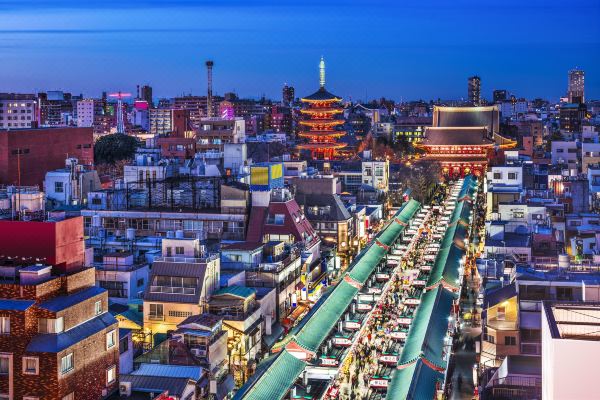 Top pickAsakusa View Hotel5 min walk to Senso-jiSee rates on Trip.com →
 Agora Place Tokyo Asakusa2 min walk to Tawaramachi (Ginza subway line)See rates on Trip.com →
 Hotel MyStays AsakusaRooms with Tokyo Skytree views; 13 min walk to Senso-jiSee rates on Trip.com →
 Tosei Hotel Cocone Asakusa Kuramae10 min walk to Senso-ji; opened 2020See rates on Trip.com →
 HOTEL TAVINOS Asakusa5 min walk to Senso-ji; opened 2020See rates on Trip.com →
- Narita ~60 min · direct Keisei Access Express
- Haneda ~45 min · direct Toei Asakusa / Keikyu
- Bullet train ~20 min to Tokyo Station
- Yamanote loop No
Why stay here
- Some of the lowest hotel prices in central Tokyo
- Direct trains to both Narita and Haneda
- Senso-ji and the riverside are at their quietest early in the morning
Worth knowing
- Not on the Yamanote line: about 30 minutes to Shinjuku or Shibuya
- Very busy during the Sanja Matsuri festival (third weekend of May)
Ueno
Narita arrivals, museums, budget$
Ueno has the fastest link to Narita: the Keisei Skyliner reaches the airport in about 45 minutes. Ueno Park holds the Tokyo National Museum, the National Museum of Western Art and the zoo. Ameyoko market runs along the tracks. It is on the Yamanote loop, Asakusa is two stops away on the Ginza line, and hotel prices are among the lowest in the center.
- Narita ~45 min · direct Keisei Skyliner, the fastest airport train
- Haneda ~40 min · 1 change JR, then Keikyu or the monorail
- Bullet train Ueno Station (northbound lines); ~7 min to Tokyo Station
- Yamanote loop Yes
Why stay here
- The fastest train to Narita, ideal for early flights or late arrivals
- On the Yamanote line, with Tokyo Station 7 minutes away
- Museums and one of Tokyo's biggest cherry-blossom parks on the doorstep
Worth knowing
- Ueno Park is packed in cherry-blossom season (late March to early April)
- Fewer upscale hotels than Ginza or Shinjuku
Tokyo Bay (Odaiba and Toyosu)
Families, bay views, space$$
Odaiba and Toyosu are reclaimed islands in Tokyo Bay. They have wide streets, bigger rooms, bay views, teamLab Planets and the Toyosu fish market. They suit families who want space and quiet more than a central address. Haneda is close, but most sights are a 25 to 40 minute ride away.
Hotels in Tokyo Bay
Scores and booking on Trip.com · November dates: 12–18 Nov 2026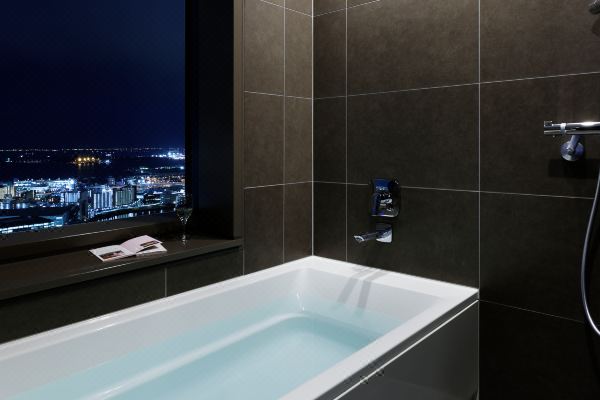 Top pickMitsui Garden Hotel Toyosu Premier3 min walk to Toyosu Station, 12 min to teamLab PlanetsSee rates on Trip.com →
 Hilton Tokyo Odaiba1 min walk to Odaiba Seaside Park, 4 min to Daiba StationSee rates on Trip.com →
 Grand Nikko Tokyo Daiba3 min walk to Daiba Station; renovated 2023See rates on Trip.com →
 Tokyo Bay Ariake Washington Hotel4 min walk to Tokyo Big Sight StationSee rates on Trip.com →
 Hotel Villa Fontaine Grand Tokyo Ariake6 min walk to Ariake Station; opened 2020See rates on Trip.com →
- Narita ~90 min · 1–2 changes Via Tokyo Station or Shinagawa
- Haneda ~30 min · 1 change Or a short taxi ride
- Bullet train ~25 min to Tokyo Station
- Yamanote loop No
Why stay here
- Bigger rooms and wide, quiet streets: easy with children
- Bay and Rainbow Bridge views from many rooms
- Close to Haneda, with teamLab Planets nearby
Worth knowing
- Far from the main sights: plan on 25 to 40 minutes each way
- Quiet in the evening, with few places to eat after dark
When Tokyo hotels cost the most
The area matters less than the dates. Rooms near the big cherry-blossom parks (Ueno, Shinjuku Gyoen, the Meguro River) cost two to three times the usual rate in late March and early April, and the best ones sell out months ahead. Golden Week (April 29 to May 5), Obon (August 13 to 15) and New Year (December 29 to January 3) are Japan's busiest domestic holidays and push prices up across the city.
The cheapest months are January, February and June. November is the best-value peak: autumn leaves, dry weather and roughly half the spring hotel premium. See the best time to visit Tokyo for the month-by-month weather, the worst time to visit Tokyo for the dates to avoid, and the cherry blossom trackerfor this year's bloom.
Before you fly, sort out mobile data: Japan eSIM plans from three providers are priced side by side in the best eSIM for Japan guide, so you have maps and train times from the moment you land.
Questions people ask
What is the best neighborhood to stay in Tokyo?
For most trips, Shinjuku: it has more train lines than anywhere else in Tokyo, a direct Narita Express and the widest choice of hotels. Ginza and the Tokyo Station area are better if you are taking the bullet train, Asakusa and Ueno are the best value, and Tokyo Bay suits families who want space.
Where should I stay in Tokyo for the first time?
Shinjuku. More train lines meet at Shinjuku Station than anywhere else in Tokyo, it is on the JR Yamanote loop, and the Narita Express runs there directly. If you will take the bullet train to Kyoto or Osaka, Ginza and the Tokyo Station area are the better base.
Is it better to stay in Shinjuku or Shibuya?
Shinjuku for transport and day trips: more lines, direct coaches to Mt Fuji and trains to Hakone. Shibuya for food, shopping and Harajuku on foot. They are 7 minutes apart on the Yamanote line, so either works for seeing both.
Where should I stay in Tokyo if I fly into Narita or Haneda?
For Narita, Ueno is fastest: the Keisei Skyliner takes about 45 minutes. Asakusa, Shinjuku and Tokyo Station also have direct trains. For Haneda, Ginza (Higashi-Ginza) and Asakusa have direct trains on the Toei Asakusa line, and Tokyo Bay is a short taxi ride.
What is the cheapest area to stay in central Tokyo?
Asakusa and Ueno. Both have some of the lowest hotel prices in central Tokyo, and both have direct trains to Narita. Asakusa also has direct trains to Haneda; Ueno is on the Yamanote line.
Does it matter if my hotel is on the Yamanote line?
It helps. The Yamanote is the loop line that links Shinjuku, Shibuya, Harajuku, Tokyo Station, Akihabara and Ueno, so a hotel near one of its stations puts most sights within one ride. Asakusa and Tokyo Bay are off the loop but well served by the subway.
How this guide was put together
Journey times are the fastest scheduled trains from each area's main station, rounded, from the operators' own timetables: JR East (Narita Express, Yamanote and Chuo lines, Tokaido Shinkansen), Keisei (Skyliner and Access Express), Keikyu, Tokyo Metro and Toei Subway. Hotel details (walking distances, opening and renovation years, guest scores and review counts) come from each hotel's own Trip.com listing, read on October 14, 2026. Seasonal prices and the cheapest months come from the Tokyo month-by-month guide. Hotels are chosen on location, guest score and review count.
Book the rest of your Tokyo trip
 Trip.comShinjukuKeio Plaza Hotel TokyoNovember dates: 12–18 Nov 2026See rates on Trip.com →
- Trip.comShinjukuHotel Gracery ShinjukuNovember dates: 12–18 Nov 2026See rates on Trip.com →
- Trip.comShinjukuShinjuku Washington HotelNovember dates: 12–18 Nov 2026See rates on Trip.com →
- Trip.comShinjukuJR Kyushu Hotel Blossom ShinjukuNovember dates: 12–18 Nov 2026See rates on Trip.com →
- Trip.comShinjukuTokyu Stay ShinjukuNovember dates: 12–18 Nov 2026See rates on Trip.com →
- More hotels in Tokyo →
- Trip.comShibuyaCerulean Tower Tokyu HotelNovember dates: 12–18 Nov 2026See rates on Trip.com →
- Trip.comShibuyaShibuya Stream HotelNovember dates: 12–18 Nov 2026See rates on Trip.com →
- Trip.comShibuyaShibuya Excel Hotel TokyuNovember dates: 12–18 Nov 2026See rates on Trip.com →
- Trip.comShibuyaHotel Indigo Tokyo ShibuyaNovember dates: 12–18 Nov 2026See rates on Trip.com →
- Trip.comShibuyaShibuya Tokyu REI HotelNovember dates: 12–18 Nov 2026See rates on Trip.com →
- More hotels in Tokyo →
- Trip.comGinzaImperial Hotel, TokyoNovember dates: 12–18 Nov 2026See rates on Trip.com →
- Trip.comGinzaMitsui Garden Hotel Ginza PremierNovember dates: 12–18 Nov 2026See rates on Trip.com →
- Trip.comGinzaThe Royal Park Hotel Ginza 6-chomeNovember dates: 12–18 Nov 2026See rates on Trip.com →
- Trip.comGinzaDaiwa Roynet Hotel Ginza PremierNovember dates: 12–18 Nov 2026See rates on Trip.com →
- Trip.comGinzaKOKO HOTEL Ginza-1chomeNovember dates: 12–18 Nov 2026See rates on Trip.com →
- More hotels in Tokyo →
- Trip.comAsakusaAsakusa View HotelNovember dates: 12–18 Nov 2026See rates on Trip.com →
- Trip.comAsakusaAgora Place Tokyo AsakusaNovember dates: 12–18 Nov 2026See rates on Trip.com →
- Trip.comAsakusaHotel MyStays AsakusaNovember dates: 12–18 Nov 2026See rates on Trip.com →
- Trip.comAsakusaTosei Hotel Cocone Asakusa KuramaeNovember dates: 12–18 Nov 2026See rates on Trip.com →
- Trip.comAsakusaHOTEL TAVINOS AsakusaNovember dates: 12–18 Nov 2026See rates on Trip.com →
- More hotels in Tokyo →
- Trip.comTokyo BayHilton Tokyo OdaibaNovember dates: 12–18 Nov 2026See rates on Trip.com →
- Trip.comTokyo BayGrand Nikko Tokyo DaibaNovember dates: 12–18 Nov 2026See rates on Trip.com →
- Trip.comTokyo BayTokyo Bay Ariake Washington HotelNovember dates: 12–18 Nov 2026See rates on Trip.com →
- Trip.comTokyo BayMitsui Garden Hotel Toyosu PremierNovember dates: 12–18 Nov 2026See rates on Trip.com →
- Trip.comTokyo BayHotel Villa Fontaine Grand Tokyo AriakeNovember dates: 12–18 Nov 2026See rates on Trip.com →
- More hotels in Tokyo →

 KlookSHIBUYA SKY ticketfrom US$19Open-air rooftop above ShibuyaBook on Klook →
- KlookteamLab Borderlessfrom US$26Digital art museum in Azabudai HillsBook on Klook →
- KlookTokyo Tower ticketfrom US$9Main deck admissionBook on Klook →
- KlookRoppongi Hills observatoryTokyo City View deckBook on Klook →
- KlookFull-day Tokyo city tourfrom US$79Imperial Palace, Asakusa and a Skytree ticket · free cancellationBook on Klook →
- See all Tokyo tours →


- KlookMt Fuji photo spots day tourfrom US$61Full day around Lake KawaguchiBook on Klook →
- KlookMt Fuji and Kawaguchiko ropewayfrom US$49Ropeway ticket includedBook on Klook →
- KlookMt Fuji and Hakone with cable carfrom US$49Lake Ashi and OwakudaniBook on Klook →
- KlookNikko day tourfrom US$54Kegon Falls, Lake Chuzenji and IrohazakaBook on Klook →
- KlookHitachi Seaside Park day tripSeasonal flower hills by the seaBook on Klook →
- See all Tokyo tours →







 KiwitaxiHND airport to your hotelFixed price, booked before you landBook a transfer →
- KlookKeisei Skyliner from NaritaAirport express into Ueno and NipporiBook on Klook →
- KlookN'EX Narita Express returnRound trip between Narita and TokyoBook on Klook →
- KlookHaneda Airport limousine busAirport bus into central TokyoBook on Klook →
- KlookShinkansen, Tokyo to OsakaBullet train ticket for a two-city tripBook on Klook →
Partner links. Prices and availability are set by the partner. We may earn a commission, at no extra cost to you.