 Trip.com











 Klook
Klook








The worst month to visit Tokyo is August
August is Tokyo's hottest month: 31°C daytime highs, 24°C nights that never cool off, humidity routinely above 70%, and a heat index that regularly passes 38°C on the pavement in Shinjuku or Asakusa. Sightseeing between 11am and 4pm is genuinely punishing, and heat-stroke warnings from the city are a near-daily event.
Obon (August 13–15) is the second problem. It is the nationwide ancestor-honouring holiday, and the days around it are the busiest domestic-travel period of the year after New Year: shinkansen seats out of Tokyo sell out weeks ahead, many small restaurants and businesses close, and hotel rates in resort areas spike. The window to avoid is roughly August 11–17.
Why July through September is genuinely difficult
- July — the heat arrives. The rainy season ends mid-month and summer hits hard: 30°C days, 156mm of rain in bursts, and the heat index crossing 35°C. The Sumida River Fireworks (last Saturday) draws a million people.
- August — peak heat plus Obon. The hottest month and the domestic shutdown, as above.
- September — typhoon peak and one of the wettest months. 209mm of rain and the height of the Pacific typhoon season for the Kanto region. Storms track across central Honshu every few weeks, grounding flights at Narita and Haneda and shutting sightseeing for a day or two at a time. Track them at the Japan Meteorological Agency.
- June — the rainy season (tsuyu). Not in the worst three, but worth knowing: 168mm of rain, mostly overnight drizzle and overcast days. The upside is that June is usually the cheapest month for Tokyo hotels.
The other "wrong" time: cherry blossom week without a booking
Late March to early April has Tokyo's best weather and its worst logistics. If you have not booked by roughly November of the previous year:
- Hotel rates climb well above normal within 5km of Ueno Park, the Meguro River, and Shinjuku Gyoen
- Availability collapses — even business hotels sell out
- Golden Week (April 29 – May 5) follows immediately with the year's biggest domestic travel surge
It is the right time to go — but only with a booking in hand. Otherwise, November gives the same dry, clear weather with far better availability.
If you have to travel in summer, here's what to do
- Arrive before August 11 or after August 17. Obon is the one date window that is worth moving a trip to avoid.
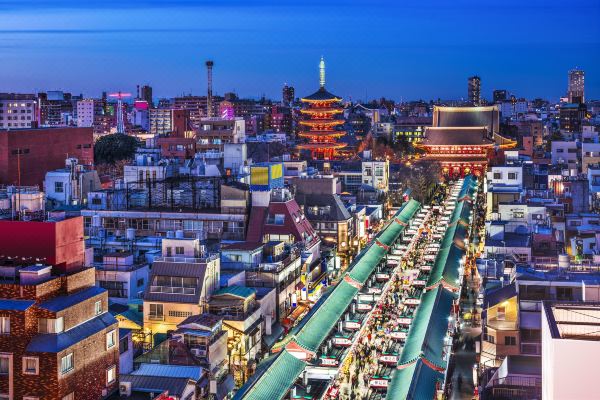
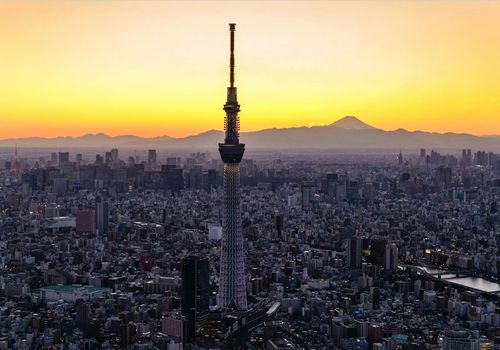
- Sightsee early and late. Meiji Jingu and Senso-ji at 8am; museums, department-store basements, and Akihabara from noon to 4pm; the Skytree and city views after dark.
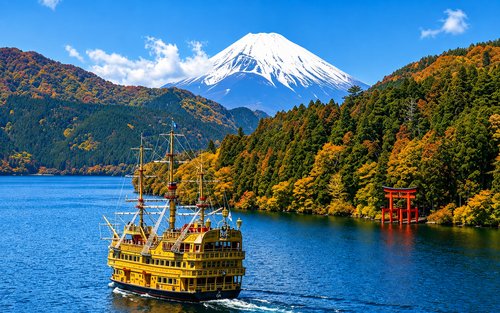
- Escape upward. Nikko, Hakone, and the Kiso Valley run 5–8°C cooler and are within two hours by train. Hokkaido skips the humidity entirely.
- Buy travel insurance with weather coverage for September — a typhoon can cost you two days of a week-long trip.
- Lean into the festivals. Summer is matsuri season — Mitama Matsuri at Yasukuni (mid-July), neighbourhood bon-odori dances all August. Evenings are when Tokyo summer works.
Better windows: when to visit instead
- Late October – November: The second peak season and, for many, the better one — 17–22°C days, low humidity, clear skies, and koyo autumn leaves peaking November 20–30 at Rikugien, Meiji Jingu Gaien, and Shinjuku Gyoen. Far easier to book than spring.
- Mid-May:After Golden Week ends on May 5, crowds drop sharply while the weather peaks at 23°C with low humidity. Sanja Matsuri (third weekend) is one of the city's great festivals.
- Late March – early April: Cherry blossoms — with a booking made the previous autumn.
Click any month on the seasonality map above for the full climate detail and our verdict.
Your Tokyo cheat sheet
One email with the whole year in it — and the questions that actually change a trip there, answered.
- All 12 months scored 0–100
- The months to skip, and when it turns good again
- The questions that change the plan, answered
- Plus the Travel Timing Calendar 2027: every destination, every month (PDF)
We'll email you your cheat sheet with the Travel Timing Calendar, plus occasional travel-timing guides. Unsubscribe anytime; see our privacy policy.
The year at a glance
Twelve months, three seasons
Each cell is one month. Lemon means peak, sky means shoulder, gray means avoid. The outlined cell is the current month.
Atlas Ranger Score · proprietary
When Tokyo scores best, month by month
Our transparent 0–100 score blends weather comfort, crowds, value and festivals into one number per month. How it's calculated →
- Best monthApril 59
- Best valueJune 67 off-peak
- ToughestAugust 59
See how Tokyo ranks against every destination on the Best Time to Travel leaderboard →
Explore the map
Every city, every month
Drag the month scrubber, hover any city, read the headline for that window.
Tokyo vs Nearby Destinations
vs Kyoto
Visit both — they're 2 hours apart on the shinkansen and complement each other. Pick Tokyo for modern Japan, food density, and urban energy. Pick Kyoto for temples, gardens, and traditional culture. Most travelers spend 4-5 days in Tokyo, then 3-4 days in Kyoto.
vs Osaka
Tokyo and Osaka are Japan's two largest cities but they feel different. Tokyo is more polished, more international, more diverse neighborhoods. Osaka is more food-focused, more casual, more boisterous — and cheaper. As a base for the Kansai region (Kyoto, Nara, Kobe), Osaka edges Kyoto for budget travelers.
vs Okinawa
Different climate, different culture, different trip entirely. Tokyo is humid subtropical urban Japan; Okinawa is full subtropical island Japan. If you're trying to escape Tokyo's August heat, Okinawa is hotter and has typhoon risk — Hokkaido is the actual cool-summer escape. Combine Tokyo + Okinawa across different seasons (Tokyo in April or November, Okinawa in May or October).
Airport transfers, money, water, connectivity and which areas to stay in are covered once, on the Tokyo best-time guide. Choosing a neighborhood? See the best area to stay in Tokyo. Need data in Japan? Compare plans in the best eSIM for Japan guide. Planning a day out? See the Mt Fuji day trip from Tokyo guide. Taking bullet trains? The JR Pass calculator shows whether a pass pays off.
Things to do in Tokyo
Self-guided tours and skip-the-line tickets you can book ahead.

Tours & tickets via WeGoTrip — we may earn a commission, at no extra cost to you.
Frequently asked questions
When is typhoon season in Japan?
What is the hottest month in Tokyo?
Is June a bad time to visit Tokyo?
What is the best month to visit Tokyo?
What is the worst month to visit Tokyo?
When is the rainy season in Tokyo?
How many days do you need in Tokyo?
When is the cheapest time to visit Tokyo?
Is Tokyo safe for tourists?
Should I visit Tokyo or Kyoto first?
What should I pack for Tokyo?
Keep planning
Plan your Tokyo trip
Sources
Every claim on this page is backed by an authoritative source. Atlas Ranger synthesizes data from multiple references so you can see exactly where each fact came from.
- Japan National Tourism Organization (JNTO) — TokyoUsed for: Official tourism guidance, festival timing, and seasonal travel advisories.
- Japan Meteorological Agency — Tokyo NormalsUsed for: Climate normals (1991-2020) for temperature, rainfall, and sunshine hours.
- U.S. State Department Japan Travel AdvisoryUsed for: Independent safety assessment and entry requirement reference.
- Tokyo Convention & Visitors BureauUsed for: Festival calendar, illumination dates, neighborhood-specific events.