The short answer — and why Osaka is different
October is the underrated best month to visit Osaka.Daytime 22°C, low humidity, the year's second-clearest skies, autumn harvests across Kuromon Market and Dotonbori, Universal Studios Halloween Horror Nights at full intensity, and crowds 30-40% below Kyoto for nearly identical weather. April runs a close second (cherry blossoms at Osaka Castle Park) but at 2-3x normal hotel rates.
Here's the strategic insight most guides miss: Osaka is most travelers' food-focused city, not their sightseeing city.That changes the calculation. For Kyoto's temples and Tokyo's shrines, you need clear weather to enjoy outdoor sightseeing. For Osaka's defining experiences — Dotonbori at night, Kuromon Market crawls, Tenjin Matsuri river processions, Tennoji izakaya alleys — weather matters less. Osaka is workable in more seasons than its neighbors.
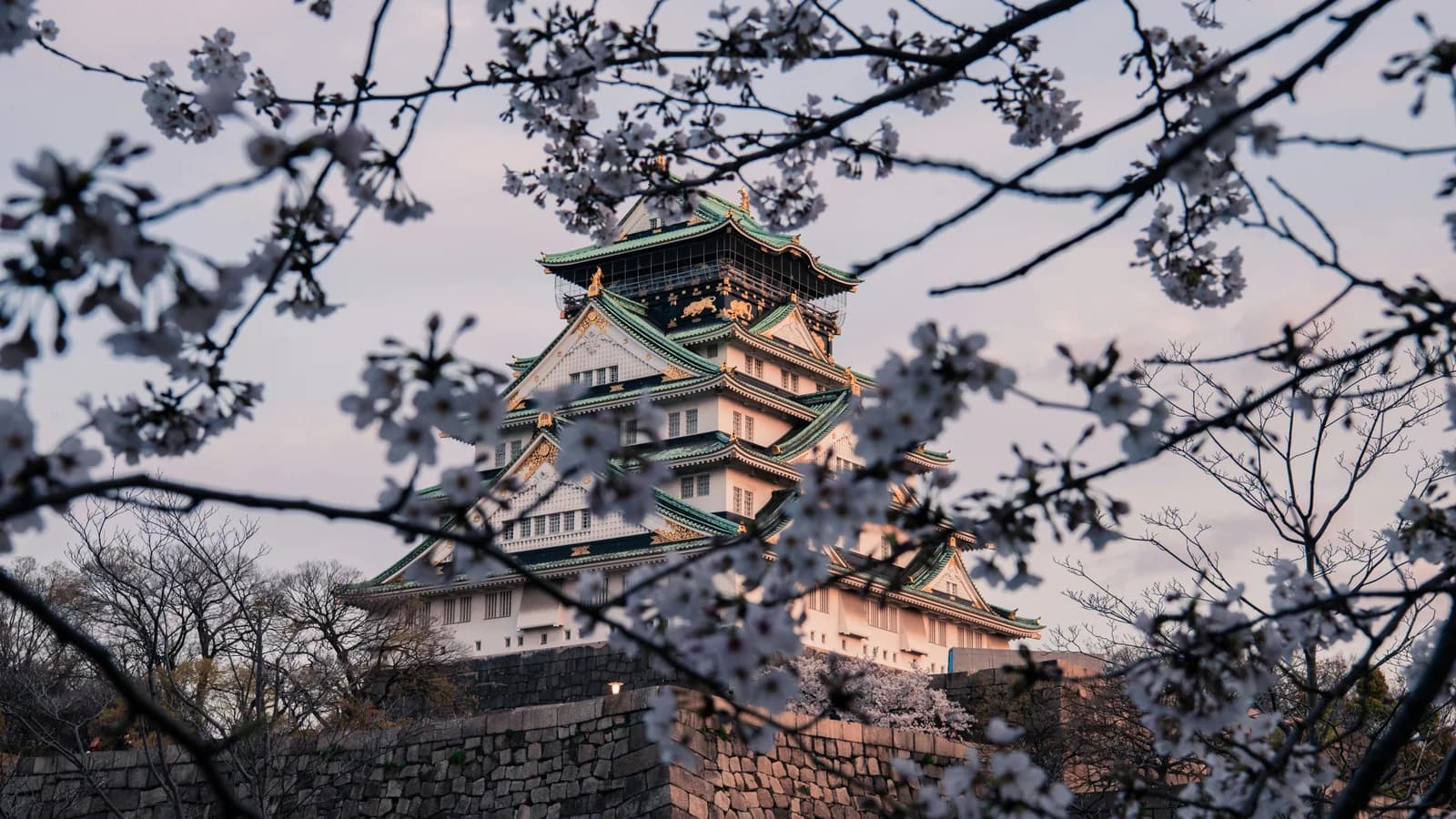
The cherry blossom angle — Osaka Castle Park
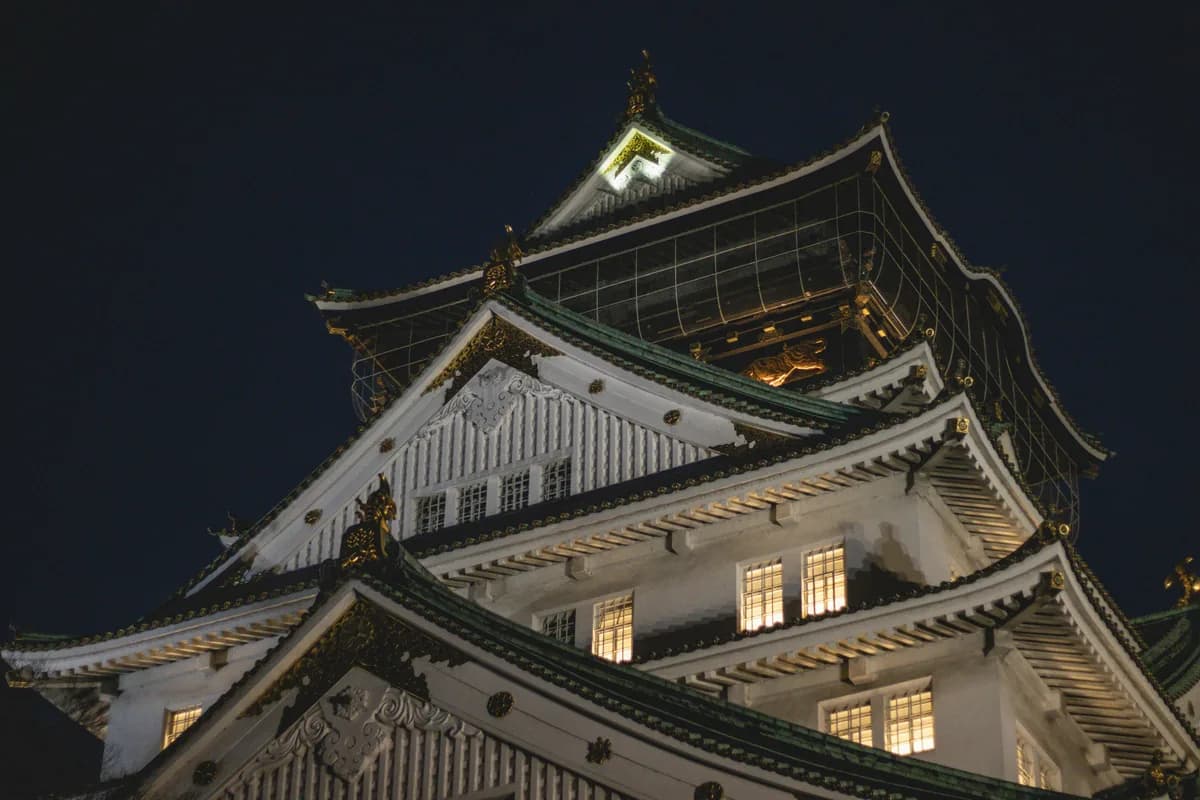
Osaka's cherry blossom front opens slightly before Kyoto's — typically March 25-30 (kaika) with full bloom around April 1-8 (mankai). The defining spot is Osaka Castle Park: 3,000+ cherry trees with the white castle as backdrop, illuminated in the evenings (Nishinomaru Garden opens for paid evening access, about 350 yen). The single most photographed cherry-blossom-with-castle shot in Japan.
The secondary spot — and the locals' pick — is Kema Sakuranomiya Park: 5,000 cherry trees along a 4 km stretch of the Okawa River, riverside picnic culture, fewer tourists than the Castle. Walk distance: about 4 km north of central Osaka, accessible by JR Sakuranomiya Station. For 2026 forecasts, see our cherry blossom forecast 2026 page.
Tenjin Matsuri (July 24-25) — the festival that justifies summer
Osaka's defining festival, dating back over 1,300 years, is one of Japan's top threealongside Kyoto's Gion and Tokyo's Kanda. The pattern: land procession by day, river procession by night, fireworks finale.
The river procession is the part people travel for — 100+ illuminated mikoshi boats float down the Okawa River through central Osaka after sunset, lit by torches and lanterns, accompanied by drum and shamisen music from the boats. Fireworks (5,000+) close the night from 7:30 PM. Best viewing spots: the bridges near Osaka Tenmangu Shrine and along the Sakuranomiya stretch of the Okawa. Crowds are intense; pick your spot by 6 PM.
July is otherwise hot (31°C, 75%+ humidity) and most travelers should avoid it — but Tenjin Matsuri is one of those events worth a difficult trip for. Book Osaka accommodation by January-February of the same year.
Autumn (October-November) — the food peak
Autumn in Osaka isn't about leaves the way it is in Kyoto — Osaka has limited traditional gardens. It's about food, festivals, and the year's clearest weather.
October: Kuromon Market shifts to autumn harvests (matsutake mushrooms, chestnuts, fresh fugu starts in November). Dotonbori restaurants change menus. Universal Studios Halloween Horror Nights peaks weekend nights — book USJ-area hotels by August. Kishiwada Danjiri Matsuri (southern Osaka) on two September/October weekends — boisterous wood-cart racing, completely different energy from elegant Kyoto festivals.
November:The year's clearest weather (17°C highs, dry, 6 hours sun). For autumn leaves (limited in central Osaka), day-trip to Minoo Park — 30 min by Hankyu line from Umeda, a 33 m waterfall framed by maple trees, the iconic Osaka koyo image. The fried maple leaves (momiji tempura) sold from roadside stalls are a Minoo specialty. For temple-and-koyo, Mt. Kongo on the south side of the prefecture is a half-day hike option.
When to avoid Osaka
August is the worst month.Osaka sits in a basin with a coastal opening — 33°C+ frequent, 75%+ humidity routine, the year's peak heat. Obon (Aug 13-15) sees partial business closures and nationwide travel disruption. The food festival atmosphere shifts to early morning and post-9pm; daytime sightseeing is genuinely difficult.
September has typhoon risk— less direct than central Japan but Kansai International (Osaka's airport on a man-made island) occasionally has weather-related flight cancellations. USJ Halloween Horror Nights launches mid-September which is the upside.
The cheapest time to visit Osaka
June (rainy season) is typically the cheapest month— hotel rates 30-40% below cherry blossom peaks, mild 27°C weather, 200mm rainfall (mostly overnight and morning drizzle). Indoor attractions (USJ, Osaka Aquarium Kaiyukan, Umeda Sky Building, Kuromon Market) run year-round, so the rain doesn't shut down your trip.
January and February are close runners-up — coldest weather but the driest months of the year. Osaka winter food (oden carts, hotpot, sake) is the underrated cold-weather angle. The most expensive weeks of the year are the cherry blossom peak (first week of April) and Tenjin Matsuri (July 24-25), when central Osaka hotels run 2x normal rates and sell out 4+ months ahead.
Where to base yourself, by trip style
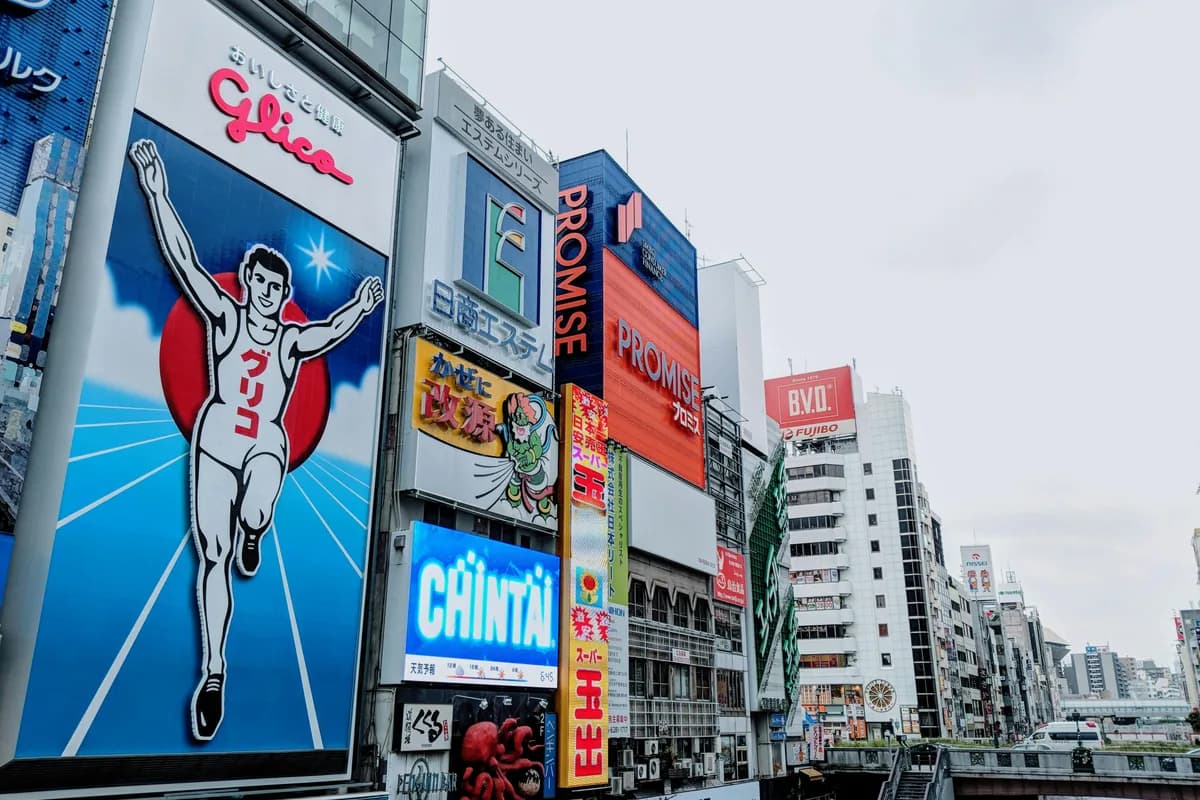
- Namba / Dotonbori for first-time visitors and food-focused trips — most atmospheric district, neon, Glico running-man sign, walking distance to Kuromon Market, loud at night.
- Umeda for transit-focused travelers — JR Osaka Station, multiple subway lines, direct buses to Kansai International. Best for multi-city Japan trips.
- Honmachi / Shinsaibashifor the balanced base — Nishi-Shinsaibashi arcade (Japan's second-largest covered shopping street), Pontocho-style food alleys, mid-range hotels. Quieter at night than Namba.
- Tennojifor budget hotels and southern Osaka access — Abeno Harukas (Japan's tallest building, 300 m), direct access to Kansai International, Wakayama and Mt. Koya day trips.
- USJ Resort Area for theme park trips with kids — official partner hotels on Yumeshima island with park access, family pools, early-entry perks.
Day trips by season
- Kyoto (15 min by JR): year-round but peak in cherry blossom (April) and koyo (late November). Many travelers base in Osaka and day-trip to Kyoto, saving 20-30% on accommodation. See our Kyoto best-time guide.
- Nara (45 min): year-round Todai-ji + deer park; cherry blossoms at Yoshino peak mid-April; Wakakusayama burning festival late January.
- Kobe(30 min): year-round port city, Arima Onsen 20 min north (one of Japan's oldest hot springs), Kobe beef + the Glassic museum.
- Himeji (45 min by shinkansen): the white-castle UNESCO site. Cherry blossoms at the castle (early April) are spectacular.
- Mt. Koya (Koyasan) (90 min south): Buddhist mountain monastery with shukubo temple stays. Best in koyo season (late October), avoid winter snow.
The honest verdict
Osaka is Japan's most underrated major-city destination for first-time visitors. It's 20-25% cheaper than Kyoto or Tokyo for similar quality hotels, the food culture is unmatched in the country, and the working-class energy is a refreshing change from Kyoto's refinement and Tokyo's precision.
For most travelers, October is the best month: 22°C weather, autumn harvests, USJ Halloween, low humidity, and crowds well below Kyoto. April for cherry blossoms with the castle backdrop is the iconic option but pays the spring-tourism premium. June is the budget play. The single trip-defining moment is Tenjin Matsuri (July 24-25) if you can tolerate the summer heat.
Combined with Kyoto next door (15 min by train), Osaka works as either the base or the day-trip — most budget-conscious travelers base here and day-trip to Kyoto. Pair with Tokyo for the modern-vs-Kansai contrast that defines most first Japan trips.
Your Osaka cheat sheet
One email with the whole year in it — and the questions that actually change a trip there, answered.
- All 12 months scored 0–100
- The months to book, and the ones to skip
- The questions that change the plan, answered
- Plus the Travel Timing Calendar 2027: every destination, every month (PDF)
We'll email you your cheat sheet with the Travel Timing Calendar, plus occasional travel-timing guides. Unsubscribe anytime; see our privacy policy.
The year at a glance
Twelve months, three seasons
Each cell is one month. Lemon means peak, sky means shoulder, gray means avoid. The outlined cell is the current month.
Atlas Ranger Score · proprietary
When Osaka scores best, month by month
Our transparent 0–100 score blends weather comfort, crowds, value and festivals into one number per month. How it's calculated →
- Best monthOctober 71
- Best valueJune 60 off-peak
- ToughestAugust 57
See how Osaka ranks against every destination on the Best Time to Travel leaderboard →
Explore the map
Every city, every month
Drag the month scrubber, hover any city, read the headline for that window.
Conditions right now
Right now in Osaka: 19°C, clear sky, air quality good (US AQI 43).
Updated Oct 7, 8:00 PM · Live data from Open-Meteo
Osaka vs Nearby Destinations
vs Kyoto
Osaka and Kyoto are 15 minutes apart by JR train — most travelers visit both. Kyoto for temples + traditional culture, Osaka for food + nightlife + budget hotels. Most stay in Kyoto and day-trip to Osaka; budget travelers reverse it. Both cities peak in the same months (cherry blossoms April, koyo late November).
vs Tokyo
Tokyo is more polished, more international, more diverse. Osaka is more food-focused, more casual, more boisterous — and 20-25% cheaper. As a base for the Kansai region (Kyoto, Nara, Kobe, Himeji), Osaka edges Tokyo for first-timers who want maximum Japan experience per day. Most travelers spend 4-5 days in Tokyo, then 3-4 days in Osaka/Kyoto.
vs Okinawa
Different climate, different culture, different trip entirely. Osaka is urban mainland Japan; Okinawa is subtropical island Ryukyu Japan. They combine well across seasons if you have 10+ days: Osaka in April or November, Okinawa in May or October. Don't try to escape Osaka's August heat in Okinawa — it's hotter there.
Where to stay in Osaka
- Namba / Dotonbori$$First-time visitors, food, nightlife
Osaka's most atmospheric district — neon, street food, Dotonbori canal, Glico running man sign. Walking distance to Kuromon Market, Den-den Town (Osaka's electronics quarter), and Namba Station (transit hub to Kansai region). Loud at night.
Check Namba / Dotonbori prices → - Umeda$$Business travel, transit access, upscale shopping
North Osaka transit hub — JR Osaka Station, multiple subway lines, direct buses to Kansai International. Umeda Sky Building, Hep Five Ferris wheel, Osaka Station City retail. Less atmospheric than Namba but most convenient for multi-city trips.
Check Umeda prices → - Honmachi (Shinsaibashi area)$$Mid-range stays, shopping, central access
Between Umeda and Namba — covered Shinsaibashi shopping arcade (Japan's second-largest), refined restaurants, business hotels. Walking distance to both nightlife (Namba) and transit (Umeda) without paying either premium. Quieter at night than Namba.
Check Honmachi (Shinsaibashi area) prices → - Tennoji$Budget hotels, family-friendly, day trips south
South Osaka — Shitennoji Temple, Tennoji Zoo, Abeno Harukas (Japan's tallest building, 300m). Cheaper than central Osaka by 20-30%. Direct access to Kansai International and to Wakayama/Mt. Koya day trips. Best for budget travelers happy with 2-3 train stops to Namba/Umeda nightlife.
Check Tennoji prices → - USJ Resort Area$$$Theme park trips, families with kids
Universal Studios Japan official partner hotels on Yumeshima island. Park access by walking or 1-stop ferry. Family pools, themed rooms, USJ early-entry perks. Less convenient for central Osaka touring — budget extra train time for Dotonbori/Castle.
Check USJ Resort Area prices →
Osaka in pictures
Frequently asked questions
What is the best month to visit Osaka?
What is the worst month to visit Osaka?
When is the rainy season in Osaka?
How many days do you need in Osaka?
When is the cheapest time to visit Osaka?
Is Osaka safe for tourists?
Should I visit Osaka or Kyoto first?
What should I pack for Osaka?
Keep planning
Plan your Osaka trip
Sources
Every claim on this page is backed by an authoritative source. Atlas Ranger synthesizes data from multiple references so you can see exactly where each fact came from.
- Osaka Convention & Tourism BureauUsed for: Official tourism guidance, festival timing, transit details.
- Japan Meteorological Agency — Osaka NormalsUsed for: Climate normals (1991-2020) for temperature, rainfall, and sunshine hours.
- U.S. State Department Japan Travel AdvisoryUsed for: Independent safety assessment and entry requirement reference.
- JNTO — OsakaUsed for: National tourism board coverage of Osaka seasonal events.