 Trip.com










 Klook

 KKday






Yellowstone has three seasons, and roads decide which one you get
Most of the park sits above 6,000 feet, so the question is less about weather than about which roads are open. The National Park Service splits the year into three: a peak season from May to September with most services running, an off-peak season in spring and fall with limited access, and a winter season when most roads carry only guided snowcoaches and snowmobiles.
Only one road stays open to cars all year, from the North Entrance at Gardiner to Cooke City. The rest of the park opens in stages from mid-April. For the 2026 season, the West Entrance to Old Faithful road opened on April 17, the East Entrance on May 1, the South Entrance on May 8 and Dunraven Pass on May 22. Dates move with the snow each year, so check the park road status first.
The best month is September
September gives you the most for the least compromise. Roads are typically all open, days reach about 68°F (20°C) at Mammoth, and the elk rut starts around Mammoth Hot Springs. Bears come back down to roadside meadows, raptors migrate over Hayden Valley, and fall color starts above 7,000 feet.
It is still a busy month, and the park rates it that way. But an average September brings about 664,000 visits against 948,000 in July, roughly 30% fewer, and numbers fall as the month goes on. The trade-off is that some campgrounds and boat services begin closing, and nights fall to about 39°F (4°C). Our Yellowstone in September guide has the detail.
When Yellowstone is busiest
Visits are the National Park Service's average by month for 2014 to 2018. Four months, June to September, take in about 80% of the year's visitors.
- July: about 948,000 visits, the busiest month
- August: about 840,000
- June: about 781,000
- September: about 664,000
- May: about 401,000
- October: about 224,000
- November to April: under 45,000 in each month
To dodge the traffic in summer, the park advises reaching an entrance before 7 am or after noon, and staying away from the main sights between 10 am and 4 pm. Use those middle hours for a trail or a drive through a quieter valley.
The other good months
- June: all roads and facilities are typically open, and waterfalls run at full volume. It is the wettest month at Mammoth, snow is possible up high, and high water limits some backcountry sites. See Yellowstone weather in June.
- July and August: the warmest and most reliable months, with highs near 81°F (27°C) at Mammoth and everything open. They are also the busiest, with afternoon thunderstorms and a chance of wildfire haze.
- May: the wildlife pick. Bears, bison calves and wolf pups are out and visits are about half of June's, but snow lingers up high, and not every road opens until around Memorial Day.
- October: quiet roads and fall color below 7,000 feet. Most roads stay open until the end of the month, but Dunraven Pass usually closes mid-month and more services shut each week.
Best time to see wildlife in Yellowstone
Wildlife changes with the season, so pick the animal first. These are the National Park Service's own seasonal notes.
- Bears: May for black and grizzly bears along the road and in Lamar Valley, then September and October when they return to lower ground.
- Wolves: Lamar Valley, which the park lists from November to March, and again in May when pups emerge.
- Bison: calves in April and May, and the rut in Lamar and Hayden valleys in July and August.
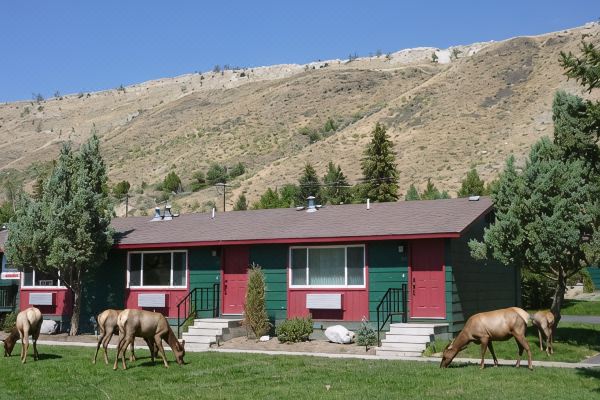
- Elk: calves at Mammoth in May and June, and the rut at Mammoth and Grant Village in September and October.
Stay at least 100 yards from bears and wolves and at least 25 yards from all other animals. Our guide to things to do in Yellowstone covers where to go for each.
Yellowstone in winter is a different trip
From mid-December to mid-March, guided snowcoaches and snowmobiles run on groomed roads to Old Faithful and the canyon, and only Old Faithful Snow Lodge and Mammoth Hot Springs Hotel are open inside the park. It is very cold, at about 31°F (0°C) for a January high at Mammoth, and few people are around. If that appeals, read our Yellowstone in winter guide before booking.
When to avoid
November is the hardest month, as most roads close to cars in early November but oversnow travel does not start until mid-December. Late March and April have a similar gap. See the worst time to visit Yellowstone for what still works in those weeks.
A few practical things
- Book rooms early. The National Park Service says lodging inside the park fills quickly, and campsites can be reserved six months ahead. See where to stay in Yellowstone.
- You need a car or a tour. The park has no public transportation, and Old Faithful and the canyon are about 50 miles apart with a 45 mph limit.
- Budget for the entrance fee. A private vehicle pays $35 for seven days. Non-US residents aged 16 and over pay an extra $100 per person unless they hold an annual pass, and Grand Teton charges its own fee.
- Pack layers in any month. Check the live Yellowstone forecast before you set out.
The honest verdict
Go in September if you can, ideally after the first week. Take June if you want waterfalls and everything open, and May if wildlife matters most and you can live with some closed roads. Take July or August if those are your only dates, and start early each day. Compare it with other trips on the Best Time to Travel leaderboard.
Your Yellowstone cheat sheet
One email with the whole year in it — and the questions that actually change a trip there, answered.
- All 12 months scored 0–100
- The months to book, and the ones to skip
- The questions that change the plan, answered
- Plus the Travel Timing Calendar 2027: every destination, every month (PDF)
We'll email you your cheat sheet with the Travel Timing Calendar, plus occasional travel-timing guides. Unsubscribe anytime; see our privacy policy.
The year at a glance
Twelve months, three seasons
Each cell is one month. Lemon means peak, sky means shoulder, gray means avoid. The outlined cell is the current month.
Atlas Ranger Score · proprietary
When Yellowstone scores best, month by month
Our transparent 0–100 score blends weather comfort, crowds, value and festivals into one number per month. How it's calculated →
- Best monthSeptember 79
- Best valueMay 62 off-peak
- ToughestNovember 20
See how Yellowstone ranks against every destination on the Best Time to Travel leaderboard →
Explore the map
Every city, every month
Drag the month scrubber, hover any city, read the headline for that window.
United States vs Nearby Destinations
vs Iceland
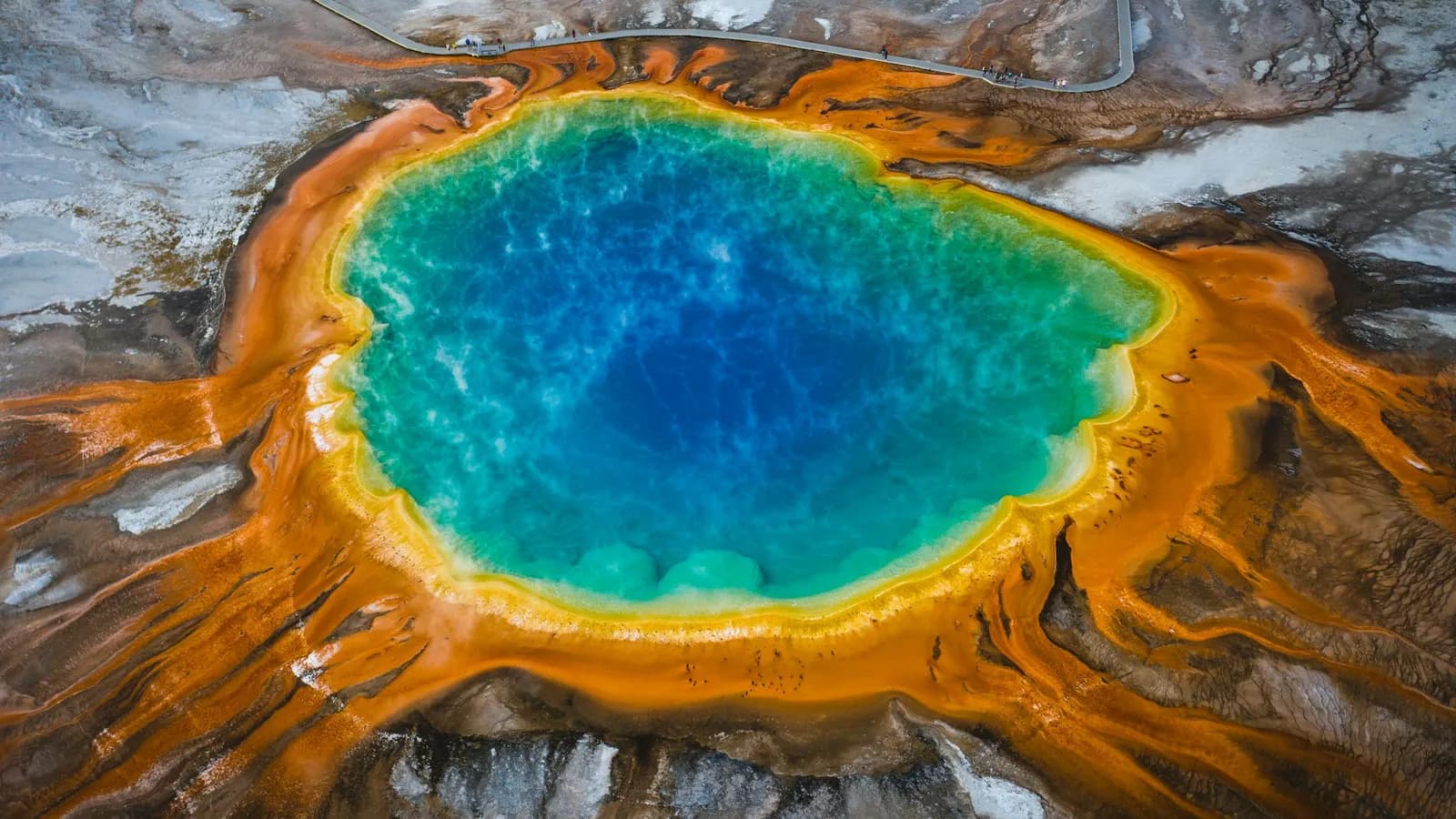
Both are geothermal trips, but they suit different travelers. Yellowstone has far more geysers and big wildlife, and it is best from June to September. Iceland adds waterfalls and sea coast, and winter brings the northern lights. Pick Yellowstone for bison, wolves and boardwalk geyser basins, and Iceland for a road trip with a coastline.
vs Hawaii
Two very different US national park trips. Hawaii is warm all year, with volcanoes and beaches, so it stays open when Yellowstone is snowbound. Yellowstone is a cold-climate summer trip built around geysers and wildlife. For a winter getaway pick Hawaii; for a summer one with bison and geysers pick Yellowstone.
Where to stay in United States
- West Yellowstone$$Old Faithful and the geyser basins
The town at the West Entrance, with the largest choice of rooms just outside the park. It is about 30 minutes to Madison Junction, then 35 to 45 minutes on to Old Faithful. Snowcoach tours also leave from here in winter.
Compare hotels in West Yellowstone → - Gardiner$$Lamar Valley wildlife and winter trips
The small town at the North Entrance, 15 minutes from Mammoth Hot Springs. It is on the only park road open to cars all year, so it is the best base for winter wildlife watching in Lamar Valley.
Compare hotels in Gardiner → - Cody$$Yellowstone Lake and a town with museums
A larger town about 52 miles and 75 minutes east of the East Entrance, with its own year-round airport. It is a longer drive in, but the road through the Shoshone valley is scenic, and it works for a first or last night.
Compare hotels in Cody → - Jackson$$Combining Yellowstone with Grand Teton
The town south of Grand Teton National Park, with a year-round airport. The South Entrance is about 57 miles and 90 minutes north, so it suits a two-park trip more than daily drives into Yellowstone.
Compare hotels in Jackson →
Frequently asked questions
What is the best month to visit Yellowstone?
What is the worst month to visit Yellowstone?
When does it rain and snow the most in Yellowstone?
How many days do you need in Yellowstone?
Is Yellowstone safe to visit?
What should I pack for Yellowstone?
What is the closest airport to Yellowstone?
Should I combine Yellowstone with Grand Teton?
Keep planning
Plan your United States trip
Sources
Every claim on this page is backed by an authoritative source. Atlas Ranger synthesizes data from multiple references so you can see exactly where each fact came from.
- National Park Service: Yellowstone seasonsUsed for: Visitation level, facilities, road access and wildlife by month.
- NOAA NCEI: Mammoth, 1991-2020 normalsUsed for: Monthly temperature, rain and snow normals.
- National Park Service: Yellowstone safetyUsed for: Thermal area rules and wildlife distances.
- National Park Service: visitation statisticsUsed for: Average visits by month, 2014-2018.
- National Park Service: park roadsUsed for: Projected 2026 road dates and 2026-27 oversnow dates.
- NOAA: Billings, Montana sunshine, 1961-1990Used for: Sunshine hours, from the nearest station that records them (via Wikipedia).