Hawaii · Where to stay
Where to stay on the Big Island
Where to stay on the Big Island starts with which side. The dry west has Kailua-Kona and the resort beaches of the Kohala Coast. The wet east has Hilo and Volcano Village, next to Hawaiʻi Volcanoes National Park. The island is big enough that many visitors split their stay. Here are all four areas, compared on the drive from the airport and the weather.
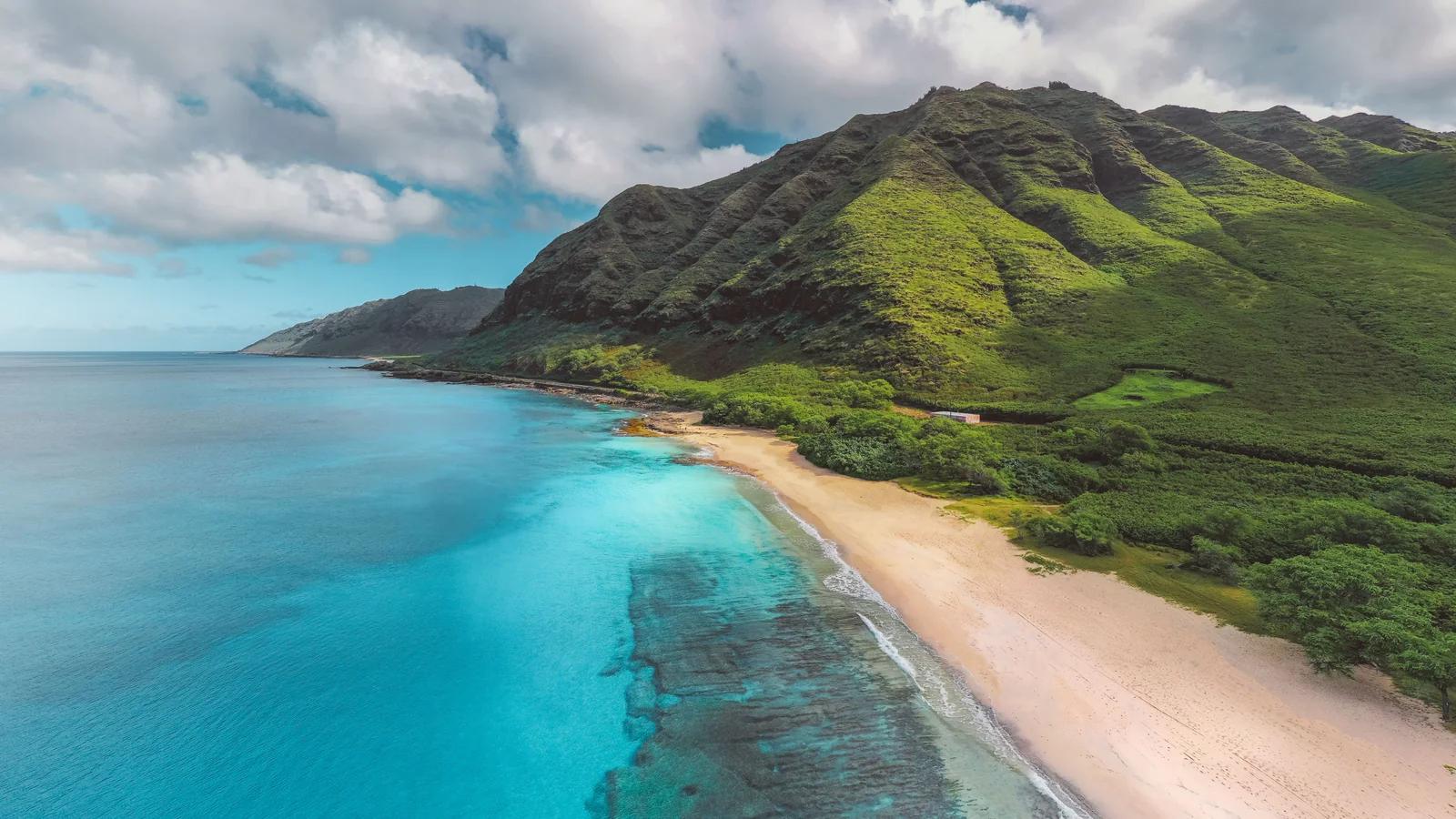
Where to stay on the Big Island: the short answer
- First time on the Big IslandKailua-KonaClose to the airport, with a walkable seafront town.Top pickRoyal Kona Resort
- Beaches and resortsKohala CoastThe best sandy beaches and the driest weather.Top pickFairmont Orchid
- The volcanoVolcano VillageLodges minutes from Hawaiʻi Volcanoes National Park.Top pickKilauea Lodge and Restaurant
- Waterfalls and rainforestHiloA harbour town with waterfalls and the volcano within reach.Top pickDolphin Bay Hotel
the Big Island areas compared
Distances are by road from the nearest airport terminal (Kona or Hilo) to each area, from OpenStreetMap routing. Rainfall is NOAA's 1991–2020 annual normal at the nearest station.
| Area | Airport | Shore | Hotels |
|---|---|---|---|
| Kailua-Kona & KeauhouFirst visits, a walkable seafront town | ~14–25 km by roadKona Airport (KOA) | West, leewardKona airport gauge: 10 in (251 mm) of rain a year | Hotels |
| Kohala CoastResort beaches, couples, the driest weather | ~31–44 km by roadKona Airport (KOA) | Northwest, leewardWaikōloa gauge: 8.5 in (217 mm) of rain a year | Hotels |
| HiloWaterfalls, rainforest, the volcano | ~6.5 km by roadHilo Airport (ITO) | East, windwardHilo airport gauge: 120 in (3,058 mm) of rain a year | Hotels |
| Volcano VillageHawaiʻi Volcanoes National Park | ~45 km by roadHilo Airport (ITO) | Inland, on the volcanoPark HQ gauge: 96 in (2,444 mm) of rain a year | Hotels |
Kailua-Kona & Keauhou
First visits, a walkable seafront town
Kailua-Kona is the main town on the dry west side of the island, with hotels, shops and restaurants along Aliʻi Drive on the seafront and Kailua Pier at its north end, where the Ironman World Championship finishes. Keauhou, a few kilometres south, has resort hotels around Keauhou Bay. Together they are the most practical base on the Big Island: close to Kona airport, with everything from condos to resort hotels. The Kona airport gauge records only about 10 inches (251 mm) of rain a year.
Hotels in Kailua-Kona & Keauhou
Scores and booking on Trip.com · May dates: 12–18 May 2027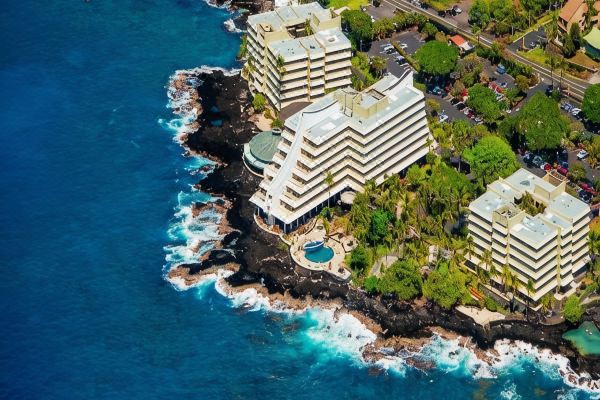 Top pickRoyal Kona ResortOn Aliʻi Drive in Kailua-Kona, on the lava shorelineSee rates on Trip.com →
 Courtyard by Marriott King Kamehameha's Kona Beach HotelBy Kailua Pier, a 2 min walk to the Ironman finish lineSee rates on Trip.com →
 OUTRIGGER Kona Resort and SpaAt Keauhou Bay, a 3 min walk to the beach accessSee rates on Trip.com →
 Holiday Inn Express & Suites KAILUA-KONA by IHGIn Kailua-Kona, a 3 min walk to the village art galleriesSee rates on Trip.com →
 Sea VillageOn Aliʻi Drive, south of Kailua-Kona townSee rates on Trip.com →
- Airport ~14–25 km by road Kona Airport (KOA)
- Shore West, leeward Kona airport gauge: 10 in (251 mm) of rain a year
Why stay here
- A walkable seafront town on Aliʻi Drive
- Close to Kona airport
- Condos, inns and resort hotels to choose from
Worth knowing
- Much of the shore is lava rock rather than sandy beach
- Hawaiʻi Volcanoes National Park is a long day trip
Kohala Coast
Resort beaches, couples, the driest weather
North of the airport, the Kohala Coast is a string of planned resort areas set among black lava fields: Waikōloa, Mauna Lani and Mauna Kea. This is where the Big Island’s best white-sand beaches are, among them Kaunaʻoa (Mauna Kea) Beach and Hapuna, and the resorts sit right on them. It is also the driest area in this guide: the Waikōloa Beach Resort gauge records about 8.5 inches (217 mm) of rain a year.
Hotels in Kohala Coast
Scores and booking on Trip.com · May dates: 12–18 May 2027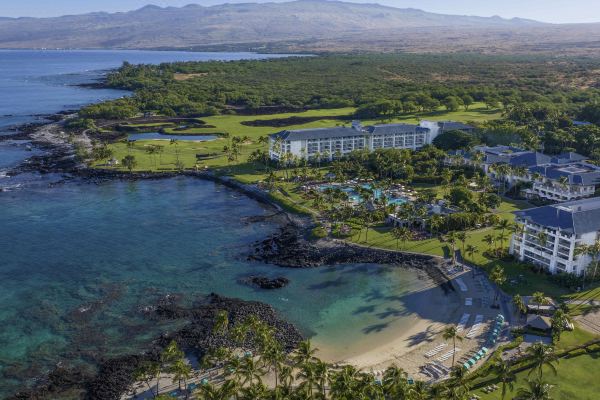 Top pickFairmont OrchidMauna Lani, a 5 min walk to the Puakō Petroglyph ParkSee rates on Trip.com →
 Mauna Kea Beach Hotel, Autograph CollectionAt Kaunaʻoa (Mauna Kea) Beach, a 2 min walk to Manta Ray PointSee rates on Trip.com →
 Mauna Lani PointMauna Lani, an 8 min walk to the beach clubSee rates on Trip.com →
 The Westin Hapuna Beach ResortAbove Hapuna, a 6 min walk to the Hapuna golf courseSee rates on Trip.com →
 Hilton Waikoloa VillageWaikōloa, a 5 min walk to Lagoon BeachSee rates on Trip.com →
- Airport ~31–44 km by road Kona Airport (KOA)
- Shore Northwest, leeward Waikōloa gauge: 8.5 in (217 mm) of rain a year
Why stay here
- The best sandy beaches on the island
- The driest, sunniest weather here
- Full-service resorts with pools and golf
Worth knowing
- Few places to eat outside the resorts
- Far from Hilo and the volcano
Hilo
Waterfalls, rainforest, the volcano
Hilo is the island's old harbour town on the wet east side, with a historic downtown and hotels along Banyan Drive by Hilo Bay and Liliʻuokalani Gardens. It is green because it is wet: the Hilo airport gauge records about 120 inches (3,058 mm) of rain a year, around twelve times as much as Kona airport. In return it is close to rainforest waterfalls and much closer than Kona to Hawaiʻi Volcanoes National Park.
Hotels in Hilo
Scores and booking on Trip.com · May dates: 12–18 May 2027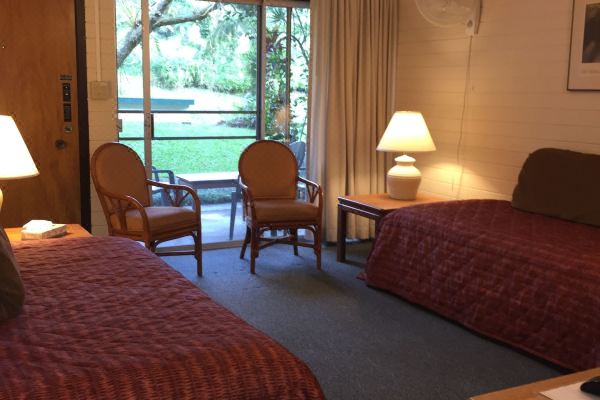 Top pickDolphin Bay HotelOn Iliahi Street in HiloSee rates on Trip.com →
 Grand Naniloa Hotel, a Doubletree by HiltonOn Banyan Drive by Hilo Bay, a 3 min walk to the golf courseSee rates on Trip.com →
 Hilo Hawaiian Hotel, Trademark Collection by WyndhamOn Banyan Drive, a 4 min walk to Liliʻuokalani GardensSee rates on Trip.com →
 Scp Hilo HotelOn Banyan Way, a 4 min walk to Reeds Bay Beach ParkSee rates on Trip.com →
- Airport ~6.5 km by road Hilo Airport (ITO)
- Shore East, windward Hilo airport gauge: 120 in (3,058 mm) of rain a year
Why stay here
- Close to the volcano and rainforest waterfalls
- A historic harbour town on Hilo Bay
- Liliʻuokalani Gardens on Hilo Bay
Worth knowing
- Very wet: expect showers in every season
- Few sandy swimming beaches
Volcano Village
Hawaiʻi Volcanoes National Park
Volcano Village is a small settlement in the rainforest just outside the entrance to Hawaiʻi Volcanoes National Park. Places to stay are lodges, inns and cabins rather than hotels, and staying here means you can see the park early in the morning and after dark. It sits high on the mountain, so it is cool and wet: the gauge at the park headquarters records about 96 inches (2,444 mm) of rain a year and an average high of only about 70°F (21°C). Check the National Park Service for current eruption and closure information before you go.
Hotels in Volcano Village
Scores and booking on Trip.com · May dates: 12–18 May 2027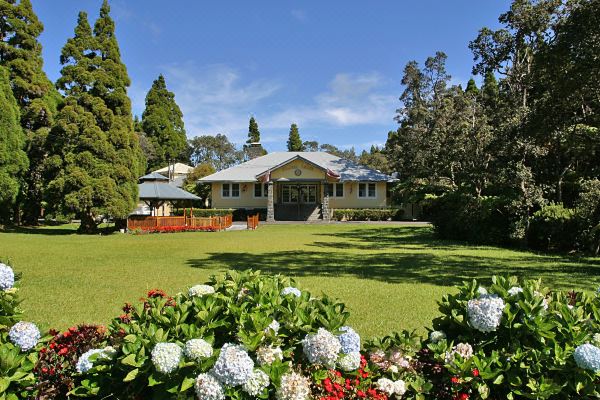 Top pickKilauea Lodge and RestaurantOn Old Volcano Road, a 3 min walk to the village storeSee rates on Trip.com →
 Volcano Village EstatesIn Volcano Village, a 14 min walk to the national parkSee rates on Trip.com →
 Aloha Crater LodgeIn Volcano Village, in the rainforestSee rates on Trip.com →
 Lokahi LodgeIn Volcano Village, a 9 min walk to the national parkSee rates on Trip.com →
 Chalet KilaueaOn Wright Road in Volcano VillageSee rates on Trip.com →
- Airport ~45 km by road Hilo Airport (ITO)
- Shore Inland, on the volcano Park HQ gauge: 96 in (2,444 mm) of rain a year
Why stay here
- Minutes from Hawaiʻi Volcanoes National Park
- Quiet rainforest lodges and cabins
- See the park early and after dark
Worth knowing
- Cool and wet: bring a jacket
- No beach and few restaurants
- A long drive from Kona airport
When to book the Big Island
Hawaii's best months are April to July and October to November, and May, September and October are among the cheapest. On the Big Island the side you stay on matters more than the month: the west stays dry year-round, while Hilo and Volcano are wet in every season.
The hotel links here are dated for May. See the best time to visit Hawaii for month-by-month weather, the worst time to visit Hawaii, and the Hawaii hurricane season. Comparing islands? See where to stay in Oahu, Maui and Kauai.
Questions people ask
Is it better to stay in Kona or Hilo?
Kona for sun, beaches and the main airport: the Kona airport gauge records about 10 inches (251 mm) of rain a year. Hilo for the volcano and waterfalls, but it gets about 120 inches (3,058 mm) a year. Many visitors split their stay between the two sides.
Where should I stay on the Big Island for the volcano?
Volcano Village, just outside the entrance to Hawaiʻi Volcanoes National Park, or Hilo, about 45 km from the village by road. Check the National Park Service for current eruption and closure information before you go.
Where are the best beaches on the Big Island?
On the Kohala Coast north of Kona airport, which has the island’s best white-sand beaches, including Kaunaʻoa (Mauna Kea) Beach and Hapuna. The resorts at Waikōloa, Mauna Lani and Mauna Kea sit on or near them.
What is the driest part of the Big Island?
The west side. NOAA’s 1991–2020 normals record about 8.5 inches (217 mm) of rain a year at Waikōloa Beach Resort and about 10 inches (251 mm) at Kona airport, against about 120 inches (3,058 mm) at Hilo airport.
Do I need a car on the Big Island?
Yes. The island is large: Volcano Village is about 45 km from Hilo airport, and the Kohala resorts are 31 to 44 km from Kona airport, and most sights are spread far apart.
How this guide was put together
Road distances come from OpenStreetMap routing from the Kona and Hilo airport terminals to the centre of each area, read on November 15, 2026. Rainfall and temperature figures are NOAA's 1991–2020 annual normals for the Kona airport, Waikōloa Beach Resort, Hilo airport and Hawaiʻi Volcanoes National Park headquarters stations. Hotel details (street address, walking distances, guest scores and review counts) come from each hotel's own Trip.com listing, read on November 15, 2026; walking minutes are the listing's distance at 80 metres a minute. Hotels are chosen on location, guest score and review count; adults-only, casino and party hotels are left out.
Book the rest of your the Big Island trip

 Trip.comWaikīkīHalekulaniMay dates: 12–18 May 2027See rates on Trip.com →
 Trip.comWaikīkīThe Ritz-Carlton Residences, Waikiki BeachMay dates: 12–18 May 2027See rates on Trip.com →
 Trip.comWaikīkīHalepuna Waikiki by HalekulaniMay dates: 12–18 May 2027See rates on Trip.com →
 Trip.comWaikīkīPrince WaikikiMay dates: 12–18 May 2027See rates on Trip.com →
 Trip.comWaikīkīSheraton Waikiki Beach ResortMay dates: 12–18 May 2027See rates on Trip.com →
- More hotels in Honolulu →
 Trip.comKāʻanapaliAston Mahana at KaanapaliMay dates: 12–18 May 2027See rates on Trip.com →
 Trip.comKāʻanapaliAston Kaanapali ShoresMay dates: 12–18 May 2027See rates on Trip.com →
 Trip.comKāʻanapaliOutrigger Honua Kai Resort & SpaMay dates: 12–18 May 2027See rates on Trip.com →
 Trip.comKāʻanapaliOutrigger Kaanapali Beach ResortMay dates: 12–18 May 2027See rates on Trip.com →
 Trip.comKāʻanapaliThe Westin Maui Resort & Spa, Ka'anapaliMay dates: 12–18 May 2027See rates on Trip.com →
- More hotels in Kāʻanapali / Wailea, Maui →
 Trip.comKonaAston Kona by The SeaMay dates: 12–18 May 2027See rates on Trip.com →
 Trip.comKonaRoyal Kona ResortMay dates: 12–18 May 2027See rates on Trip.com →
 Trip.comKonaCourtyard by Marriott King Kamehameha's Kona Beach HotelMay dates: 12–18 May 2027See rates on Trip.com →
 Trip.comKonaOUTRIGGER Kona Resort and SpaMay dates: 12–18 May 2027See rates on Trip.com →
 Trip.comKonaKona Reef, A Raintree Vacation Club ResortMay dates: 12–18 May 2027See rates on Trip.com →
- More hotels in Kona coast, Big Island →

 KlookKualoa Ranch movie sites tourfrom US$63Valley tour past film locationsBook on Klook →
- KlookOʻahu circle island tourfrom US$84Full-day island loop with Diamond Head views · free cancellationBook on Klook →
- KlookPearl Harbor & Honolulu highlights tourfrom US$61USS Arizona Memorial and city sights · free cancellationBook on Klook →
- KlookWaikīkī trolley passfrom US$22Hop-on trolley around Honolulu · free cancellationBook on Klook →
- KlookBattleship Missouri Memorial ticketfrom US$40Admission to the historic battleship · free cancellationBook on Klook →
- See all the Big Island tours →


- KlookHaleakalā sunrise tourfrom US$254Summit sunrise tour on Maui · free cancellationBook on Klook →
- KlookBig Island grand circle tourfrom US$261Full-day loop of the island · free cancellationBook on Klook →
- KlookMauna Kea stargazing tourfrom US$255Summit sunset and stars with transfers · free cancellationBook on Klook →
- See all the Big Island tours →







Partner links. Prices and availability are set by the partner. We may earn a commission, at no extra cost to you.