New York · Where to stay
Where to stay in New York City
Where to stay in New York City comes down to how you will spend your days. Midtown puts the big sights on foot, Lower Manhattan the harbour and the 9/11 Memorial, and the Upper West Side Central Park and calmer streets. Downtown Brooklyn and Long Island City sit just across the river. Here are all five, compared on subway lines and the train from JFK.
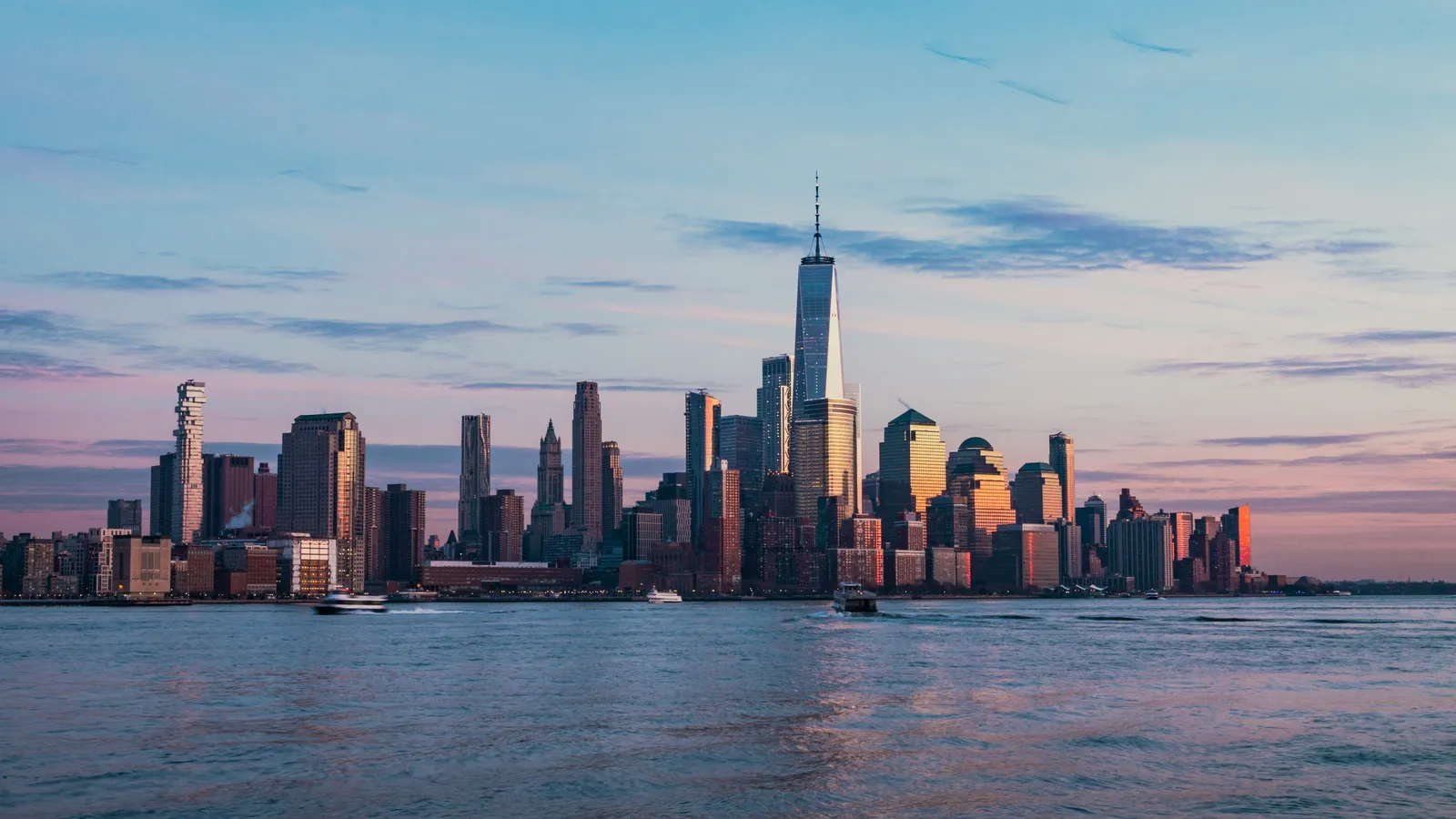
Where to stay in New York City: the short answer
- First time in New YorkMidtown ManhattanWalk to Times Square, the theatres and Central Park, with every subway line close by.Top pickCasablanca Hotel by Library Hotel Collection
- FamiliesUpper West SideCentral Park, the Natural History museum and calm residential streets.Top pickThe Lucerne Hotel
- Sights downtownLower ManhattanThe 9/11 Memorial, the harbour ferries and the Brooklyn Bridge on foot.Top pickConrad New York Downtown
- Outside ManhattanDowntown BrooklynBrooklyn Bridge Park and many lines straight into Manhattan.Top pickEVEN Hotel BROOKLYN by IHG
- Easy from JFKLong Island CityThe E train from the AirTrain with no change, and skyline views.Top pickBoro Hotel
New York City areas compared
Subway lines are the MTA's daytime routes at each area's main stations; some lines run differently at night and at weekends.
| Area | From JFK | Subway | Hotels |
|---|---|---|---|
| Midtown ManhattanFirst visits, Broadway, the big sights | AirTrain + E trainNo change to 42 St or 5 Av/53 St | 1 2 3 7 N Q R W STimes Sq-42 St; 4 5 6 at Grand Central | Hotels |
| Lower ManhattanThe 9/11 Memorial, ferries, Brooklyn Bridge | AirTrain + E trainNo change to World Trade Center | 2 3 4 5 A C J ZFulton St; E at World Trade Center | Hotels |
| Upper West SideFamilies, Central Park, museums | AirTrain + subwayOne change, e.g. A to 59 St-Columbus Circle | 1 2 3 B C72 St, 79 St, 81 St-Museum of Natural History | Hotels |
| Downtown BrooklynA lower-key base, Brooklyn Bridge Park | AirTrain + A trainNo change to Hoyt-Schermerhorn or Jay St | 2 3 4 5 A C F RBorough Hall, Jay St-MetroTech | Hotels |
| Long Island CitySkyline views, the E train from JFK | AirTrain + E trainNo change to Queens Plaza or Court Sq-23 St | E F R 7 N W GQueens Plaza, Court Sq, Queensboro Plaza | Hotels |
Midtown Manhattan
First visits, Broadway, the big sights
Midtown is the middle of Manhattan, from about 34th Street to Central Park, and it is where most first-time visitors stay. Times Square and the Broadway theatres are on its west side, Grand Central, the New York Public Library and Bryant Park in the middle, and Rockefeller Center, Fifth Avenue and Central Park to the north. Two of the biggest stations in the city are here, so almost every subway line passes through. The trade-off is the crowds: the blocks around Times Square are busy at every hour.
Hotels in Midtown Manhattan
Scores and booking on Trip.com · May dates: 12–18 May 2027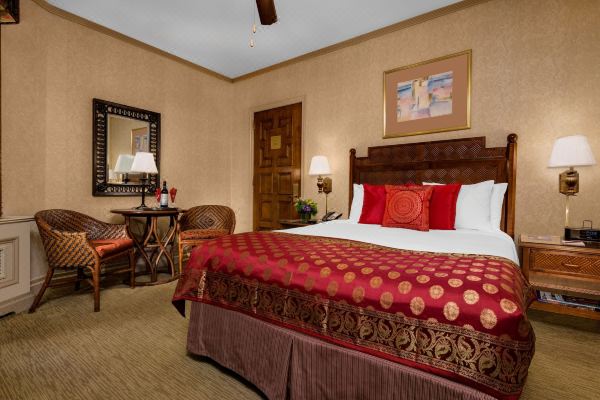 Top pickCasablanca Hotel by Library Hotel CollectionWest 43rd St, a 1 min walk to the Broadway theatres and 4 min to Bryant ParkSee rates on Trip.com →
 Library Hotel by Library Hotel CollectionOn Madison Ave, 3 min walk to Grand Central and the New York Public LibrarySee rates on Trip.com →
 Residence Inn New York Manhattan/Midtown EastEast 48th St, 6 min walk to Grand Central; rooms with kitchensSee rates on Trip.com →
 The Kimberly Hotel, WorldHotels EliteEast 50th St, 7 min walk to Rockefeller CenterSee rates on Trip.com →
 Pod 39East 39th St, 6 min walk to Grand Central; small rooms and bunk roomsSee rates on Trip.com →
- From JFK AirTrain + E train No change to 42 St or 5 Av/53 St
- Subway 1 2 3 7 N Q R W S Times Sq-42 St; 4 5 6 at Grand Central
Why stay here
- Walk to Times Square, the theatres, Rockefeller Center and Central Park
- The most subway lines of any area
- The widest choice of hotels in the city
Worth knowing
- Crowded and loud around Times Square
- Rooms are often small
- Fewer quiet residential streets for an evening walk
Lower Manhattan (Financial District)
The 9/11 Memorial, ferries, Brooklyn Bridge
Lower Manhattan is the island's southern tip: Wall Street, the World Trade Center and the 9/11 Memorial & Museum, Battery Park, and the docks for the Statue of Liberty and Staten Island ferries. The Brooklyn Bridge walkway starts on its eastern edge. It is an office district, so it is busy on weekday mornings and quieter in the evenings and at weekends, and many of its hotels are newer towers. The E train runs here straight from the JFK AirTrain station.
Hotels in Lower Manhattan
Scores and booking on Trip.com · May dates: 12–18 May 2027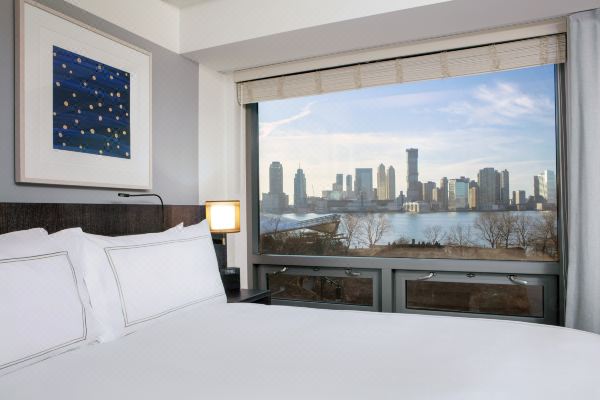 Top pickConrad New York DowntownBattery Park City, 5 min walk to the 9/11 Memorial & MuseumSee rates on Trip.com →
 Courtyard New York World Trade Center AreaGreenwich St, a 2 min walk to the 9/11 Memorial & MuseumSee rates on Trip.com →
 Mint House at 70 PinePine St, a 3 min walk to Wall Street; apartment-style roomsSee rates on Trip.com →
 Hotel Indigo NYC FINANCIAL DISTRICT by IHGTrinity Place, a 1 min walk to Trinity Church and 3 min to the 9/11 MemorialSee rates on Trip.com →
 AC Hotel New York DowntownMaiden Lane, a 5 min walk to Pier 17 and the SeaportSee rates on Trip.com →
- From JFK AirTrain + E train No change to World Trade Center
- Subway 2 3 4 5 A C J Z Fulton St; E at World Trade Center
Why stay here
- Walk to the 9/11 Memorial, Wall Street and the harbour
- Statue of Liberty and Staten Island ferries nearby
- Quieter evenings and weekends than Midtown
Worth knowing
- Quiet streets at night once offices empty
- A subway ride to Times Square and Central Park
Upper West Side
Families, Central Park, museums
The Upper West Side is the residential stretch between Central Park and the Hudson, north of Columbus Circle. The American Museum of Natural History sits on Central Park West at 79th Street, Riverside Park runs along the river, and the side streets are lined with brownstones, delis and playgrounds. It suits families and anyone who wants a calmer base: the 1, 2 and 3 trains along Broadway reach Times Square in a few stops.
Hotels in Upper West Side
Scores and booking on Trip.com · May dates: 12–18 May 2027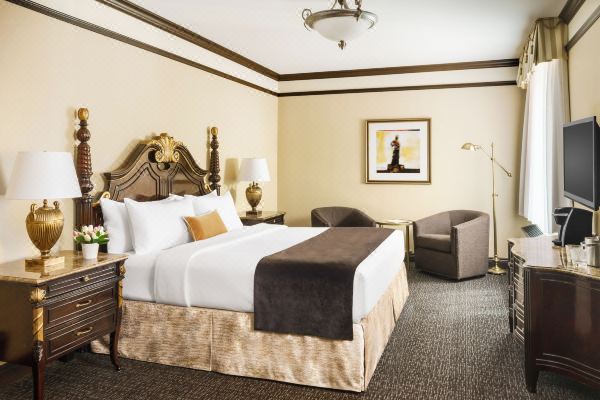 Top pickThe Lucerne HotelWest 79th St, 4 min walk to the American Museum of Natural HistorySee rates on Trip.com →
 The Wallace HotelWest 76th St, 6 min walk to Riverside ParkSee rates on Trip.com →
 Hotel BeaconOn Broadway at 75th St, 7 min walk to the Natural History museumSee rates on Trip.com →
 Arthouse HotelWest 77th St, 5 min walk to the American Museum of Natural HistorySee rates on Trip.com →
 Mandarin Oriental New YorkAt Columbus Circle, a 3 min walk to Central ParkSee rates on Trip.com →
- From JFK AirTrain + subway One change, e.g. A to 59 St-Columbus Circle
- Subway 1 2 3 B C 72 St, 79 St, 81 St-Museum of Natural History
Why stay here
- Central Park and Riverside Park within a few minutes’ walk
- Next to the American Museum of Natural History
- Calm, residential streets for families
Worth knowing
- Fewer hotels to choose from than Midtown or downtown
- A change of train from JFK
Downtown Brooklyn
A lower-key base, Brooklyn Bridge Park
Downtown Brooklyn sits just across the East River from Lower Manhattan, between Brooklyn Heights, Fort Greene and the Barclays Center. Brooklyn Bridge Park and the Brooklyn Bridge walkway are a short walk from its northern edge, and the Promenade in Brooklyn Heights looks straight across at the Manhattan skyline. Several stations here are stops on lines that cross into Manhattan within a few minutes, and the A train runs here without a change from the AirTrain at Howard Beach.
Hotels in Downtown Brooklyn
Scores and booking on Trip.com · May dates: 12–18 May 2027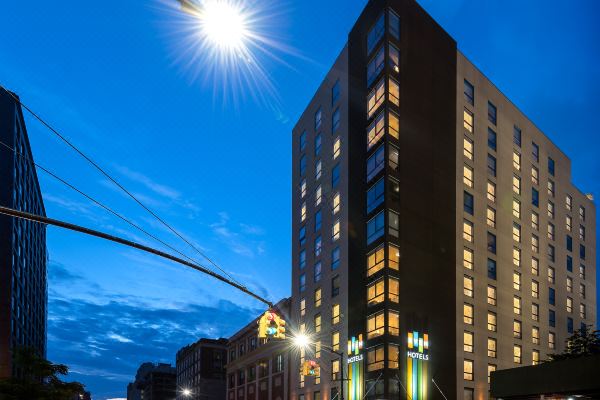 Top pickEVEN Hotel BROOKLYN by IHGNevins St, 7 min walk to Atlantic Terminal and 9 min to Fort Greene ParkSee rates on Trip.com →
 Sheraton Brooklyn New YorkDuffield St, 11 min walk to the Brooklyn BridgeSee rates on Trip.com →
 New York Marriott at The Brooklyn BridgeAdams St, 4 min walk to the Brooklyn Bridge and 5 min to the Transit MuseumSee rates on Trip.com →
 Holiday Inn BROOKLYN DOWNTOWN by IHGSchermerhorn St, 8 min walk to Atlantic TerminalSee rates on Trip.com →
 Ace Hotel BrooklynSchermerhorn St, 8 min walk to the New York Transit MuseumSee rates on Trip.com →
- From JFK AirTrain + A train No change to Hoyt-Schermerhorn or Jay St
- Subway 2 3 4 5 A C F R Borough Hall, Jay St-MetroTech
Why stay here
- Walk to Brooklyn Bridge Park and across the Brooklyn Bridge
- Many lines into Lower Manhattan and Midtown
- Less crowded streets than Midtown
Worth knowing
- A subway ride to most Manhattan sights
- Fewer hotels than in Manhattan
Long Island City (Queens)
Skyline views, the E train from JFK
Long Island City is the Queens neighbourhood directly across the East River from Midtown. Its hotels cluster around Queens Plaza and Court Square, where the E, F, R, 7, N, W and G lines meet, and many look back across the river at the Midtown skyline. The waterfront parks at Hunters Point and Gantry Plaza have some of the best skyline views in the city. It is a practical base rather than a destination in itself: most visitors ride into Manhattan each day.
Hotels in Long Island City
Scores and booking on Trip.com · May dates: 12–18 May 2027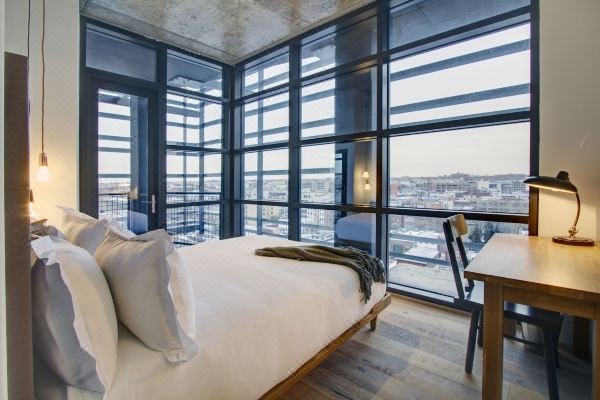 Top pickBoro Hotel27th St, 8 min walk to the Queensboro Bridge; skyline-view roomsSee rates on Trip.com →
 Vista LIC Hotel, BW Premier Collection39th Ave, 8 min walk to the Queensboro BridgeSee rates on Trip.com →
 LIC Hotel21st St, 7 min walk to MoMA PS1See rates on Trip.com →
 Hampton Inn by Hilton Long Island City New York11th St, 15 min walk to the Queensboro BridgeSee rates on Trip.com →
- From JFK AirTrain + E train No change to Queens Plaza or Court Sq-23 St
- Subway E F R 7 N W G Queens Plaza, Court Sq, Queensboro Plaza
Why stay here
- The E train from the JFK AirTrain without a change
- Skyline views across the East River
- Close to Midtown by subway
Worth knowing
- Outside Manhattan: a subway ride to every sight
- Hotel blocks are mixed in with offices and warehouses
When to book New York
New York's most comfortable weather is in spring and autumn: April to June and September to October. July and August are hot and humid, and January and February are the coldest months, with snow and wind that make long walks hard work. The weeks around Thanksgiving, Christmas and New Year's Eve are some of the busiest of the year in Midtown.
The hotel links here are dated for May. See the best time to visit New York City for month-by-month weather, New York in February and New York in March for the late-winter months, and JFK to Manhattan for every way in from the airport.
Questions people ask
What is the best area to stay in New York City for the first time?
Midtown Manhattan. Times Square, the Broadway theatres, Rockefeller Center, Grand Central and the south end of Central Park are all within walking distance, and more subway lines pass through Midtown than any other area, so the rest of the city is easy to reach.
Is it better to stay in Manhattan or Brooklyn?
Manhattan if you want to walk to most of the sights. Downtown Brooklyn if you prefer quieter streets and do not mind a subway ride: lines from Borough Hall and Jay St-MetroTech cross into Lower Manhattan within a few stops, and Brooklyn Bridge Park is a short walk away.
Where should families stay in New York?
The Upper West Side, between Central Park and Riverside Park, next to the American Museum of Natural History. Its streets are residential and calmer than Midtown, and the 1, 2 and 3 trains along Broadway reach Times Square in a few stops.
Where should I stay in New York to be close to JFK?
Choose a hotel near the E train. From the AirTrain at Jamaica, the E runs without a change to Long Island City (Queens Plaza and Court Sq-23 St), Midtown (5 Av/53 St and 42 St-Port Authority) and Lower Manhattan (World Trade Center). Our JFK to Manhattan guide compares every way in.
Is Times Square a good place to stay?
It is the most central spot for theatre and first-time sightseeing, with many subway lines at Times Sq-42 St. It is also the most crowded and loudest part of Midtown. For the same convenience with calmer streets, look at hotels near Grand Central or Bryant Park.
Is Long Island City a good place to stay in New York?
Yes, if you want a practical base close to Midtown: the E, F, R, 7, N and W trains run from its stations into Manhattan, and the E comes straight from the JFK AirTrain. It is quieter at night, with few sights of its own beyond the waterfront parks and their skyline views.
How this guide was put together
Subway lines at each station, and the AirTrain JFK connections to the E train at Sutphin Blvd-Archer Av-JFK Airport and the A train at Howard Beach-JFK Airport, come from the MTA's own subway station list (MTA Subway Stations, data.ny.gov), read on November 15, 2026. Hotel details (street address, walking distances, guest scores and review counts) come from each hotel's own Trip.com listing, read on November 15, 2026; walking minutes are the listing's distance at 80 metres a minute. Seasons come from the New York City month-by-month guide. Hotels are chosen on location, guest score and review count; casino and party hotels are left out.
Book the rest of your New York City trip
 Trip.comMidtownCasablanca Hotel by Library Hotel CollectionMay dates: 12–18 May 2027See rates on Trip.com →
- Trip.comMidtownLibrary Hotel by Library Hotel CollectionMay dates: 12–18 May 2027See rates on Trip.com →
- Trip.comMidtownResidence Inn New York Manhattan/Midtown EastMay dates: 12–18 May 2027See rates on Trip.com →
- Trip.comMidtownThe Kimberly Hotel, WorldHotels EliteMay dates: 12–18 May 2027See rates on Trip.com →
- Trip.comMidtownPod 39May dates: 12–18 May 2027See rates on Trip.com →
- More hotels in New York →
- Trip.comLower ManhattanConrad New York DowntownMay dates: 12–18 May 2027See rates on Trip.com →
- Trip.comLower ManhattanCourtyard New York World Trade Center AreaMay dates: 12–18 May 2027See rates on Trip.com →
- Trip.comLower ManhattanMint House at 70 PineMay dates: 12–18 May 2027See rates on Trip.com →
- Trip.comLower ManhattanHotel Indigo NYC FINANCIAL DISTRICT by IHGMay dates: 12–18 May 2027See rates on Trip.com →
- Trip.comLower ManhattanAC Hotel New York DowntownMay dates: 12–18 May 2027See rates on Trip.com →
- More hotels in New York →
- Trip.comUpper West SideThe Lucerne HotelMay dates: 12–18 May 2027See rates on Trip.com →
- Trip.comUpper West SideThe Wallace HotelMay dates: 12–18 May 2027See rates on Trip.com →
- Trip.comUpper West SideHotel BeaconMay dates: 12–18 May 2027See rates on Trip.com →
- Trip.comUpper West SideArthouse HotelMay dates: 12–18 May 2027See rates on Trip.com →
- Trip.comUpper West SideMandarin Oriental New YorkMay dates: 12–18 May 2027See rates on Trip.com →
- More hotels in New York →
- Trip.comDowntown BrooklynEVEN Hotel BROOKLYN by IHGMay dates: 12–18 May 2027See rates on Trip.com →
- Trip.comDowntown BrooklynSheraton Brooklyn New YorkMay dates: 12–18 May 2027See rates on Trip.com →
- Trip.comDowntown BrooklynNew York Marriott at The Brooklyn BridgeMay dates: 12–18 May 2027See rates on Trip.com →
- Trip.comDowntown BrooklynHoliday Inn BROOKLYN DOWNTOWN by IHGMay dates: 12–18 May 2027See rates on Trip.com →
- Trip.comDowntown BrooklynAce Hotel BrooklynMay dates: 12–18 May 2027See rates on Trip.com →
- More hotels in New York →
- Trip.comLong Island CityBoro HotelMay dates: 12–18 May 2027See rates on Trip.com →
- Trip.comLong Island CityVista LIC Hotel, BW Premier CollectionMay dates: 12–18 May 2027See rates on Trip.com →
- Trip.comLong Island CityLIC HotelMay dates: 12–18 May 2027See rates on Trip.com →
- Trip.comLong Island CityHampton Inn by Hilton Long Island City New YorkMay dates: 12–18 May 2027See rates on Trip.com →
- More hotels in New York →



Partner links. Prices and availability are set by the partner. We may earn a commission, at no extra cost to you.