
 Trip.com




 Klook
Klook







For most travellers, the worst month to visit Greece is August
August combines everything that makes a Greek summer hard: 33°C average days in Athens with heatwaves that push past 40°C, the year's highest wildfire risk, the August 15 national holiday when Greeks fill every ferry and island room, and the highest prices of the year. July is nearly identical and, on the thermometer, hotter still — a 35°C average in Athens.
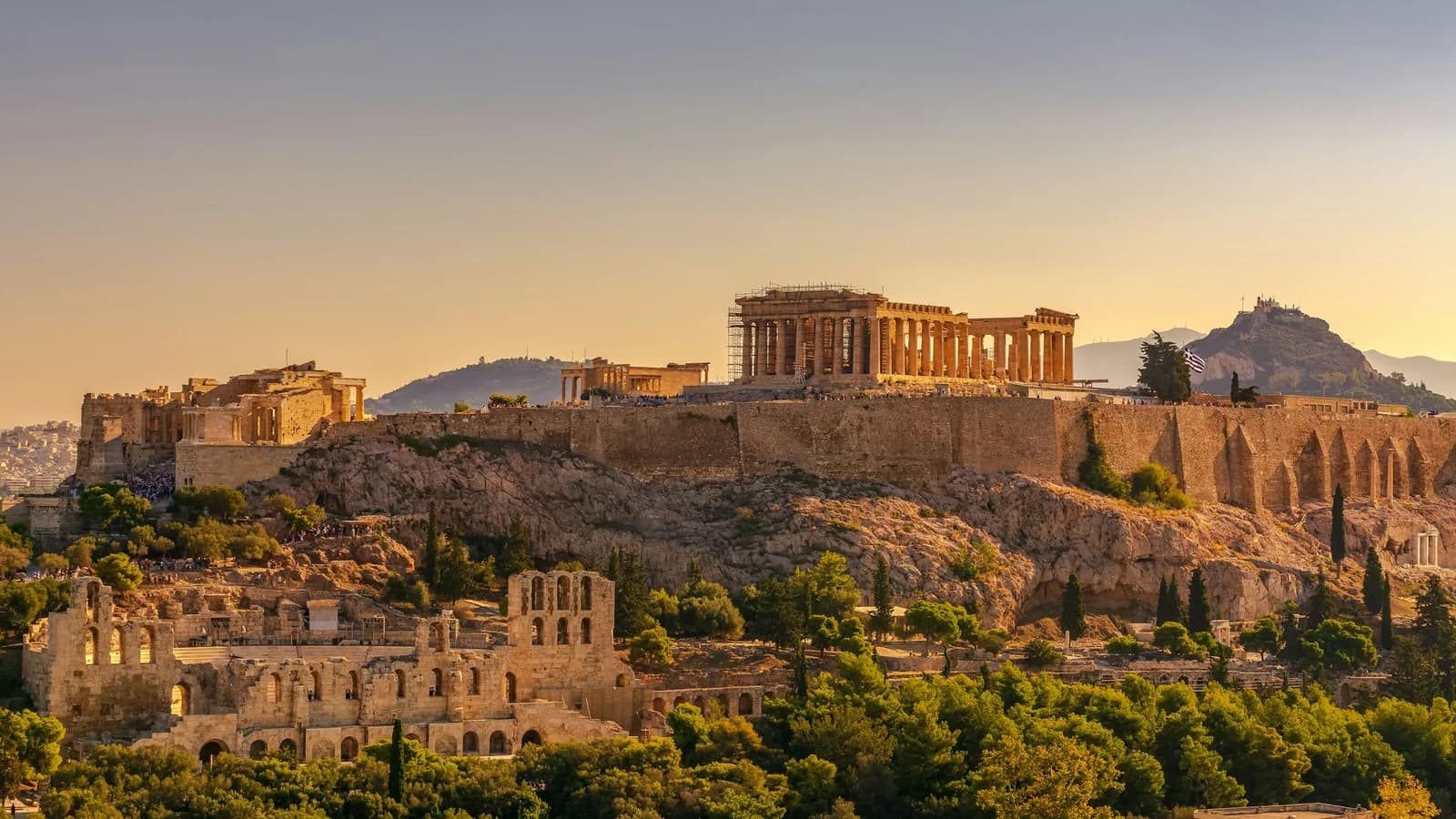
The Acropolis closed during the hottest hours of the day in the July 2023, 2024, and 2025 heatwaves, and the Ministry of Culture now treats midday closures as standard heatwave policy. Wildfires forced mass evacuations on Rhodes (July 2023), on Evia (August 2021), and near Athens (August 2024). In the Cyclades, the meltemi — a dry northerly that blows hardest in July and August — cancels ferries for a day or two at a time.
Why July and August are genuinely difficult
- Heat.Athens averages 35°C in July; heatwaves of 40–44°C have become an annual event. The islands run a few degrees cooler thanks to the sea breeze, but Santorini's caldera path at 2pm is still brutal. Watch the Hellenic National Meteorological Service for heatwave warnings.
- Wildfires. Bone-dry summers (9mm of rain in July) and strong winds make July–August the fire season. Evacuation alerts arrive by the 112 system — register your phone on arrival.
- Crowds and prices. July and August take 42% of the year's tourist-accommodation nights in Greece (Eurostat, 2025). Santorini and Mykonos are saturated; Athens hotel rates and island rooms peak; the August 15 weekend is the busiest travel period of the Greek year.
- The meltemi. A dry northerly that gusts to 60–70 km/h across the Cyclades, closing beaches on the north side of each island and cancelling ferries.
For island trips, the other worst time is January and February
The Atlas Ranger Score puts January at the bottom on pure numbers — 13°C days, 62mm of rain, and the year's shortest sunny days — but the real problem is that the islands are shut:
- Most hotels, tavernas and rental shops on the Cyclades close from November to March
- Ferry schedules drop to a skeleton service; some routes stop entirely
- Santorini and Mykonos are near-empty — atmospheric for a few hours, dead for a week
- Athens is cold, grey, and wet — but its museums, food, and hotel rates are at their best
Crete, Rhodes, and Corfu have enough year-round population to stay partly open, and Athens with Thessaloniki is a genuinely good winter city trip. But a winter island-hop is the one Greek itinerary that simply does not work.
If you have to travel in high summer, here's what to do
- Book the Acropolis for 8am. Timed tickets open the gate at 8; be there then, and be done by 10. Same for Delphi, Knossos, and Ancient Olympia.
- Choose the Ionian or the Sporades over the Cyclades. Corfu, Kefalonia, and Skopelos are greener, cooler, and sheltered from the meltemi.
- Avoid August 13–17 for any ferry travel. Book cabins and cars months ahead if you must move on those dates.
- Register for 112 emergency alerts on arrival — wildfire evacuation notices go out by SMS in English.
- Plan the middle of the day indoors or in the water — museums, long lunches, or a beach with shade — and save walking for after 6pm.
Better windows: when to visit instead
- May:The sweet spot — 25°C days, 12 hours of sun, every island route running, prices well below summer. The sea is a cool 20°C by month's end.
- September: The other sweet spot — 29°C days, the warmest sea of the year (25°C), the meltemi fading, and crowds easing after the first week, though the month as a whole is still about as busy as June. The best month for swimming.
- April and October: Mild, uncrowded, and cheap, with the islands opening (April) or winding down (October). Orthodox Easter — usually April — is the best cultural week of the year.
Click any month on the seasonality map above for the full climate detail and our verdict.
Official statistics · Eurostat
How busy Greece gets, month by month
Busiest months: July and August, about 42% of the year's tourist-accommodation nights in Greece (Eurostat, 2025). August alone is 22%, roughly 21 times the quietest month.
Each bar is that month's share of all nights spent in hotels, holiday and other short-stay accommodation and campsites in Greece, 2025, residents and visitors combined. The 2023–2025 average shows the same pattern (no month differs by more than 1 percentage point). Source: Eurostat, tour_occ_nim.
Your Greece cheat sheet
One email with the whole year in it — and the questions that actually change a trip there, answered.
- All 12 months scored 0–100
- The months to skip, and when it turns good again
- The questions that change the plan, answered
- Plus the Travel Timing Calendar 2027: every destination, every month (PDF)
We'll email you your cheat sheet with the Travel Timing Calendar, plus occasional travel-timing guides. Unsubscribe anytime; see our privacy policy.
The year at a glance
Twelve months, three seasons
Each cell is one month. Lemon means peak, sky means shoulder, gray means avoid. The outlined cell is the current month.
Atlas Ranger Score · proprietary
When Greece scores best, month by month
Our transparent 0–100 score blends weather comfort, crowds, value and festivals into one number per month. How it's calculated →
- Best monthMay 93
- Best valueMarch 70 off-peak
- ToughestAugust 75
See how Greece ranks against every destination on the Best Time to Travel leaderboard →
Explore the map
Every city, every month
Drag the month scrubber, hover any city, read the headline for that window.
Greece vs Nearby Destinations
vs Spain
Both are Mediterranean with the same July–August heat problem. Spain has more year-round cities (Madrid, Barcelona, Seville) and its islands stay open in winter; Greece has the better island-hopping and ancient sites but shuts down from November to March. Pick Spain for a winter or city trip; pick Greece for islands in May–June or September.
vs Mallorca
Mallorca is one island with a big airport, year-round flights, and a shorter season gap; Greece is dozens of islands linked by ferries that stop running in winter. Mallorca is easier and cheaper to reach from northern Europe; Greece has more variety and better value once you are there. Pick Mallorca for a simple week; pick Greece for a two-island trip.
Airport transfers, money, water, connectivity and which areas to stay in are covered once, on the Greece best-time guide.
Frequently asked questions
What is the weather like in Greece in August?
Is September a good time to visit Greece?
Are the Greek islands open in winter?
What is the worst month to visit Greece?
What is the best month to visit Greece?
How hot does Greece get in summer?
When is rainy season in Greece?
When is the cheapest time to visit Greece?
How many days do you need in Greece?
Is Greece safe for tourists?
Keep planning
Plan your Greece trip
Sources
Every claim on this page is backed by an authoritative source. Atlas Ranger synthesizes data from multiple references so you can see exactly where each fact came from.
- Visit Greece (Greek National Tourism Organisation)Used for: Official visitor information, seasonal opening guidance, event dates
- Open-Meteo Historical Climate Data (ERA5)Used for: Monthly temperature, rainfall, sunshine averages (5-year, Athens)
- Hellenic National Meteorological Service (EMY)Used for: Heatwave warnings, meltemi forecasts, national climate data
- Hellenic Ministry of Culture — site opening hoursUsed for: Acropolis and archaeological-site hours, heatwave closures
- Eurostat — Nights spent at tourist accommodation establishments - monthly data (tour_occ_nim), Greece, 2025Used for: Busiest and quietest months: each month's share of the year's tourist-accommodation nights in Greece (whole country), 2025, checked against the 2023–2025 average