
 Trip.com




 KKday
KKday


 Klook
Klook




Aruba is the Caribbean island where timing barely matters
Most Caribbean guides are really hurricane guides. Aruba is the exception. It sits at 12°N, south of the main Atlantic storm track, and direct hits are historically rare. It is also semi-arid — the whole island gets less rain in a year than many Caribbean islands get in two months.
The result: every month works. Highs run 30–33°C all year, the trade wind blows constantly and keeps it comfortable, and even the wettest month (November, 83mm) is drier than a typical summer month in Jamaica or the Bahamas. So the real question here is not weather — it is price.
The best month is April — specifically, after the 15th
Aruba's winter high season ends around April 15, and the effect is abrupt: resort rates typically drop sharply overnight while the weather stays exactly the same. April averages 32°C with just 22mm of rain and 11.5 hours of sun — among the driest, sunniest stretches of the year.
Book the second half of April and you get peak-season conditions at shoulder prices, with the spring-break crowd gone. It is the single best-value week-long window on the island.
May and June: the quiet months
- May — 32°C, dry (32mm), and among the quietest months of the year at low-season rates. The Soul Beach Music Festival over Memorial Day weekend is the one busy stretch.
- June — the sunniest month of the year at nearly 12 hours a day, and still dry at 35mm. Hurricane season opens on June 1 but that means little this far south. Summer family demand starts to lift rates from mid-month.
Together with late April, this is the value core of the Aruban year: identical weather to February, roughly a third off the price.
January to March: the most reliable, at peak prices
Winter is high season for a reason. March is the driest month of the year (31mm) with near-constant sunshine and the clearest water for snorkelling off Malmok and Boca Catalina. February is nearly identical and hosts Carnival — weeks of jump-ups building to the Grand Parade in Oranjestad on the Sunday before Ash Wednesday, the biggest event on the island.
You will pay the year's highest rates outside Christmas, and Palm Beach will be full. If Carnival is the reason you are going, it is worth every cent; if it is not, check the dates before booking, as road closures and full hotels come with it.
What to time around
- Windsurfing and kiteboarding— the trade wind is strongest May through July. Aruba Hi-Winds at Fisherman's Huts falls in early July.
- Calmest, clearest water — February and March, for snorkelling the Antilla wreck and Baby Beach.
- Carnival — January into February, peaking the weekend before Ash Wednesday.
- Cheapest rates — September and October, when the island is emptiest.
The two windows to think twice about
- October and November— Aruba's short wet season. November is the wettest month (83mm) with the most overcast days and the weakest trade wind, so the heat feels heavier. Still mild by Caribbean standards, and the cheapest time to go. Detail on our worst time to visit Aruba page.
- December 20 – January 3 — the annual price peak, with minimum-stay requirements at most resorts and the high-rise strip sold out months in advance. Early December, by contrast, is dry, quiet and still at low-season rates.
Where to stay
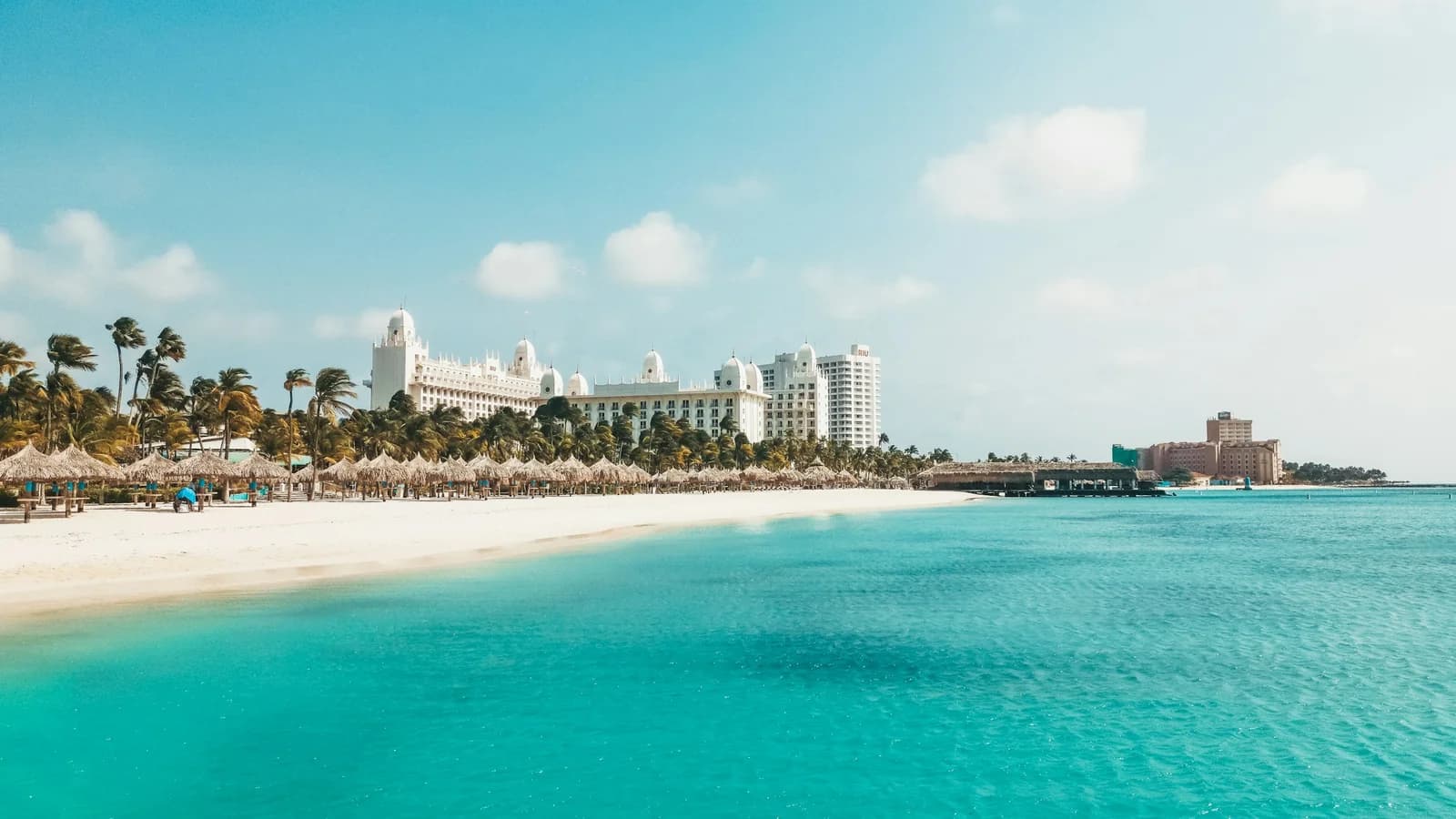
- Palm Beach — the high-rise strip: the most restaurants within walking distance, calm water, and the busiest beach.
- Eagle Beach— low-rise, far more space on the sand, the famous fofoti trees, and a quieter feel. Consistently rated among the world's best beaches.
- Oranjestad or Savaneta — cheaper guesthouses and apartments, local food, and a rental car for beach days. Savaneta has the fishing-village feel.
Whatever you pick, stay on the west coast. The windward east coast is dramatic — Arikok National Park, the Natural Pool, the ruined Natural Bridge — but the surf there is not for swimming in any month.
A few practical things
- The tap water is desalinated and safe to drink — genuinely good, and worth knowing on an island where bottled water adds up.
- US pre-clearance runs at the airport, so US-bound travellers clear immigration in Aruba and arrive home as a domestic flight. Allow extra time on departure.
- US dollars are accepted everywhere alongside the florin; no need to change money.
- Five to seven days is right. The island is about 30km long — a week covers both beaches, a snorkel day, Arikok, and a sunset at the California Lighthouse without rushing.
The honest verdict
Go mid-April to June. You get the same sun, the same 32°C, the same trade wind and the same water as the February crowd pays peak prices for — for noticeably less, on a quieter island. Take February or Marchif you want the year's most bankable weather or you are going for Carnival, and accept the premium. Skip late October and November if grey days would bother you, and skip the Christmas fortnight unless the dates are fixed.
See how Aruba compares on the Best Time to Travel leaderboard — it has one of the flattest year-round curves of any destination we score.
Your Aruba cheat sheet
One email with the whole year in it — and the questions that actually change a trip there, answered.
- All 12 months scored 0–100
- The months to book, and the ones to skip
- The questions that change the plan, answered
- Plus the Travel Timing Calendar 2027: every destination, every month (PDF)
We'll email you your cheat sheet with the Travel Timing Calendar, plus occasional travel-timing guides. Unsubscribe anytime; see our privacy policy.
The year at a glance
Twelve months, three seasons
Each cell is one month. Lemon means peak, sky means shoulder, gray means avoid. The outlined cell is the current month.
Atlas Ranger Score · proprietary
When Aruba scores best, month by month
Our transparent 0–100 score blends weather comfort, crowds, value and festivals into one number per month. How it's calculated →
- Best monthApril 67
- Best valueSeptember 61 off-peak
- ToughestNovember 65
See how Aruba ranks against every destination on the Best Time to Travel leaderboard →
Explore the map
Every city, every month
Drag the month scrubber, hover any city, read the headline for that window.
Aruba vs Nearby Destinations
vs Bahamas
Aruba is the reliable choice — outside the hurricane belt, no true wet season, drinkable tap water. The Bahamas has clearer water and far more islands to explore but carries real storm risk from August to October. Pick Aruba for an autumn trip or a guaranteed-sun week; pick the Bahamas in winter or spring for the water.
vs Cancun
Cancun is cheaper and adds cenotes and Mayan ruins; Aruba is safer, calmer, and has better weather from September to November when Cancun is in its hurricane and sargassum window. Pick Cancun for excursions and value; pick Aruba for a low-risk beach week.
Where to stay in Aruba
- Palm Beach (high-rise strip)$$$Resorts, restaurants, the busiest beach
The busiest stretch, with calm water and the most dining within walking distance. Book early for December–March.
Compare hotels in Aruba → - Eagle Beach (low-rise strip)$$Wide quiet sand, couples, the famous fofoti trees
Fewer high-rises, more space on the beach, a short drive or bus ride to Palm Beach dining.
Compare hotels in Aruba → - Oranjestad / Savaneta$Value, local food, self-catering
Cheaper guesthouses and apartments; a rental car helps for beach days. Savaneta has the fishing-village feel and Zeerover.
Compare hotels in Aruba →
Frequently asked questions
What is the worst month to visit Aruba?
What is the best month to visit Aruba?
Does Aruba get hurricanes?
When is the cheapest time to visit Aruba?
How many days do you need in Aruba?
Is Aruba safe for tourists?
Aruba or the Bahamas — which is better?
Keep planning
Plan your Aruba trip
Sources
Every claim on this page is backed by an authoritative source. Atlas Ranger synthesizes data from multiple references so you can see exactly where each fact came from.
- Aruba Tourism Authority (aruba.com)Used for: Official visitor information, entry requirements, event dates
- Open-Meteo Historical Climate Data (ERA5)Used for: Monthly temperature, rainfall, sunshine averages (5-year)
- Meteorological Department Aruba 1991-2020 normals, OranjestadUsed for: Monthly average daily highs (station normals replace the ERA5 grid-cell highs)
- Departamento Meteorologico ArubaUsed for: Local forecasts, wet-season onset, tropical-system advisories
- NOAA National Hurricane CenterUsed for: Atlantic hurricane season climatology and storm tracks