

 Trip.com














 Klook
Klook







Cancun has two seasons, and only one is dry
Cancun runs on a tropical wet-and-dry rhythm, not four temperate seasons. What decides your trip is not temperature — it stays warm year-round — but rain, humidity and storm risk. The calendar splits cleanly in two:
- Dry season (December–April) — the high season.Warm rather than scorching 29–32°C days, low humidity, the year's least rain, and calm, clear Caribbean water. This is the postcard Cancun, and its peak-price window.
- Wet season (June–November) — the low season.Heavy afternoon rain building through June and peaking near 223–242mm in September and October, oppressive June–August heat (around 34°C) and humidity, and Atlantic hurricane risk — offset by the year's lowest prices.
The best months: December through April
The sweet spot is the heart of the dry season. April is the single driest month, with just 37mm of rain, long sun hours and hot 32°C days. March is nearly as dry at 45mm, and February is the most dependable of all — 43mm, plenty of sun, a milder 29°C and calm seas. December and January round out the prime stretch with comfortable 29°C warmth and the most bearable humidity of the year. If your priority is reliable sun and flat, swimmable Caribbean water, target any of these five months.
Two catches a weather chart won't show you
Cancun's dry season hides two wrinkles that never appear in a temperature graph, and both can shape the trip more than the rain does.
- Spring Break (March). All month, US and Canadian college crowds flood the Hotel Zone for nightlife and beach parties. The weather is gorgeous, but the beaches and clubs are at their rowdiest and rates climb. If that energy is the appeal, March is unbeatable; if you want calm, February or early April is the smarter call.
- Sargassum seaweed (worst roughly April–August).Brown drifts of sargassum can pile up on Caribbean-facing beaches, heaviest from spring into summer. It varies wildly by beach and week, so it rarely ruins a trip — but if you travel in April, check a current sargassum map first and favour north-facing shores like Isla Mujeres' Playa Norte.
Easter adds a domestic rush in spring
One more spring date to plan around: Semana Santa (Holy Week), the week before Easter, is one of Mexico's biggest domestic holidays. Mexican families travel to the coast en masse, so beaches, the Isla Mujeres ferries and Riviera Maya roads get busy and hotels book out. Once that rush clears, late April can be a genuine sweet spot — still bone-dry, still warm, with rates beginning to ease off the winter peak.
The smartest value windows: May and November
Flanking the dry season are two shoulder months where weather and price overlap best. Maybrings the year's sunniest hours and only the first scattered showers (84mm) as rates dip from the winter peak — though sargassum can be at its heaviest then. November is the mirror image: rain easing to 113mm, humidity dropping and hurricane season winding down, with excellent value outside the late-month US Thanksgiving rush. Neither is as bulletproof as February, but both deliver near-dry-season weather at off-peak prices.
Where to stay in Cancun
“Where to stay” in Cancun usually means picking your base on the coast, and the right choice depends on what you came for:
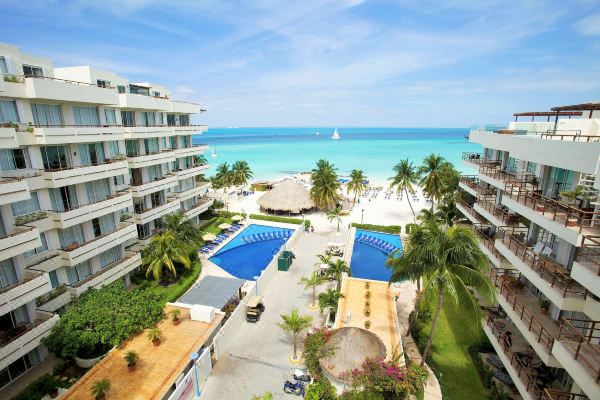
- Hotel Zone (Zona Hotelera) — the 22km barrier-island strip of white-sand beaches, big resorts and nightlife. The most convenient beach base, the priciest, and the busiest during Spring Break.
- Downtown Cancun (El Centro) — the real working city inland, with markets, taquerías and far cheaper hotels; frequent buses reach the Hotel Zone in 20–30 minutes.
- Isla Mujeres — a small, laid-back island a short ferry away, with the calm, shallow Playa Norte and a quieter pace.
- Playa del Carmen / Riviera Maya — a walkable beach town an hour south, the strongest base for Tulum, cenotes and Cozumel day trips.
The honest verdict
For warm, dry days, calm seas and the classic Caribbean postcard, go December through April — with February the safest pick for sun without the Spring Break crowds, and April the driest of all. For the best weather-to-price ratio, aim for the May or November shoulders. Whatever your dates, weigh the storm-and-savings gamble on our cheapest time to visit Cancun guide, compare it head-to-head with its boho neighbour on our Cancun vs Tulum page, or see where it lands against every destination on the Best Time to Travel leaderboard.
Your Cancun cheat sheet
One email with the whole year in it — and the questions that actually change a trip there, answered.
- All 12 months scored 0–100
- The months to book, and the ones to skip
- The questions that change the plan, answered
- Plus the Travel Timing Calendar 2027: every destination, every month (PDF)
We'll email you your cheat sheet with the Travel Timing Calendar, plus occasional travel-timing guides. Unsubscribe anytime; see our privacy policy.
The year at a glance
Twelve months, three seasons
Each cell is one month. Lemon means peak, sky means shoulder, gray means avoid. The outlined cell is the current month.
Atlas Ranger Score · proprietary
When Cancun scores best, month by month
Our transparent 0–100 score blends weather comfort, crowds, value and festivals into one number per month. How it's calculated →
- Best monthFebruary 80
- Best valueNovember 72 off-peak
- ToughestSeptember 51
See how Cancun ranks against every destination on the Best Time to Travel leaderboard →
Explore the map
Every city, every month
Drag the month scrubber, hover any city, read the headline for that window.
Good to know
Before you go to Cancun
The ground-level practicalities that make a trip smooth — the stuff that's hard to find until you're already there.
Getting in from CUN airport
Cancun International is about 20km south of the Hotel Zone. The ADO bus is the cheapest reliable option into downtown; pre-booked private transfers and authorised airport taxis cost more but go door-to-door. Skip the unofficial touts working arrivals and the aggressive timeshare booths.
Money: pesos beat dollars
USD is accepted across the Hotel Zone, but you almost always get a worse rate paying in dollars — prices are quietly marked up and change comes in pesos anyway. Withdraw pesos from a bank ATM, decline the machine's currency-conversion offer, and carry small bills for tips and taxis.
Getting around
Cheap public buses run the length of the Hotel Zone and into downtown. For the Riviera Maya, shared colectivo vans and the comfortable ADO intercity coaches link Playa del Carmen and Tulum, while passenger ferries run to Isla Mujeres and Cozumel. A rental car only pays off for far-flung cenotes and ruins.
Check the sargassum forecast
Sargassum seaweed can pile up on Caribbean-facing beaches, heaviest roughly April through August, leaving brown drifts and an odour. It varies hugely by beach and week. If you are booking for those months, check a current sargassum map or webcam first, and favour north-facing shores like Isla Mujeres' Playa Norte.
Drink bottled water
Tap water in Cancun is not considered safe to drink. Stick to bottled or filtered water — most resorts and hotels provide it — and use it for brushing teeth if you have a sensitive stomach. Ice in established Hotel Zone bars and restaurants is generally made from purified water.
SIM and eSIM options
A local Telcel SIM gives the best coverage across the Yucatán and is sold at the airport, Oxxo convenience stores and phone shops. For a quicker, no-queue setup, a travel eSIM activated before you fly works well in Cancun and along the Riviera Maya. Resort and café Wi-Fi is widespread but uneven.
Mexico vs Nearby Destinations
vs Tulum
Pick Cancun for big all-inclusive resorts, nightlife, easy airport access and dependable infrastructure. Pick Tulum, 90 minutes south, for a smaller boho beach-club vibe, clifftop Maya ruins and cenote swims — at higher prices and with patchier services. They share the same dry-winter best season.
vs Cabo San Lucas
Pick Cancun for warm Caribbean swimming, white-sand beaches, ruins and cenotes on the Yucatán. Pick Cabo, on the Pacific Baja side, for dramatic desert-meets-sea scenery, sport-fishing and whale watching — but cooler, rougher water. Their seasons differ: Cabo is best Oct–Jun and dodges Cancun's summer hurricane risk.
Where to stay in Mexico
- Hotel Zone (Zona Hotelera)$$$Beaches, resorts, nightlife
The 22km barrier-island strip of white-sand beaches, big resorts, clubs and malls. The default Cancun base — most convenient for the beach, the most expensive, and the busiest during Spring Break.
Compare hotels in Cancun → - Downtown Cancun (El Centro)$Budget stays, local life, authentic food
The real working city inland from the beaches, with markets, taquerías and far cheaper hotels. You trade beachfront for value and a more local feel; frequent buses run to the Hotel Zone in about 20–30 minutes.
Compare hotels in Cancun → - Isla Mujeres$$Laid-back island pace, calm beaches
A small, relaxed island a short ferry from Cancun, with the calm, shallow Playa Norte and golf-cart-sized streets. A quieter, more low-key alternative for those who want the Caribbean without the resort-strip intensity.
Check Isla Mujeres prices → - Playa del Carmen / Riviera Maya$$Walkable beach town, Riviera Maya base
An hour south, this walkable beach town centres on the lively Quinta Avenida and makes a strong base for Tulum, cenotes and Cozumel day trips. More compact and stroll-friendly than Cancun's spread-out Hotel Zone.
Check Playa del Carmen / Riviera Maya prices →
Frequently asked questions
What is the best month to visit Cancun?
What is the worst time to visit Cancun?
When is the rainy season in Cancun?
How many days do you need in Cancun?
Is Cancun safe for tourists?
Should I visit Cancun or Tulum?
When is the cheapest time to visit Cancun?
Keep planning
Plan your Mexico trip
Sources
Every claim on this page is backed by an authoritative source. Atlas Ranger synthesizes data from multiple references so you can see exactly where each fact came from.
- Cancun Official Tourism BoardUsed for: Official Cancun tourism guidance, events calendar and regional information
- Open-Meteo Historical Climate Data (ERA5)Used for: Sunshine-hour averages (Cancun, 2020–2024); temperature and rainfall come from the SMN station normals below
- U.S. State Department Mexico Travel AdvisoryUsed for: Independent safety assessment for Quintana Roo and Mexico entry requirements
- CONAGUA — Servicio Meteorológico NacionalUsed for: Monthly temperature and rainfall (Cancún Airport/Observatorio station normals) plus national hurricane-season dates