
 Trip.com




 Klook
Klook







Tulum has two seasons, and temperature is barely one of them
On the Caribbean side of Mexico's Riviera Maya, the thermometer hardly moves: highs sit between about 29 and 34°C in every month of the year. What actually decides a Tulum trip is the interplay of rainfall, humidity, storm risk and sargassum seaweed. The town swings between a bright, breezy dry season (December–April) and a hot, humid, storm-prone wet season (May–October). Get those rhythms right and the difference between a postcard week and a washed-out one comes down to which month you pick, not how warm it is.
The best stretch: December through April
The dry season is Tulum at its finest. From December to April, rainfall drops away, humidity eases, and the steady trade winds temper the midday heat. This is when the beach clubs hum, the clifftop Maya ruins photograph best against clear skies, and the sea is at its most inviting. It is also high season, so beach-zone hotels and the most popular cenotes book up well ahead and prices climb to their annual peak.
The driest months — and the sweet spot
March and April are the driest months, bottoming out near 47mm and 40mm respectively, with the longest, sunniest days of the year. They are superb for cenote swims and exploring the ruins — but they carry two catches: sargassum often begins arriving in earnest from spring, and Semana Santa (Holy Week) fills the coast with domestic holidaymakers. February is the connoisseur's pick: around 57mm of rain, climbing sunshine, gentle warmth before the summer heat builds, and beaches that are usually still clear of seaweed. December and January complete the dry-season core with warm, reliable weather, though the Christmas–New Year surge makes late December the priciest window of all.
Cenotes and ruins reward dry-season timing
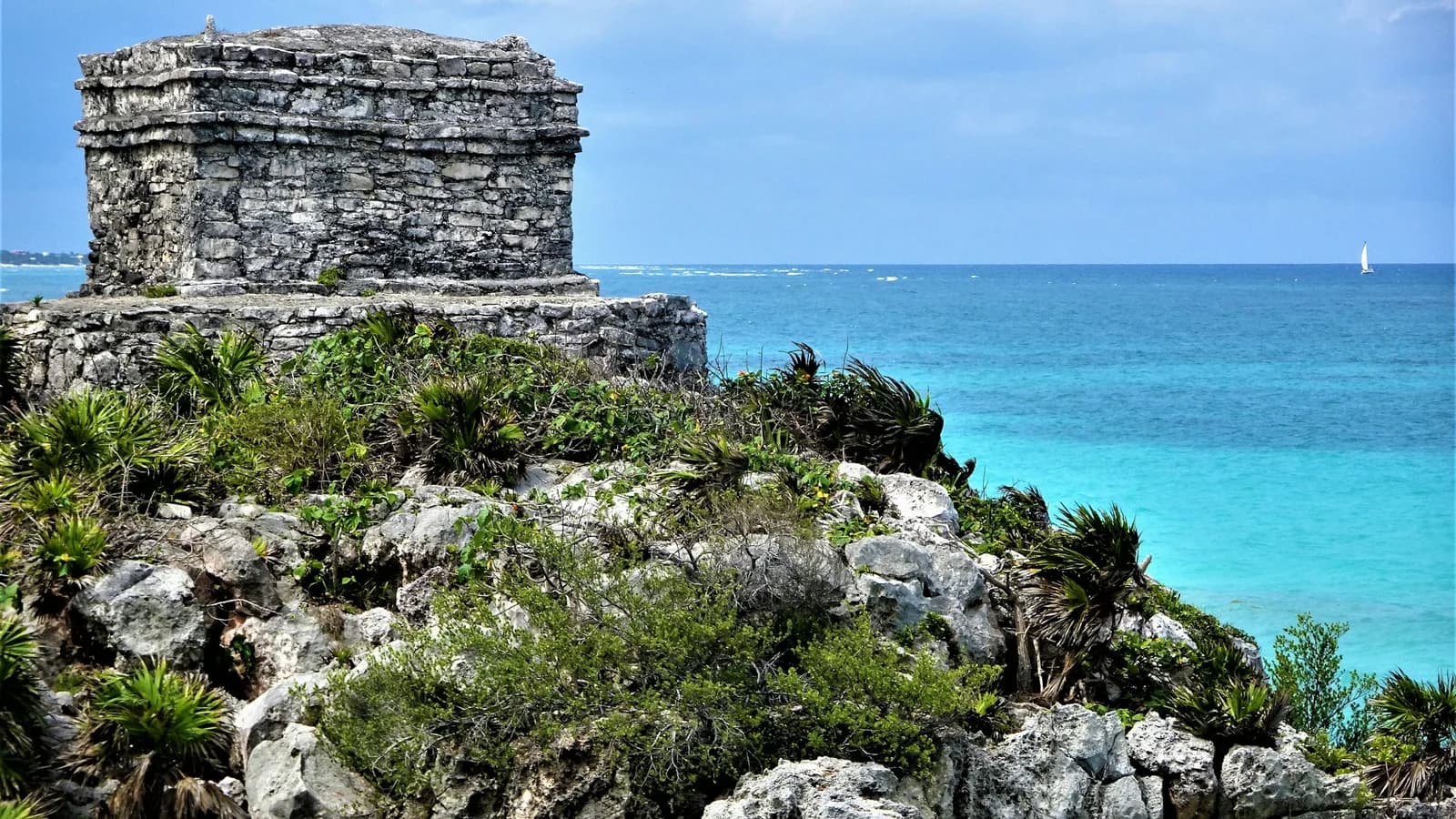
Tulum's headline experiences lean on the same calendar. The cenotes— freshwater sinkholes linked to the regional aquifer — are a cool, clear escape that shines when the surrounding jungle isn't soaked by afternoon storms, and they make a reliable seaweed-free swim even when the beaches don't cooperate. The clifftop Tulum ruinsare best walked early, before the heat and tour buses peak; around the March equinox the region's Maya sites, including Chichén Itzá inland, draw their biggest crowds. Dry-season light and lower humidity make all of it more comfortable.
The sargassum caveat every Tulum visitor should know
Sargassum is the wildcard that runs on its own clock, separate from the rain calendar. The drifting seaweed can blanket the Caribbean beaches in thick mats, heaviest roughly April through August, and volumes vary year to year. That means even a textbook dry month like April can land with weed on the sand. The practical move is to check a current sargassum tracker or recent beach photos before committing to a beachfront stay, favour the earlier dry months (December–February) if pristine sand is the priority, and keep the cenotes in your back pocket as a guaranteed clear swim.
Getting in: the new Tulum airport
Reaching Tulum is far easier than it used to be. Tulum International (TQO), which opened in late 2023, sits about 25km from the beach and now handles a growing roster of international and domestic flights — no more obligatory two-hour transfer from Cancun. If you do fly into Cancun (CUN) for cheaper fares, budget roughly two hours by car or ADO bus down the highway, and pre-book a transfer or check colectivo options before you land. For a fuller weigh-up of the two hubs, see our Cancun vs Tulum comparison.
The honest verdict
For warm, breezy days, low humidity and the clearest beaches, target the December–April dry season — with February the balanced sweet spot and March–Aprilthe driest but most sargassum-prone. For the best value-for-weather, the season's edges in November and early Mayare hard to beat. If you'd rather chase rock-bottom prices and don't mind storms, read the cheapest time to visit Tulum, or see what to avoid on the worst time to visit Tulum guide. To see how Tulum stacks up against everywhere else, browse the Best Time to Travel leaderboard.
Your Tulum cheat sheet
One email with the whole year in it — and the questions that actually change a trip there, answered.
- All 12 months scored 0–100
- The months to book, and the ones to skip
- The questions that change the plan, answered
- Plus the Travel Timing Calendar 2027: every destination, every month (PDF)
We'll email you your cheat sheet with the Travel Timing Calendar, plus occasional travel-timing guides. Unsubscribe anytime; see our privacy policy.
The year at a glance
Twelve months, three seasons
Each cell is one month. Lemon means peak, sky means shoulder, gray means avoid. The outlined cell is the current month.
Atlas Ranger Score · proprietary
When Tulum scores best, month by month
Our transparent 0–100 score blends weather comfort, crowds, value and festivals into one number per month. How it's calculated →
- Best monthFebruary 79
- Best valueNovember 71 off-peak
- ToughestSeptember 55
See how Tulum ranks against every destination on the Best Time to Travel leaderboard →
Explore the map
Every city, every month
Drag the month scrubber, hover any city, read the headline for that window.
Good to know
Before you go to Tulum
The ground-level practicalities that make a trip smooth — the stuff that's hard to find until you're already there.
Getting in: new Tulum airport
Tulum's own airport (TQO, opened late 2023) sits about 25km from the beach and now takes growing international and domestic flights. If you fly into Cancun (CUN) instead, budget roughly two hours by car or ADO bus down the highway. Pre-book a transfer or check colectivo and bus options before you land.
Money: beach zone runs pricey
Prices on the beach road rival a major resort city, while Tulum Pueblo is far cheaper. The peso is the currency, but US dollars are widely accepted on the coast (often at a poor rate). Carry some cash for small vendors and colectivos, and expect card surcharges in the beach zone.
Getting around: bikes and colectivos
Bicycles are the classic way to ride between town and the beach strip, and colectivos (shared vans) are cheap for hops along the highway and to nearby cenotes. Beach-zone taxis, by contrast, are notoriously expensive and have no meters — agree the fare first, and consider renting a car for day trips inland.
Check the sargassum forecast
Sargassum seaweed can wash onto Tulum's beaches in thick mats, heaviest roughly April through August, separate from the rain calendar. Volumes vary year to year, so check a current sargassum tracker or recent beach photos before you book a beachfront stay. Hotels in clearer stretches rake daily; cenotes are an easy seaweed-free swim.
Cenote etiquette: skip the sunscreen
The region's cenotes — freshwater sinkholes — are fragile ecosystems linked to the aquifer. Most require you to rinse off and skip sunscreen and bug spray entirely, or use only biodegradable, reef-safe products, to protect the water and wildlife. Bring a rash guard for sun cover instead, and follow each cenote's posted rules.
Water and connectivity
Stick to bottled or filtered water — tap water is not for drinking, and many hotels provide refills. For data, a local SIM or an eSIM activated before arrival is the easiest way to stay online, as beach-zone Wi-Fi is often slow or patchy. Download offline maps for cenote and ruins day trips.
Mexico vs Nearby Destinations
vs Cancun
Pick Tulum for eco-chic, low-rise beach hotels, cenotes and Maya ruins with a bohemian, design-led mood; pick Cancun for big all-inclusive resorts, a long protected beach, livelier nightlife and easier value. They share the same coast and weather, so the choice is really one of style and budget, not season.
vs Cabo San Lucas
Pick Tulum for warm Caribbean swimming, cenotes, jungle and ruins on Mexico's east coast; pick Cabo for dramatic Pacific desert-meets-sea scenery, sportfishing and resort nightlife on the Baja peninsula. Cabo's cooler Pacific water and arid climate contrast sharply with Tulum's humid tropics — and their best-weather windows differ, so match the trip to your dates.
Where to stay in Mexico
- Tulum Beach (Zona Hotelera)$$$Boutique beachfront, beach clubs, the design-led scene
The narrow beach road lined with eco-chic, low-rise hotels right on the sand. Beautiful and atmospheric but the priciest base, with limited Wi-Fi and power in places. Book well ahead for the December–April dry season.
Compare hotels in Tulum → - Tulum Pueblo (town)$Budget travellers, local food, value and connectivity
The inland town centre — guesthouses, taco stands, dive shops and far lower prices than the beach. Reliable Wi-Fi and easy bus and colectivo links, with a short bike ride or taxi to the sand. The smart base for value.
Compare hotels in Tulum → - Aldea Zama$$Modern condos, longer stays, a quieter base
A planned residential district between town and beach with newer condos and apartments, good for longer or self-catering stays. Calmer and greener than the beach strip, with reasonable access to both the sand and the town.
Compare hotels in Tulum → - Akumal / Riviera Maya (nearby)$$Turtle snorkelling, families, a calmer bay
A short drive north toward Cancun, Akumal's sheltered bay is famous for snorkelling with sea turtles and suits families wanting calmer water. A relaxed alternative base within easy reach of Tulum's ruins and cenotes.
Check Akumal / Riviera Maya (nearby) prices →
Frequently asked questions
What is the best month to visit Tulum?
What is the worst time to visit Tulum?
When is the rainy season in Tulum?
How many days do you need in Tulum?
Is Tulum safe for tourists?
Is Tulum or Cancun better?
When is the cheapest time to visit Tulum?
Keep planning
Plan your Mexico trip
Sources
Every claim on this page is backed by an authoritative source. Atlas Ranger synthesizes data from multiple references so you can see exactly where each fact came from.
- Visit Mexico (Official tourism)Used for: Official Mexico tourism guidance, seasons, festivals and regional information
- Open-Meteo Historical Climate Data (ERA5)Used for: Monthly rainfall, overnight lows and sunshine averages (Tulum, 2020–2024); daytime highs from Cozumel and Cancun station normals
- U.S. State Department Mexico Travel AdvisoryUsed for: Independent safety assessment for Quintana Roo and the wider region
- NOAA National Hurricane Center — Atlantic SeasonUsed for: Atlantic hurricane season dates and peak-activity reference (Jun–Nov)