
 Trip.com




 Klook
Klook







The toughest month is September — peak hurricane season
If reliable sun and calm seas are the point of your trip, the months to approach with caution run May through October, and the low point is September. It sits at the statistical peak of the Atlantic hurricane season, pairing high humidity, around 171mm of rain and the year's greatest storm risk. October stays wet (134mm) with lingering early-month hurricane risk, and June is wetter still — the single rainiest month at roughly 259mm as the wet season breaks. Across this stretch, beach days become a coin-flip and humidity sits heavy.
Sargassum: a separate season of its own
The other reason a Tulum trip can disappoint has nothing to do with rain. Sargassum — the drifting brown seaweed that washes onto the Caribbean coast — runs on its own clock, heaviest roughly April through August. In a bad year it can blanket the sand in thick, sun-baked mats that hotels rake daily but can't always clear. Because the sargassum window overlaps the dry season's tail, even a low-rain month like April or May can deliver weed on the beach. Volumes swing year to year, so a current sargassum tracker or recent beach photos are worth far more than the calendar alone.
What actually goes wrong — and what doesn't
It pays to be precise, because the wet season is less bleak than it sounds. Temperatures barely move — it's still 31–34°C and warm in the water. The rain typically arrives as heavy afternoon downpours that often clear by evening, rather than all-day grey, so bright mornings are common. What suffers is reliability: more humidity, the real chance of a tropical system parking over the coast for a few days, and sea grass or storm churn clouding the water. On a short, single-base beach trip, a bad-luck week carries more weight than it would on a longer, flexible itinerary.
What still works in the low season
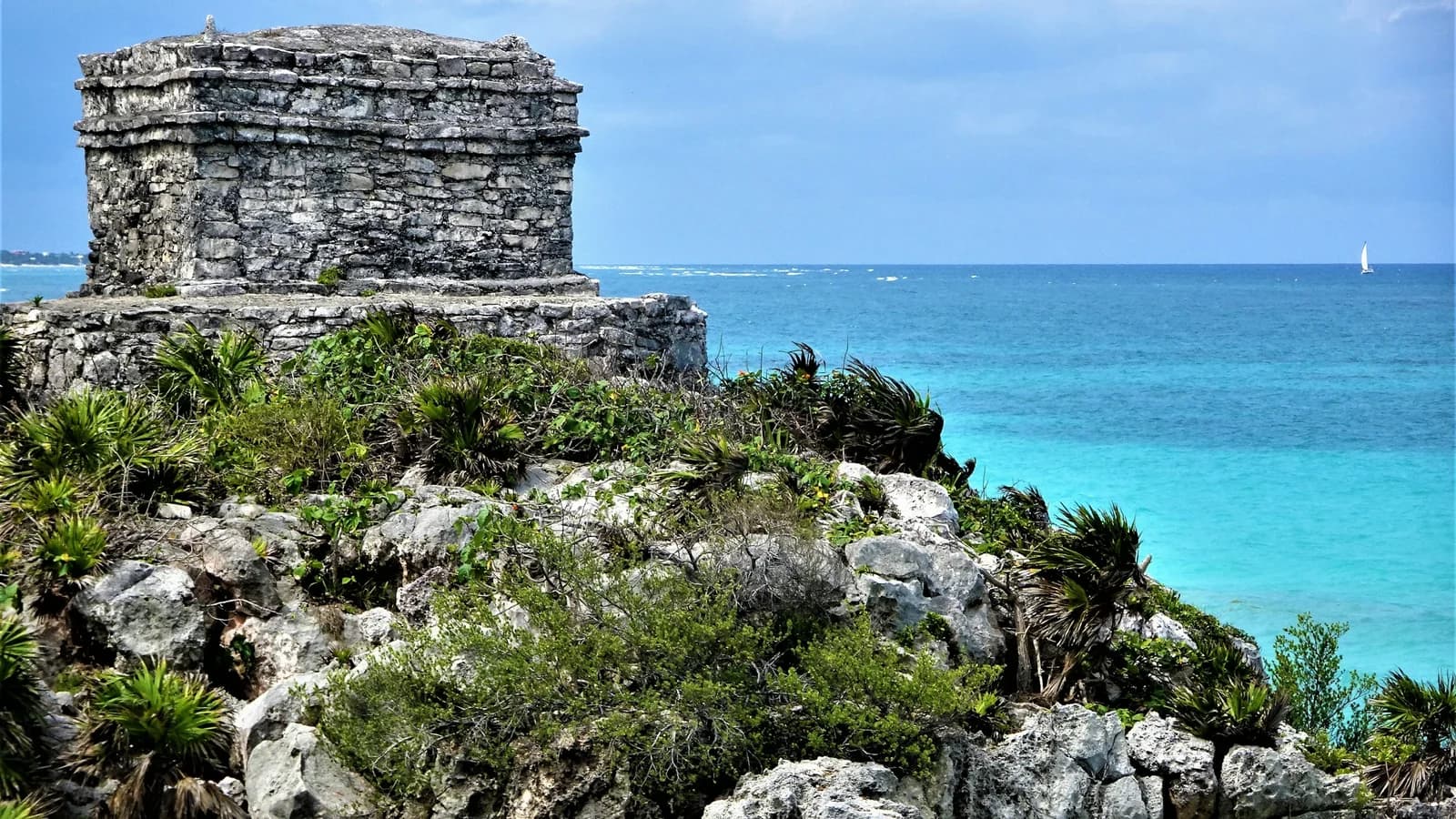
Plenty of Tulum shines through even a stormy week. The cenotes — inland freshwater sinkholes — are a clear, refreshing swim regardless of what the beaches or the forecast are doing, and the surrounding jungle is at its lushest. The clifftop Maya ruins and inland sites like Cobá and Chichén Itzá are walkable between showers, especially early. The brief July lull(the canícula) often delivers a run of drier, sunnier days mid-summer. And cultural highlights land in the rainy months too, from September's Independence Day to the Day of the Dead at the dry season's return.
When you should go in the low season anyway
The wet season has one decisive upside: it is by far the cheapest and quietest time to visit. Go anyway if your dates aren't flexible, if you want near-empty beaches and the year's lowest rates, or if cenotes and ruins matter more to you than guaranteed beach weather — just watch the tropics, carry travel insurance, and keep plans flexible. For the full price picture, see the cheapest time to visit Tulum. For the opposite end of the calendar, read the best time to visit Tulum, or use where should I go this month to weigh other options for your dates.
Your Tulum cheat sheet
One email with the whole year in it — and the questions that actually change a trip there, answered.
- All 12 months scored 0–100
- The months to skip, and when it turns good again
- The questions that change the plan, answered
- Plus the Travel Timing Calendar 2027: every destination, every month (PDF)
We'll email you your cheat sheet with the Travel Timing Calendar, plus occasional travel-timing guides. Unsubscribe anytime; see our privacy policy.
The year at a glance
Twelve months, three seasons
Each cell is one month. Lemon means peak, sky means shoulder, gray means avoid. The outlined cell is the current month.
Atlas Ranger Score · proprietary
When Tulum scores best, month by month
Our transparent 0–100 score blends weather comfort, crowds, value and festivals into one number per month. How it's calculated →
- Best monthFebruary 79
- Best valueNovember 71 off-peak
- ToughestSeptember 55
See how Tulum ranks against every destination on the Best Time to Travel leaderboard →
Explore the map
Every city, every month
Drag the month scrubber, hover any city, read the headline for that window.
Mexico vs Nearby Destinations
vs Cancun
Pick Tulum for eco-chic, low-rise beach hotels, cenotes and Maya ruins with a bohemian, design-led mood; pick Cancun for big all-inclusive resorts, a long protected beach and easier value. They share the same coast and weather, so the choice is really one of style and budget, not season.
vs Cabo San Lucas
Pick Tulum for warm Caribbean swimming, cenotes, jungle and ruins on Mexico's east coast; pick Cabo for dramatic Pacific desert-meets-sea scenery, sportfishing and big resorts on the Baja peninsula. Cabo's cooler Pacific water and arid climate contrast sharply with Tulum's humid tropics — and their best-weather windows differ, so match the trip to your dates.
Airport transfers, money, water, connectivity and which areas to stay in are covered once, on the Tulum best-time guide.
Frequently asked questions
What is the best month to visit Tulum?
What is the worst time to visit Tulum?
When is the rainy season in Tulum?
How many days do you need in Tulum?
Is Tulum safe for tourists?
Is Tulum or Cancun better?
When is the cheapest time to visit Tulum?
Keep planning
Plan your Mexico trip
Sources
Every claim on this page is backed by an authoritative source. Atlas Ranger synthesizes data from multiple references so you can see exactly where each fact came from.
- Visit Mexico (Official tourism)Used for: Official Mexico tourism guidance, seasons, festivals and regional information
- Open-Meteo Historical Climate Data (ERA5)Used for: Monthly rainfall, overnight lows and sunshine averages (Tulum, 2020–2024); daytime highs from Cozumel and Cancun station normals
- U.S. State Department Mexico Travel AdvisoryUsed for: Independent safety assessment for Quintana Roo and the wider region
- NOAA National Hurricane Center — Atlantic SeasonUsed for: Atlantic hurricane season dates and peak-activity reference (Jun–Nov)