
 Trip.com




 Klook

 KKday









Rock-bottom prices Nov — at peak monsoon
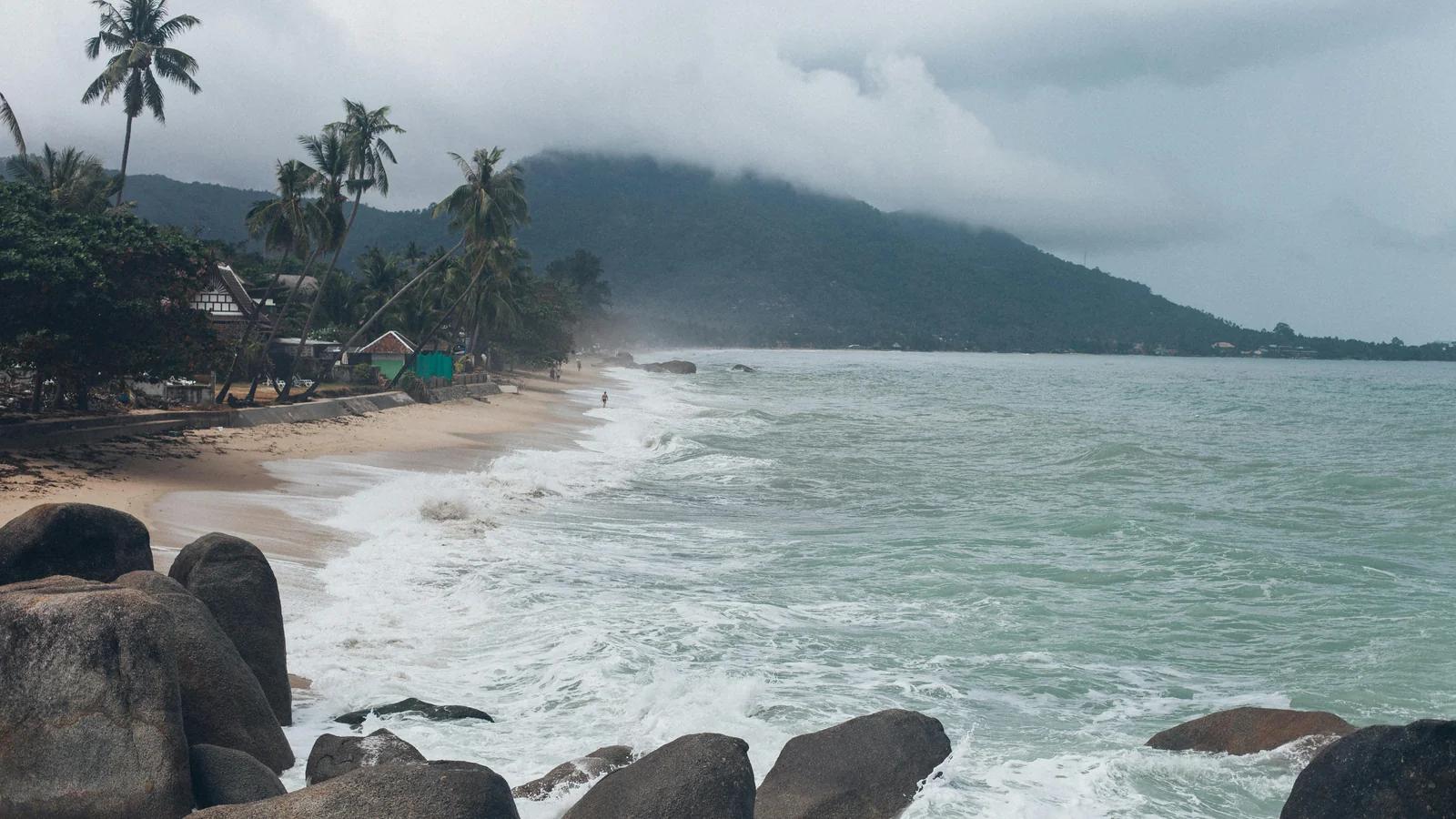
Koh Samui's cheapest stretch is November — its peak monsoon. Beach resorts in Chaweng and Lamai drop far below peak Christmas / New Year prices. Mid-range hotels run their year-round lows. Some smaller resorts close entirely but the larger ones discount aggressively to fill rooms.
For most travelers the smart play is finding the windows where prices are meaningfully off-peak but the weather still works.
The two smartest price-to-weather windows
- May–June — the European summer crowd has not arrived yet, and the monsoon on the Andaman side keeps demand low across the region. Both are hot with scattered showers — about 132mm of rain in May and 134mm in June.
- September — about 118mm of rain while the Andaman side is mid-monsoon. Prices off-peak from European-summer end. Often overlooked window — Koh Samui weather is mostly fine but the cheap-flight crowd has moved on.
What "cheap" actually looks like in Koh Samui
- Hotels in Chaweng and Bophut — November rates sit well below January
- Domestic flight Bangkok → Samui — cheaper in November
- Ferry from Donsak (mainland) — no real seasonality
- Beach restaurants — no real seasonality
- Boat to Ang Thong Marine Park — cancels often November–December
Avoid the price spikes
- Christmas + New Year (Dec 22 – Jan 5) — Western tourist surge arrives just as the monsoon ends. Beach resort rates climb well above off-season levels. NYE on Chaweng is a major event.
- Chinese New Year (late January or February) — Chinese-tourist surge. Hotel rates jump.
- Songkran (April 13–15) — Smaller impact on Samui than mainland Thailand but ferry + flight prices spike.
- Full-moon week (monthly) — Pricing on Koh Phangan spikes; Koh Samui less affected but ferry traffic is brutal.
The honest cheapest-time verdict
If you accept the monsoon: November. Year-round-low pricing. Plan beach time loosely; have indoor backup options.
If you want best value AND workable weather: May–June or September. The full positive picture is in our best time to visit Koh Samui guide.
Your Koh Samui cheat sheet
One email with the whole year in it — and the questions that actually change a trip there, answered.
- All 12 months scored 0–100
- The low-price windows, and their trade-offs
- The questions that change the plan, answered
- Plus the Travel Timing Calendar 2027: every destination, every month (PDF)
We'll email you your cheat sheet with the Travel Timing Calendar, plus occasional travel-timing guides. Unsubscribe anytime; see our privacy policy.
The year at a glance
Twelve months, three seasons
Each cell is one month. Lemon means peak, sky means shoulder, gray means avoid. The outlined cell is the current month.
Atlas Ranger Score · proprietary
When Koh Samui scores best, month by month
Our transparent 0–100 score blends weather comfort, crowds, value and festivals into one number per month. How it's calculated →
- Best monthFebruary 71
- Best valueApril 61 off-peak
- ToughestNovember 40
See how Koh Samui ranks against every destination on the Best Time to Travel leaderboard →
Explore the map
Every city, every month
Drag the month scrubber, hover any city, read the headline for that window.
Thailand vs Nearby Destinations
vs Phuket
Opposite monsoon seasons — Phuket is wet May–October, Samui is wet October–December (with lighter showers the rest of the year). Pick Phuket for more flight options, bigger resorts. Pick Samui for boutique hotels, calmer beaches, and a quieter scene. If your dates are October–November, Phuket; if May–September, Samui is the more settled of the two.
vs Koh Phangan
Pick Koh Phangan for yoga retreats — it's quieter than Samui, except in the busy week around each full moon. Pick Samui for a more polished resort base. Many travelers do both: 4 nights Samui + 2–3 nights Koh Phangan. They're a 30-minute ferry apart.
vs Krabi
Krabi (Andaman coast) has the dramatic limestone karsts and is the launchpad for Phi Phi Islands. Samui has the Gulf-coast beaches and easier ferry connections to Koh Phangan and Koh Tao. Pick Krabi for adventure and scenery; pick Samui for relaxation and boutique resorts.
Airport transfers, money, water, connectivity and which areas to stay in are covered once, on the Koh Samui best-time guide.
Frequently asked questions
What is the best month to visit Koh Samui?
What is the worst month to visit Koh Samui?
When is the rainy season in Koh Samui?
How many days do you need in Koh Samui?
Is Koh Samui safe for tourists?
Should I visit Koh Samui or Phuket?
When is the cheapest time to visit Koh Samui?
Keep planning
Plan your Thailand trip
Sources
Every claim on this page is backed by an authoritative source. Atlas Ranger synthesizes data from multiple references so you can see exactly where each fact came from.
- Tourism Authority of Thailand (TAT)Used for: Official Thailand tourism guidance, festival timing, regional information
- WMO: Ko Samui, 1991-2020Used for: Monthly temperature, rainfall and sunshine averages
- U.S. State Department Thailand Travel AdvisoryUsed for: Independent safety assessment + entry requirement reference
- Thai Meteorological Department (TMD)Used for: Thailand's national meteorological service — Gulf vs Andaman monsoon timing