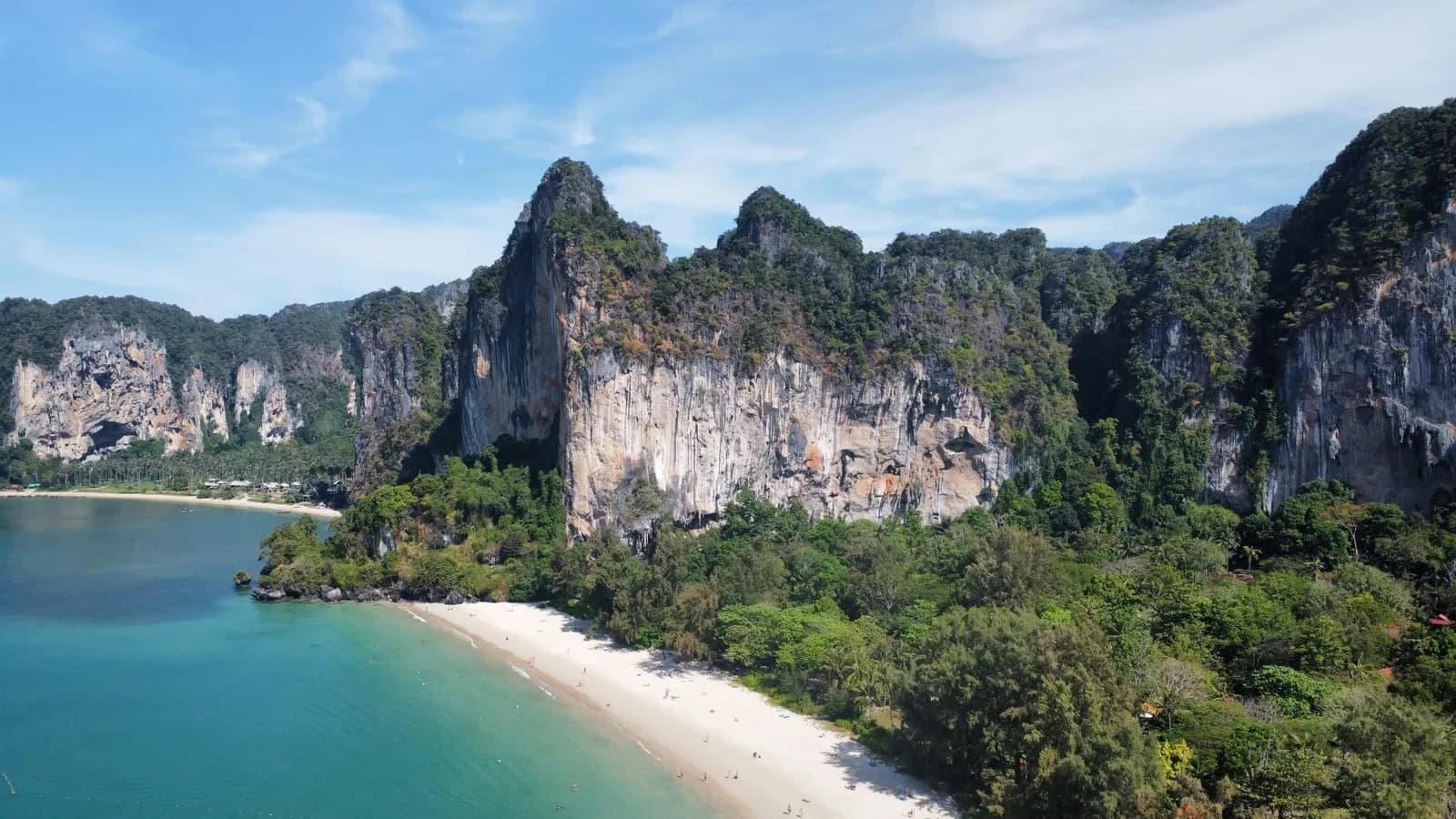
September is Krabi's worst single month — peak SW monsoon
Krabi sits on the Andaman coast, which runs the southwestern monsoon May through October — and September is when it intensifies hardest. Heavy rain combines with rough seas to routinely cancel every boat-based experience that brought you here in the first place: Phi Phi day trips, Hong Islands, Railay rock climbing access, four-island snorkel runs.
What the SW monsoon actually means here
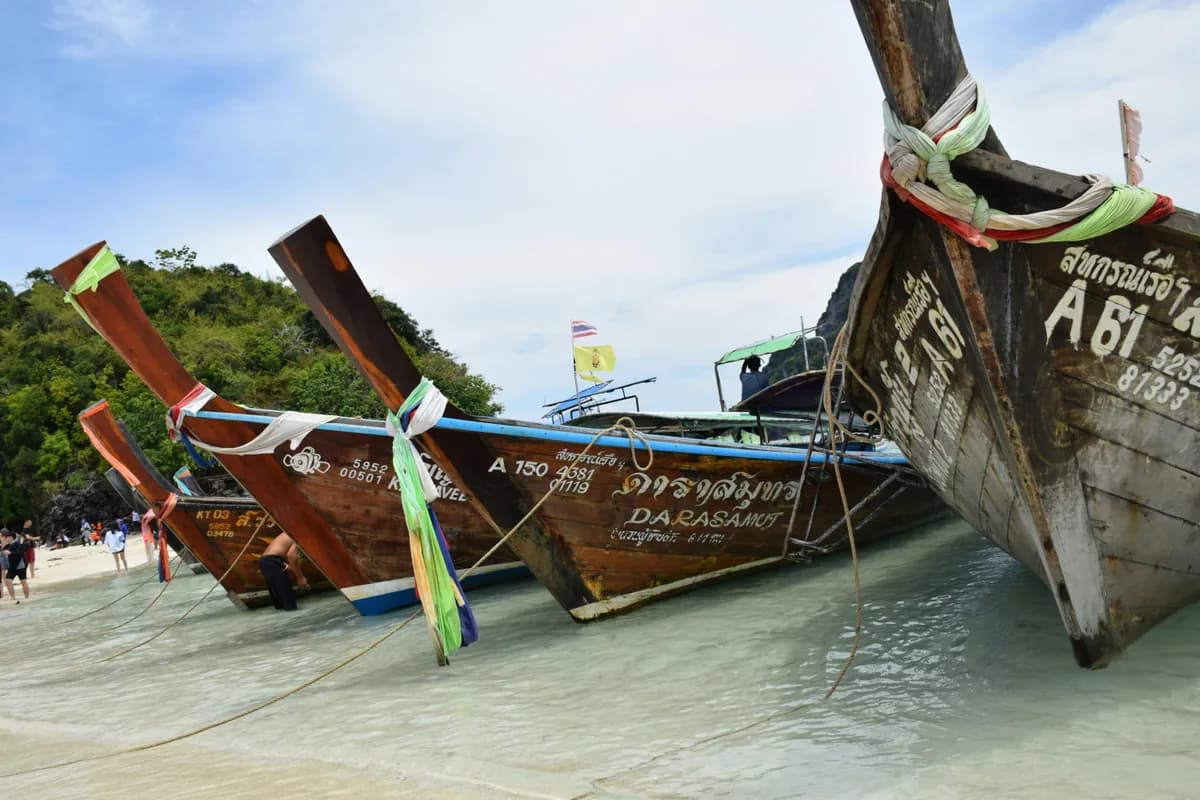
- Boat trips cancel routinely — the entire scenic-island appeal is boat-access. When seas are rough, everything cancels at the harbor that morning. You don't find out until you show up.
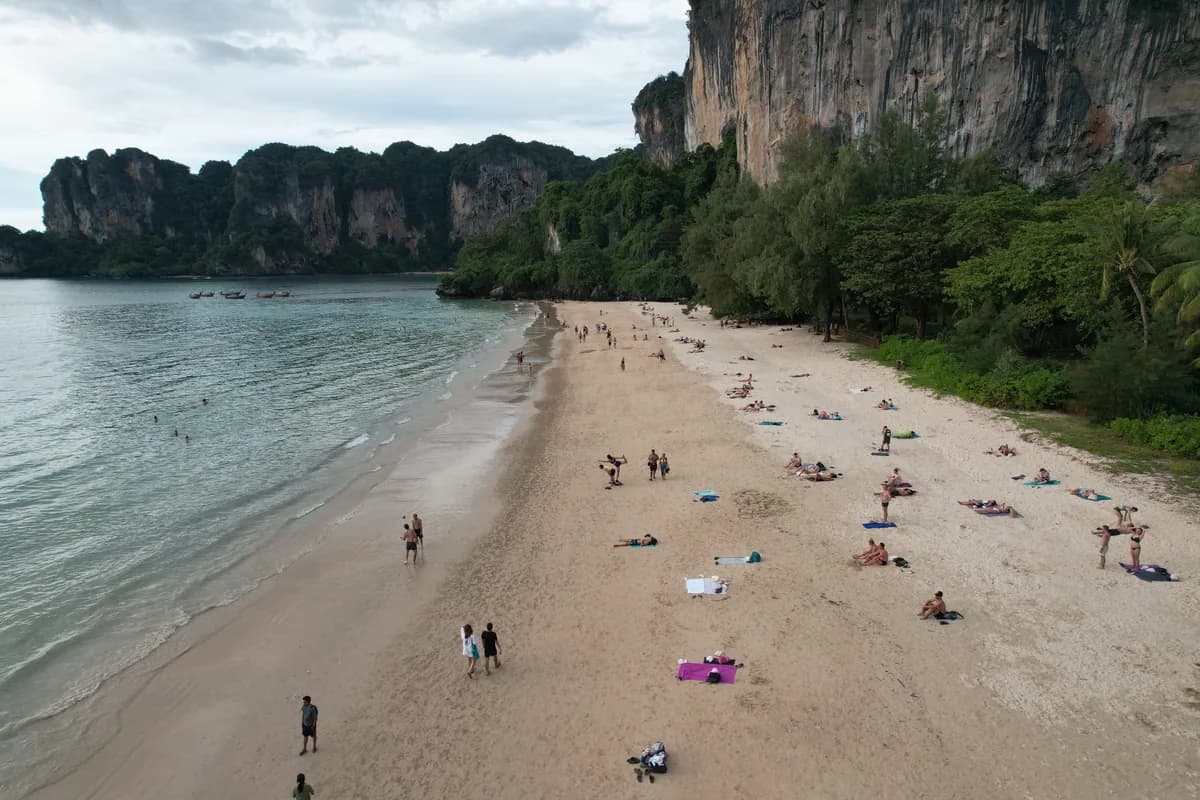
- Beaches close to swimmers — rip currents intensify; red flags fly
- Rock climbing at Railay shuts down — limestone cliffs become slick/unsafe, climbing schools pause operations
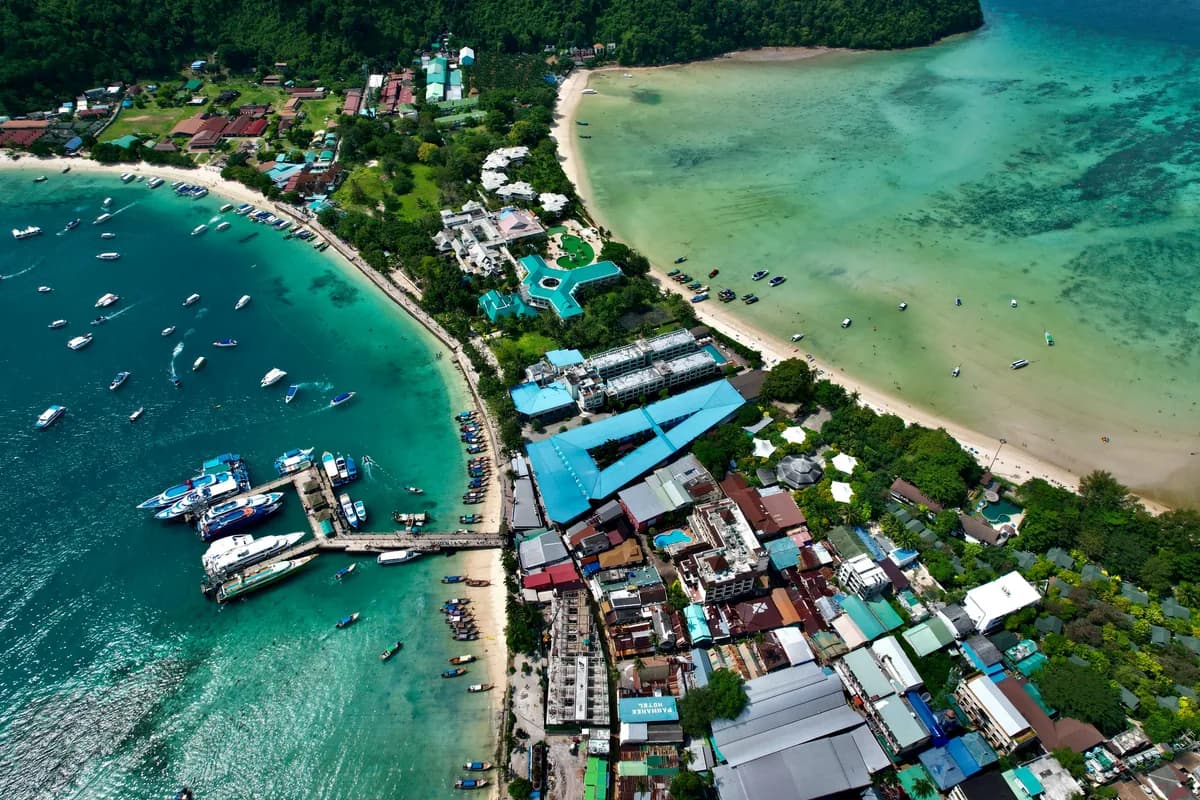
- Phi Phi accessibility drops — ferry from Krabi to Phi Phi runs less frequently and cancels in rough weather
- Some Railay-area resorts close entirely — they re-open in November
Ao Nang town stays operational and most beach restaurants stay open, but the scenic-day-trip core of Krabi is constrained.
The opposite-coast alternative
Thailand's Gulf coast (Koh Samui, Koh Phangan, Koh Tao) runs the OPPOSITE monsoon cycle. While the Andaman side is wet May–October, the Gulf side is in its dry pocket. If your dates fall in the wet window and you want a Thai beach trip, Koh Samui is the right answer — see our Koh Samui guide.
Crowd peaks worth avoiding
- Christmas + New Year (Dec 22 – Jan 5) — Western tourist surge plus Andaman peak dry season convergence. Hotels can double.
- Chinese New Year (late January or February) — Chinese tourist surge. Phi Phi day-trip boats over-capacity.
- Songkran (April 13–15) — Less impact on Krabi than mainland Thailand but flight + accommodation prices spike.
If your dates are locked in May–October
- Switch to Gulf coast — Koh Samui or Koh Phangan in their dry pocket. Same Thai beach experience, opposite weather.
- Stay in Ao Nang town — town-based hotels stay accessible. Plan day trips loosely; have backup options for cancelled boats (Krabi town, Tiger Cave Temple, Khlong Thom hot springs).
- Pivot to Khao Sok — jungle floating bungalows are at peak greenery, rainfall pattern more "afternoon storm" than "multi-day system."
For the full positive picture, see our best time to visit Krabi guide.
Your Krabi cheat sheet
One email with the whole year in it — and the questions that actually change a trip there, answered.
- All 12 months scored 0–100
- The months to skip, and when it turns good again
- The questions that change the plan, answered
- Plus the Travel Timing Calendar 2027: every destination, every month (PDF)
We'll email you your cheat sheet with the Travel Timing Calendar, plus occasional travel-timing guides. Unsubscribe anytime; see our privacy policy.
The year at a glance
Twelve months, three seasons
Each cell is one month. Lemon means peak, sky means shoulder, gray means avoid. The outlined cell is the current month.
Atlas Ranger Score · proprietary
When Krabi scores best, month by month
Our transparent 0–100 score blends weather comfort, crowds, value and festivals into one number per month. How it's calculated →
- Best monthFebruary 64
- Best valueFebruary 64 off-peak
- ToughestSeptember 48
See how Krabi ranks against every destination on the Best Time to Travel leaderboard →
Explore the map
Every city, every month
Drag the month scrubber, hover any city, read the headline for that window.
Conditions right now
Right now in Krabi: 27°C, drizzle, air quality good (US AQI 43), sea 31°C.
Updated Oct 7, 8:45 AM · Live data from Open-Meteo
Thailand vs Nearby Destinations
vs Koh Samui
Opposite monsoon seasons — Krabi (Andaman) wet May–November, Koh Samui (Gulf) wet October–December. Pick Krabi for limestone karsts, rock climbing, Phi Phi day trips. Pick Koh Samui for boutique hotels, calmer beaches, easier connections to Koh Phangan and Koh Tao. If November dates are locked, choose Samui.
vs Phuket
Same monsoon side, different vibes. Phuket is bigger, more developed, has more flight connections and bigger hotels. Krabi is quieter, more dramatic scenery (limestone karsts), and a better launchpad for Phi Phi/Koh Lanta. Pick Phuket for variety + nightlife; pick Krabi for nature + climbing + boats.
Airport transfers, money, water, connectivity and which areas to stay in are covered once, on the Krabi best-time guide.
Thailand in pictures
Frequently asked questions
What is the best month to visit Krabi?
What is the worst month to visit Krabi?
When is the rainy season in Krabi?
How many days do you need in Krabi?
Is Krabi safe for tourists?
Should I visit Krabi or Koh Samui?
When is the cheapest time to visit Krabi?
Keep planning
Plan your Thailand trip
Sources
Every claim on this page is backed by an authoritative source. Atlas Ranger synthesizes data from multiple references so you can see exactly where each fact came from.
- Tourism Authority of Thailand (TAT)Used for: Official Thailand tourism guidance, festival timing, regional information
- Open-Meteo Historical Climate Data (ERA5)Used for: Monthly temperature, rainfall, sunshine averages (2020–2024)
- U.S. State Department Thailand Travel AdvisoryUsed for: Independent safety assessment + entry requirement reference
- Thai Meteorological Department (TMD)Used for: Thailand's national meteorological service — Andaman vs Gulf monsoon timing