What "rainy season" actually means in Bali
The Bali rainy season — locally called musim hujan — runs roughly November through March, peaking in January at ~385mm of rainfall (about 13 inches in one month). But the popular picture of "constant torrential rain" is wrong. Most rainy-season days follow a predictable pattern:
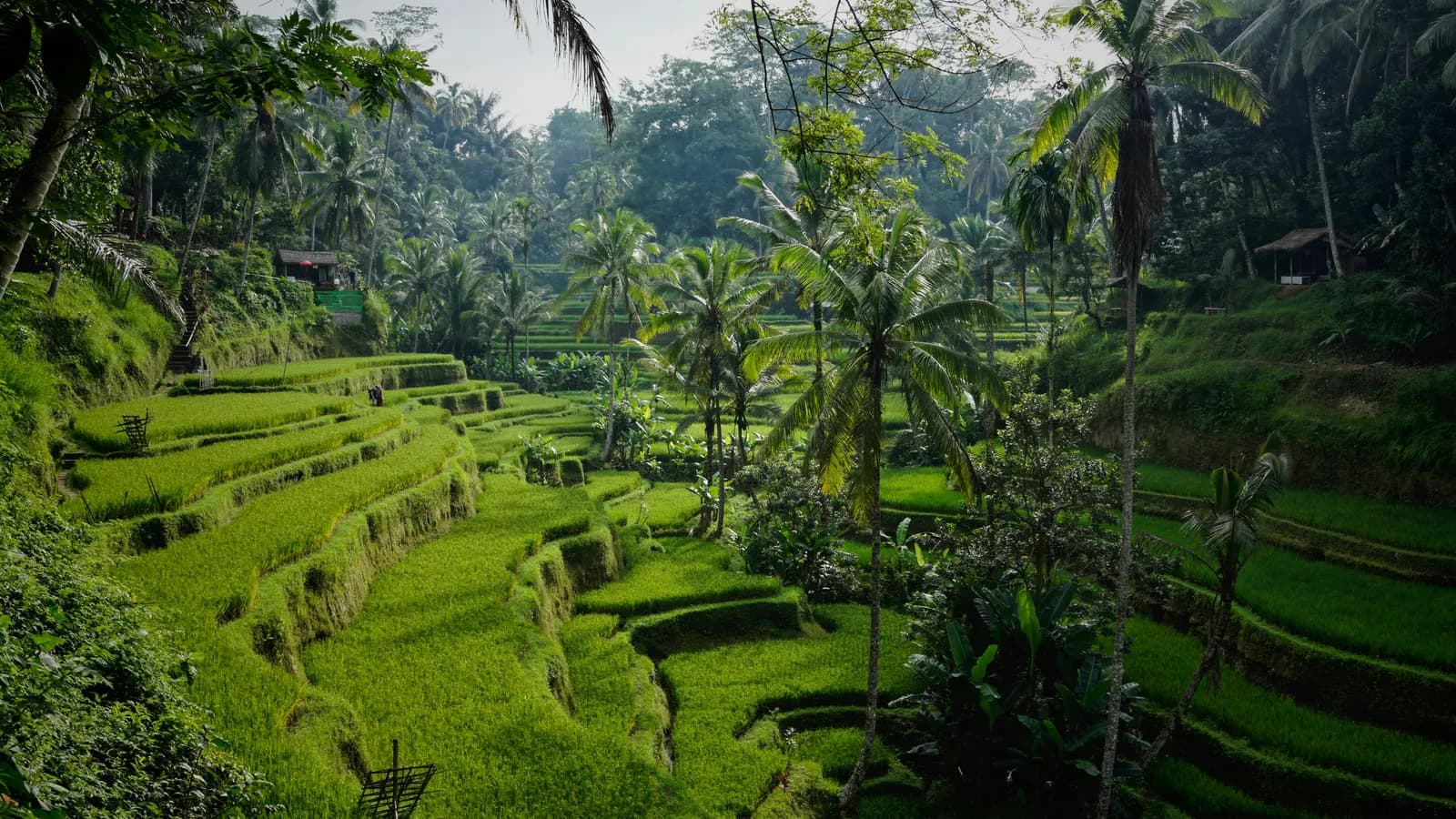
- Mornings — typically clear or partly cloudy. Most rainy-season days start dry. Best time to do active stuff (Mt Batur sunrise hike, surf, beach time, Tegallalang rice terraces).
- Midday to early afternoon — humidity builds, clouds gather.
- Late afternoon (3-5pm) — the storm. 1-3 hours of intense rain, often with thunder. Stops as fast as it started.
- Evening — usually clears. Beach clubs, dinners, and nightlife continue normally. Streets dry out within an hour.
The exception is January and February— these months have multi-day storm systems where the rain genuinely doesn't stop for 24-48 hours. Outside those two peak months, the afternoon-storm pattern is the norm.
Month-by-month rainfall pattern
From the seasonality map above, here's how the wet season actually distributes:
- November — the wet season arrives fast: rainfall jumps from ~201mm in October to ~381mm, making November the second-wettest month of the year.
- December — full wet season + Christmas/NYE crowds = unique combination of high prices AND high rainfall. ~311mm.
- January — peak rainfall (~385mm). Multi-day storm systems possible. Roads can flood in low-lying areas (north Canggu, parts of Kuta).
- February — still very wet (~371mm). Continued multi-day stretches.
- March — still wet on paper (~363mm), but the season is winding down. Showers shorter, fewer storms, prices still off-peak. The smartest "wet season" month if your dates are flexible.
What still works in Bali during wet season
Plenty. The afternoon-storm rhythm leaves most of the day usable, and a lot of Bali's best experiences are unaffected (or improved):
- Rice terraces — Tegallalang and Jatiluwih are at their greenest and most photogenic during wet season. The fields are flooded for planting.
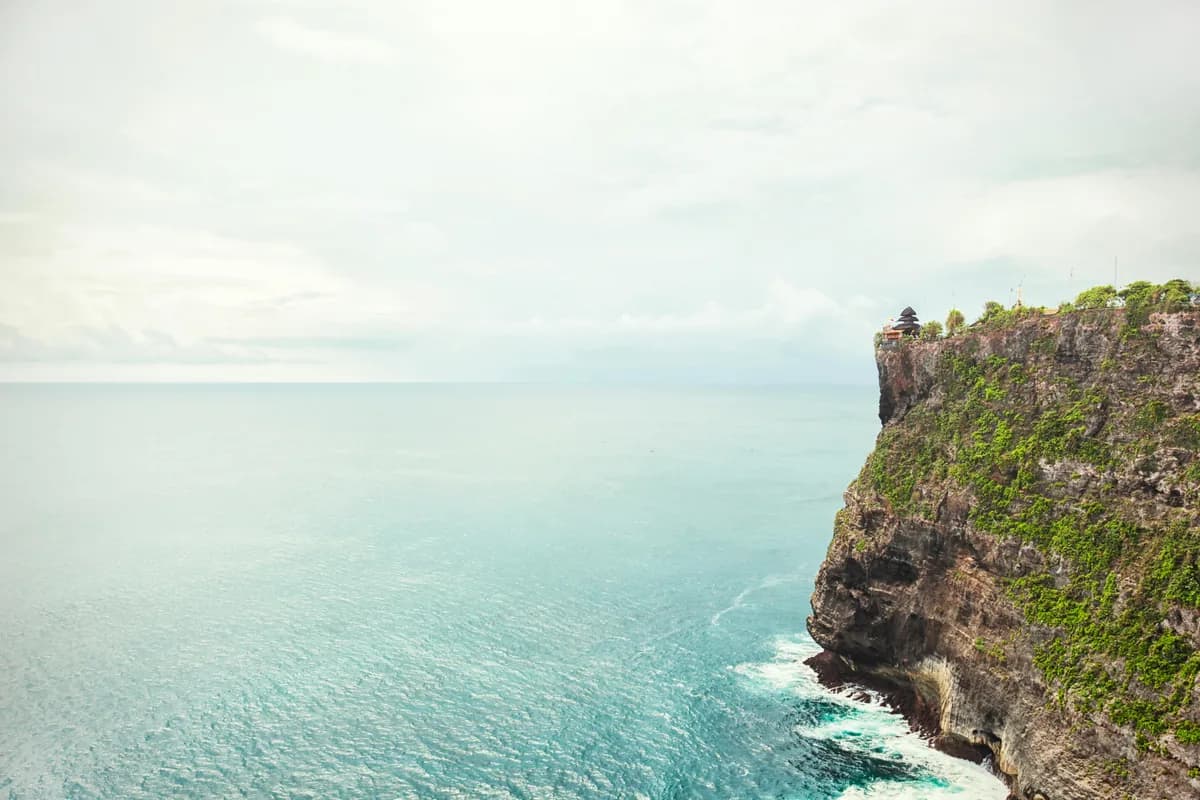
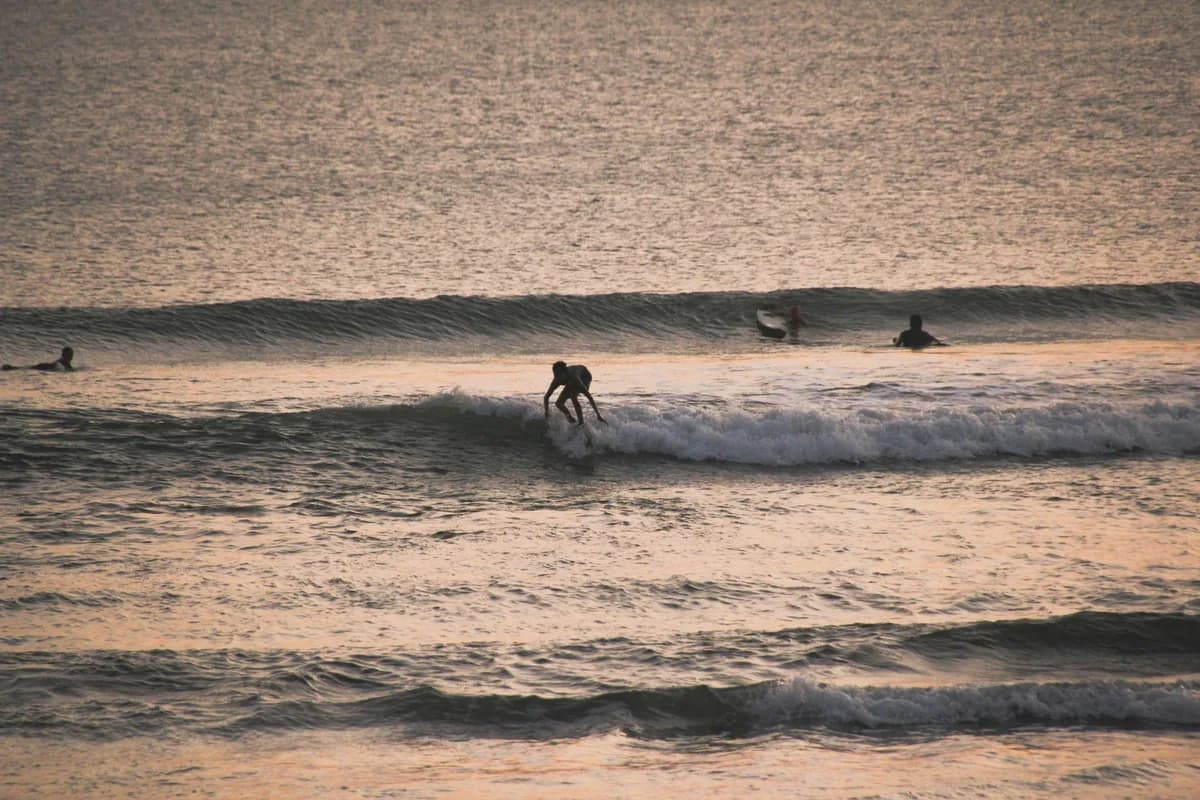
- Surfing the Bukit — Uluwatu, Padang Padang, and Bingin work year-round but the wet season actually has cleaner offshore wind (east monsoon flips to west, blowing offshore on the Bukit reefs).
- Spas + yoga + cooking classes— all indoor, rain doesn't matter, often discounted in wet season.
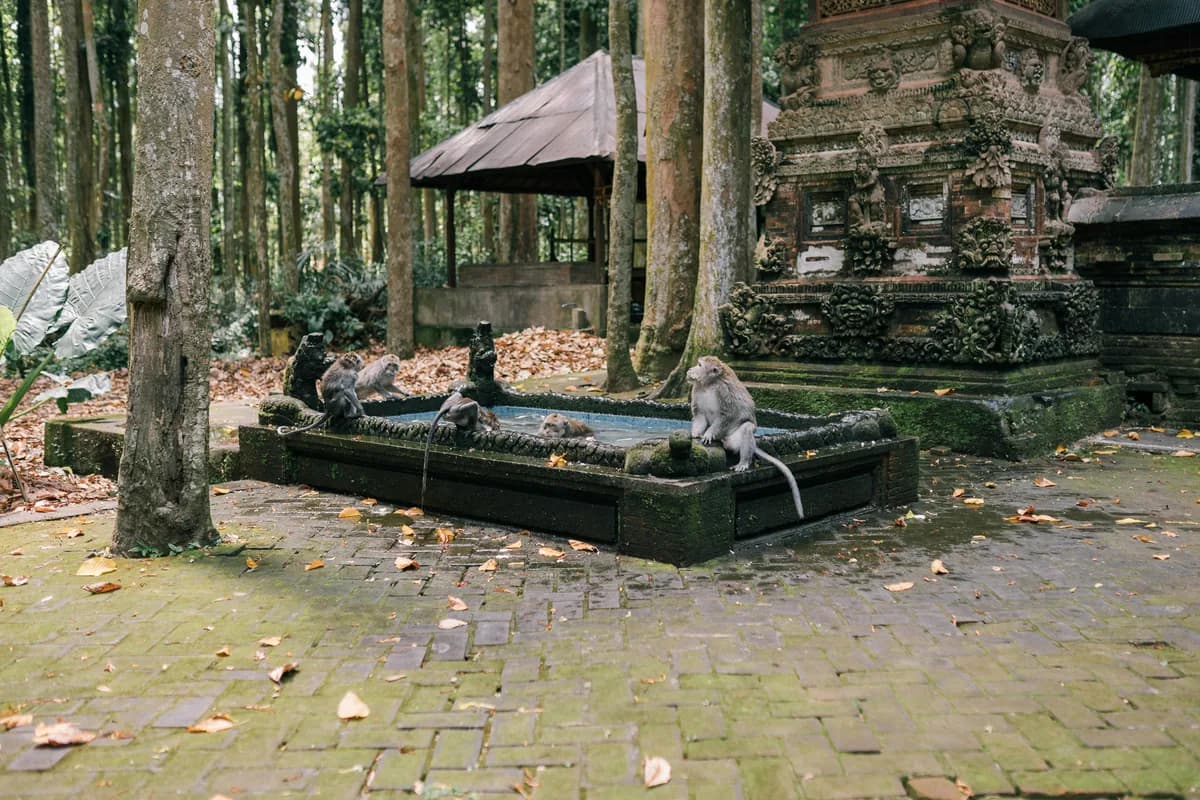
- Temple visits + cultural sites — generally less crowded, and the dramatic skies make for better photos than blue-bird midday in dry season.
- Beach clubs in Seminyak / Canggu — Potato Head, La Brisa, Finns — they all stay open through wet season. Most have indoor + outdoor space, so an afternoon storm just shifts everyone under the cover.
What doesn't work (or works worse) in wet season
- Mt Batur sunrise hike— the trail gets dangerously slippery and the summit is often clouded over. Most reputable operators don't even run tours in January–February.
- Diving + snorkeling east coast (Amed, Tulamben) — visibility drops sharply during peak rainfall. USS Liberty wreck dives become silty.
- Nusa Penida day trips — the boat crossing gets choppy. Cancellations are common in January–February. If Penida is on your list, target dry season.
- Anything where flooding affects the road — north Canggu (Berawa, Pererenan) has known drainage issues. Some restaurants and villas literally have standing water on access roads after storms.
Smart wet-season strategy
Three rules that make a Bali wet-season trip work:
- Plan outdoor stuff for mornings. Sunrise hikes, beach time, surf, rice terraces — all in the 6am–12pm window. Save indoor stuff (spa, lunch, museum, cooking class) for the 2–6pm storm window.
- Stay in central south Bali, not the deep north. Seminyak / Canggu / Ubud all have good drainage and infrastructure. Areas like Munduk + Bedugul (north highlands) get genuinely fogged-in during wet season.
- Build buffer days.If your trip is 5 days and you have one outdoor experience that's weather-critical (Penida day trip, Mt Batur hike), don't schedule it on day 4 — schedule it day 1 or 2 so you have rebook options.
The honest verdict
Bali wet season is overrated as a deal-breaker. The afternoon-storm pattern leaves 80% of most days usable. Prices are 30–50% lower than peak. Some experiences (rice terraces, Bukit surfing, the cultural side) are arguably better in the wet.
The genuine no-go window is mid-January through mid-February — multi-day storms, occasional flooding, dive/boat operators shutting down. Outside that 4-week window, wet-season Bali is a perfectly reasonable choice if you're flexible on activities. For the deeper trade-off vs dry season, see our best time to visit Bali guide.
Your Bali cheat sheet
One email with the whole year in it — and the questions that actually change a trip there, answered.
- All 12 months scored 0–100
- When the wet months hit, and how to plan around them
- The questions that change the plan, answered
- Plus the Travel Timing Calendar 2027: every destination, every month (PDF)
We'll email you your cheat sheet with the Travel Timing Calendar, plus occasional travel-timing guides. Unsubscribe anytime; see our privacy policy.
The year at a glance
Twelve months, three seasons
Each cell is one month. Lemon means peak, sky means shoulder, gray means avoid. The outlined cell is the current month.
Atlas Ranger Score · proprietary
When Bali scores best, month by month
Our transparent 0–100 score blends weather comfort, crowds, value and festivals into one number per month. How it's calculated →
- Best monthSeptember 77
- Best valueApril 69 off-peak
- ToughestJanuary 54
See how Bali ranks against every destination on the Best Time to Travel leaderboard →
Explore the map
Every city, every month
Drag the month scrubber, hover any city, read the headline for that window.
Conditions right now
Right now in Bali: 29°C, overcast, air quality moderate (US AQI 63), sea 28°C.
Updated Oct 7, 11:00 AM · Live data from Open-Meteo
Bali vs Nearby Destinations
vs Lombok
Lombok is what Bali was 20 years ago — quieter beaches, fewer crowds, the Gili Islands offshore. Pick Lombok for surfing without crowds and a slower pace. Pick Bali for variety. Many travelers do both: a 2-hour ferry connects them, so 5–6 days Bali + 3–4 days Lombok is a strong combination.
vs Phuket
Phuket and Bali are similar in concept — tropical island with beaches, nightlife, and resorts — but Phuket is more developed, more nightlife-heavy, and slightly cheaper. Pick Bali for culture and variety; pick Phuket if you specifically want a beach-and-bars Thai trip with easy day trips to Phi Phi and James Bond Island.
Airport transfers, money, water, connectivity and which areas to stay in are covered once, on the Bali best-time guide.
Bali in pictures
Frequently asked questions
What is the worst month to visit Bali?
When is the rainy season in Bali?
What is the best month to visit Bali?
How many days do you need in Bali?
Is Bali safe for tourists?
Should I visit Bali or Lombok?
When is the cheapest time to visit Bali?
Keep planning
Plan your Bali trip
Sources
Every claim on this page is backed by an authoritative source. Atlas Ranger synthesizes data from multiple references so you can see exactly where each fact came from.
- Wonderful Indonesia (Official tourism)Used for: Official Bali tourism guidance, festival timing, regional information
- Open-Meteo Historical Climate Data (ERA5)Used for: Monthly temperature, rainfall, sunshine averages (2020–2024)
- U.S. State Department Indonesia Travel AdvisoryUsed for: Independent safety assessment + entry requirement reference
- BMKG (Indonesian Agency for Meteorology, Climatology and Geophysics)Used for: Indonesia's national meteorological service — climate normals cross-reference