The worst month to visit Bali is January
January is the wettest month of the year in Bali. Rainfall averages 385mm — over 12mm per day — concentrated in heavy afternoon and overnight thunderstorms. Beaches are unreliable, ferries to Nusa Penida cancel often, scooters are miserable, and humidity stays oppressive even between storms.
February is a close second at 371mm. March averages 363mm but the wet season is tapering off by month-end. December is the worst trip-planning month for a different reason — it combines wet-season weather with Christmas and New Year price spikes that push hotel rates to peak-season levels for the wrong conditions.
Why November through March is genuinely difficult
Three converging factors make Bali's wet season hard:
- Heavy rainfall. Nov–Mar averages 311–385mm per month — roughly two to three times what June–August see (129–159mm). Most falls in concentrated multi-hour storms that flood streets and saturate beaches.
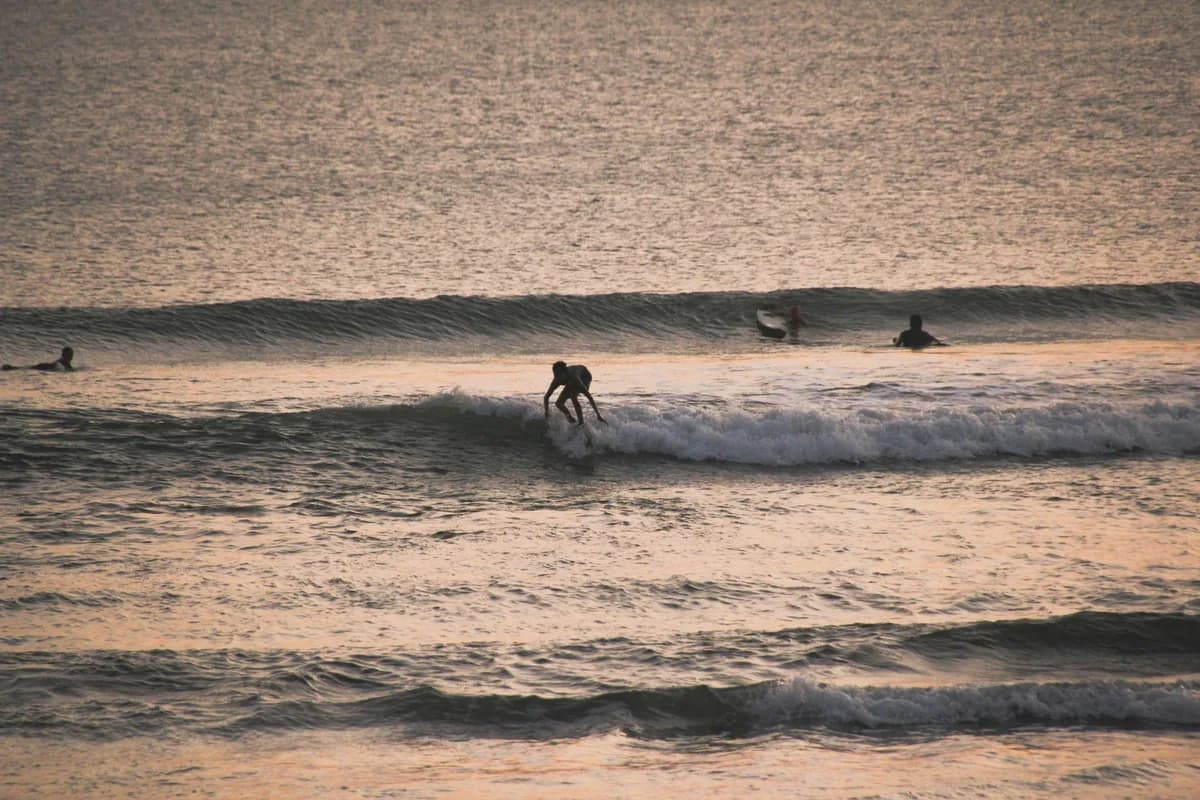
- Operational impact. The famous fast boats to Nusa Penida and Lembongan cancel frequently. Surf scene moves entirely from the west coast (Uluwatu, Padang Padang) to the east (Nusa Dua, Sanur). Many beachfront restaurants close their open-air dining areas.
- Humidity and mosquitoes. Even between storms the air sits at 85%+ humidity. Mosquito populations spike — dengue fever cases run highest December through March. Bring DEET-based repellent and consider a long-sleeved layer for evenings.
Many Bali-based businesses use the wet season for renovation. Don't be surprised if a hotel you booked has scaffolding up or a restaurant you wanted to try is closed for a full refurbishment.
The other "wrong" window: peak July–August crowds
There's a second, very different category of “worst time” to visit Bali that has nothing to do with weather. Late July through mid-August sees:
- European summer holiday peak — restaurants need bookings days ahead
- Hotel rates 50–80% above shoulder-season prices
- Brutal Canggu and Seminyak traffic — a 5km drive can take 90 minutes
- Wait lists at popular beach clubs (Finns, Atlas, Sundays)
- Crowds at every major temple, waterfall, and rice terrace
The weather is excellent — best of the year — but the experience can feel less like Bali and more like a beach resort overrun. Early June or mid-September get you almost identical weather without the crowd and price peak.
If you have to travel during wet season
Sometimes dates are locked — wedding, school holidays, work obligations. If wet season is unavoidable:
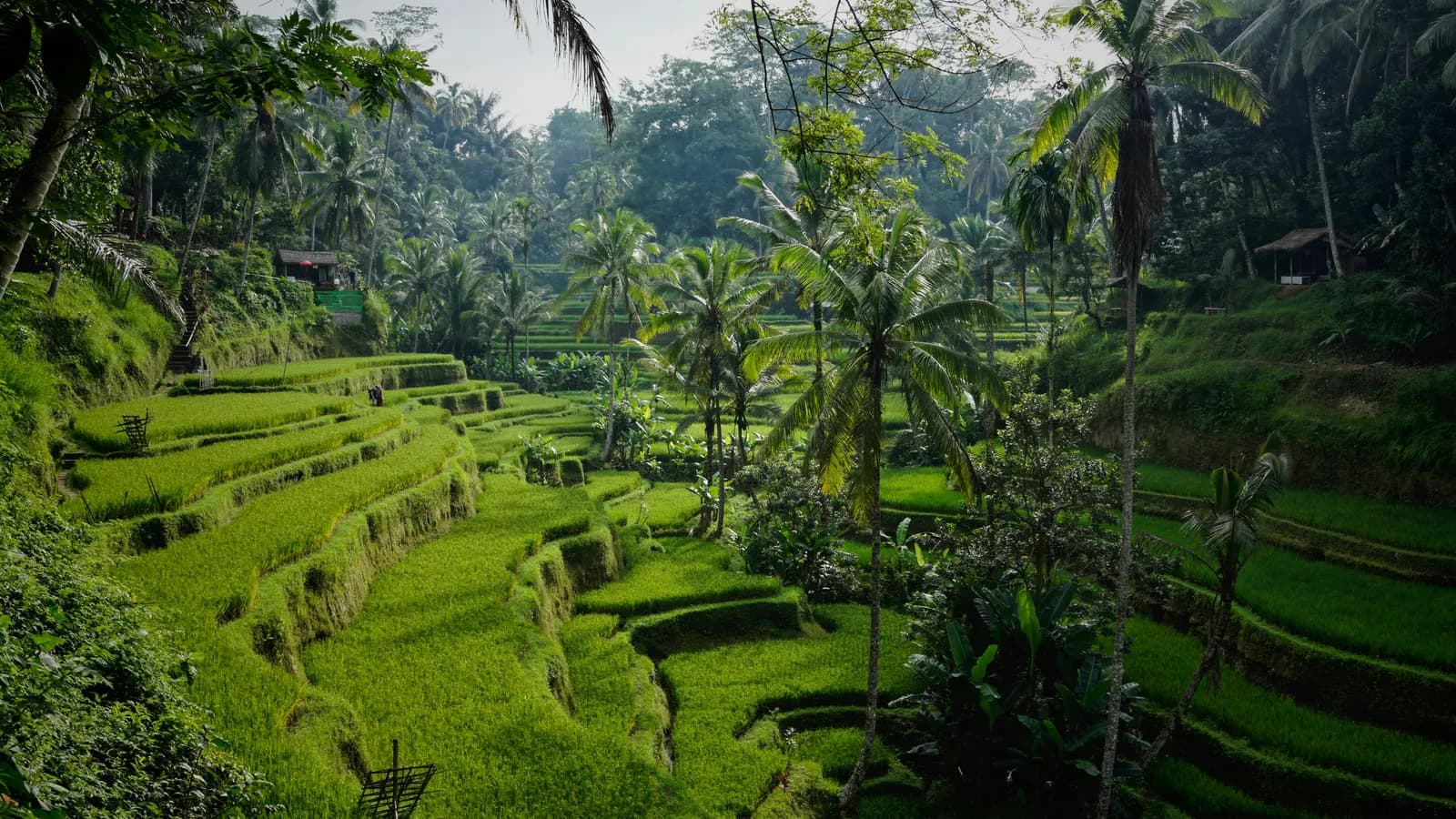
- Base inland in Ubud — the cultural heartland is built for this kind of weather. Indoor cafes, yoga shalas, museums, and rice-paddy walks between showers all work even in the 311–385mm rainfall months.
- Plan morning activities, accept lost afternoons. Mornings are usually drier than afternoons in wet season. Get sunrise at Mount Batur, temple visits, and surf sessions done before lunch.
- Move to the east coast for beach days. When the west-coast surf is blown out and the beaches are stormed, Sanur and Nusa Dua on the east coast often have flat, swimmable water and lighter rainfall.
- Buy travel insurance with weather coverage. Standard policies often exclude monsoon-related cancellations. Get one that explicitly covers them.
- Book changeable flights. If a major storm parks itself over the island for several days, you want the option to leave early.
Better windows: when to visit instead
Bali has two excellent windows that bracket the difficult months:
- April–early June: Wet season ends, rainfall halves, prices still well below July–August peak. May with the Bali Spirit Festival is particularly good.
- Mid-September–October: Crowds drop sharply after European school holidays end, hotel rates fall 20–30% from peak, and weather is still firmly dry-season. The smartest price-to-experience window.
Click any month on the seasonality map above for the full climate detail. For other Southeast Asian destinations with similar wet-season patterns, see our Da Nang and Koh Samui guides.
Your Bali cheat sheet
One email with the whole year in it — and the questions that actually change a trip there, answered.
- All 12 months scored 0–100
- The months to skip, and when it turns good again
- The questions that change the plan, answered
- Plus the Travel Timing Calendar 2027: every destination, every month (PDF)
We'll email you your cheat sheet with the Travel Timing Calendar, plus occasional travel-timing guides. Unsubscribe anytime; see our privacy policy.
The year at a glance
Twelve months, three seasons
Each cell is one month. Lemon means peak, sky means shoulder, gray means avoid. The outlined cell is the current month.
Atlas Ranger Score · proprietary
When Bali scores best, month by month
Our transparent 0–100 score blends weather comfort, crowds, value and festivals into one number per month. How it's calculated →
- Best monthSeptember 77
- Best valueApril 69 off-peak
- ToughestJanuary 54
See how Bali ranks against every destination on the Best Time to Travel leaderboard →
Explore the map
Every city, every month
Drag the month scrubber, hover any city, read the headline for that window.
Conditions right now
Right now in Bali: 29°C, overcast, air quality moderate (US AQI 63), sea 28°C.
Updated Oct 7, 11:00 AM · Live data from Open-Meteo
Bali vs Nearby Destinations
vs Lombok
Lombok is what Bali was 20 years ago — quieter beaches, fewer crowds, the Gili Islands offshore. Pick Lombok for surfing without crowds and a slower pace. Pick Bali for variety. Many travelers do both: a 2-hour ferry connects them, so 5–6 days Bali + 3–4 days Lombok is a strong combination.
vs Phuket
Phuket and Bali are similar in concept — tropical island with beaches, nightlife, and resorts — but Phuket is more developed, more nightlife-heavy, and slightly cheaper. Pick Bali for culture and variety; pick Phuket if you specifically want a beach-and-bars Thai trip with easy day trips to Phi Phi and James Bond Island.
Airport transfers, money, water, connectivity and which areas to stay in are covered once, on the Bali best-time guide.
Bali in pictures

Frequently asked questions
What is the worst month to visit Bali?
When is the rainy season in Bali?
What is the best month to visit Bali?
How many days do you need in Bali?
Is Bali safe for tourists?
Should I visit Bali or Lombok?
When is the cheapest time to visit Bali?
Keep planning
Plan your Bali trip
Sources
Every claim on this page is backed by an authoritative source. Atlas Ranger synthesizes data from multiple references so you can see exactly where each fact came from.
- Wonderful Indonesia (Official tourism)Used for: Official Bali tourism guidance, festival timing, regional information
- Open-Meteo Historical Climate Data (ERA5)Used for: Monthly temperature, rainfall, sunshine averages (2020–2024)
- U.S. State Department Indonesia Travel AdvisoryUsed for: Independent safety assessment + entry requirement reference
- BMKG (Indonesian Agency for Meteorology, Climatology and Geophysics)Used for: Indonesia's national meteorological service — climate normals cross-reference