
 Trip.com




 Klook
Klook






The Philippines runs on monsoons and islands, not four seasons
Temperature barely moves here — daytime highs sit in the low 30s°C all year. What actually decides your trip is rainfall, typhoon risk and which island you pick. Two monsoons drive the calendar on the western and central islands most visitors plan around:
- Dry season (“Amihan”) — December to May. The northeast monsoon brings cool, dry, breezy weather December–February, then March–May turns increasingly hot. This is the reliable-sunshine, peak-price window.
- Wet season (“Habagat”) — June to October. The southwest monsoon plus peak typhoon season soaks the west and north; July is the wettest month (around 447mm). Cheap and quiet, but stormy.
Where these figures apply: the temperature and rainfall numbers on this page are for Manila and western Luzon. Cebu and the Visayas, Palawan and Boracay keep different rain calendars (Cebu can see showers in the January–February dry season), and the July–October typhoon peak hits Luzon hardest. Use the figures as the Manila-side benchmark and check your island before you book.
The best months: January to March
January to March is the sweet spot. Rainfall is low (March is the driest month of the year at around 39mm), skies are sunny and seas are calm — ideal for the island-hopping, diving and beach days the Philippines is built for, all before the dry-season heat reaches full strength. February is the single best all-rounder: dry, sunny and not yet too hot.
Time it knowing January is also the country's great fiesta month — Sinulog in Cebu, Ati-Atihan in Kalibo and Dinagyang in Iloilo are spectacular but fill flights and resorts — and that Holy Week (late March or April) is the single biggest domestic travel surge of the year. Book well ahead around both.
The April–May trap, and the smart shoulder months
April and May are still mostly dry, but they are the hottest, most humid months(highs of 34°C), and midday heat on exposed islands can be punishing. If you can take the heat, late May offers easing prices before the rains settle in. The mirror-image value window is November: the dry season is returning, seas are settling, and rates are still at pre-peak lows before December's holiday surge. December itself has lovely cool, dry weather — but Christmas and New Year push prices to a seasonal peak.
The Philippines twist: pick the island, not just the month
This is the one thing that sets the Philippines apart from a single-climate beach destination. The dry/wet pattern above is the western cycle (Manila, Palawan, Boracay, Cebu). The eastern, Pacific-facing islands run on the opposite calendar — Siargao and eastern Samar are often driest during the western wet season and wettest December–February. So when the west is being rained on in July and August, the east can be sunny (and the surf is firing). In the Philippines, dodging the rain is as much an island decision as a month decision.
Where to go — match the region to your trip
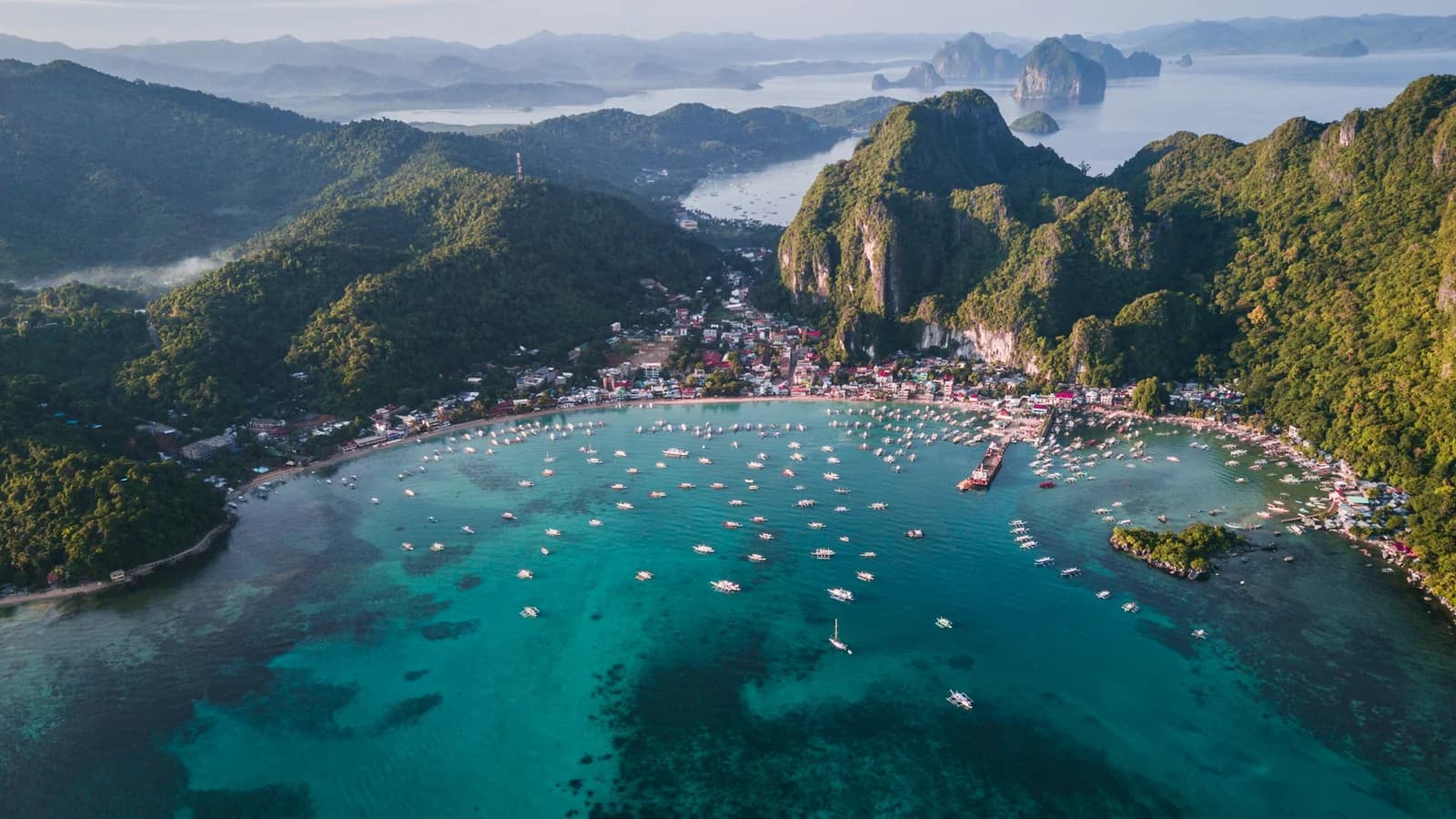
- Palawan (El Nido & Coron) — limestone lagoons and the iconic island-hopping; best in the dry season.
- Cebu & Bohol— the easiest, best-connected first trip, with diving, the Chocolate Hills and Panglao's reefs.
- Siargao — surf and a laid-back island scene on the Pacific side; often good when the west is wet (surf peaks roughly August–November).
- Boracay — the classic white-sand beach; busiest in peak dry season.
Getting there and getting around
Most trips arrive at Manila (MNL) or Cebu (CEB), then connect onward by domestic flight and boat. The archipelago is vast — budget extra time for inter-island transfers, and remember that ferries and small-plane hops are the first thing cancelled when a storm passes through. Most nationalities get 30 days visa-free; check current rules with Philippine Immigration.
A few things to know before you go
- English is everywhere.It's an official language and widely spoken, which makes the Philippines one of the easiest of Asia's beach nations to travel independently.
- Carry cash. Pesos are king once you leave the cities — many islands have limited card acceptance and few ATMs.
- Watch the storms. June–November is typhoon season; build buffer days into tight itineraries and keep an eye on PAGASA forecasts.
The honest verdict
For the most reliable archipelago-wide weather, go January to March — dry, sunny and calm — and book around the January fiestas and Holy Week. For value, target Novemberor late May. And if you're travelling in the June–October wet season, lean east to Siargao and the Pacific coast, where the rain cycle flips. See how it stacks up head-to-head on our Philippines vs Thailand comparison, or find where it lands against every destination on the Best Time to Travel leaderboard.
Your Philippines cheat sheet
One email with the whole year in it — and the questions that actually change a trip there, answered.
- All 12 months scored 0–100
- The months to book, and the ones to skip
- The questions that change the plan, answered
- Plus the Travel Timing Calendar 2027: every destination, every month (PDF)
We'll email you your cheat sheet with the Travel Timing Calendar, plus occasional travel-timing guides. Unsubscribe anytime; see our privacy policy.
The year at a glance
Twelve months, three seasons
Each cell is one month. Lemon means peak, sky means shoulder, gray means avoid. The outlined cell is the current month.
Atlas Ranger Score · proprietary
When Philippines scores best, month by month
Our transparent 0–100 score blends weather comfort, crowds, value and festivals into one number per month. How it's calculated →
- Best monthFebruary 72
- Best valueNovember 64 off-peak
- ToughestJuly 36
See how Philippines ranks against every destination on the Best Time to Travel leaderboard →
Explore the map
Every city, every month
Drag the month scrubber, hover any city, read the headline for that window.
Philippines vs Nearby Destinations
vs Thailand
Pick the Philippines for world-class island-hopping, diving and wilder, emptier beaches — and easy travel in near-universal English. Pick Thailand for smoother logistics, temples and street food, and a more developed tourist trail. Their wet seasons overlap, but the Philippines is more typhoon-exposed, so for a June–October trip Thailand is often the safer bet.
vs Bali
Pick Bali for one compact island that packs in surf, culture, rice terraces and food with short transfers and great value. Pick the Philippines for raw, spread-out island beauty — El Nido lagoons, Siargao surf, Bohol diving — at the cost of more flights and boats. Bali peaks May–September; the Philippines is best December–May, so they suit opposite halves of the year.
vs Vietnam
Pick Vietnam for a land-based journey — cities, food, history and dramatic landscapes strung along an easy north–south route. Pick the Philippines for a sea-and-islands trip built around beaches, diving and boat-hopping. Vietnam's long shape means there is always somewhere dry; in the Philippines you choose the island to dodge the rain.
Where to stay in Philippines
- Palawan (El Nido & Coron)$$Island-hopping, lagoons, the iconic Philippines
Limestone cliffs, hidden lagoons and turquoise water — the postcard Philippines. El Nido and Coron are the island-hopping capitals. Reached by flight to El Nido/Puerto Princesa or Busuanga, then boats. Best in the dry season; transfers are weather-dependent.
Compare hotels in Palawan → - Cebu & Bohol (Visayas)$$Diving, first trips, easy logistics
The central hub: Cebu is the second international gateway, with world-class diving (Malapascua, Moalboal) nearby, while neighbouring Bohol offers the Chocolate Hills and Panglao's beaches and reefs. The easiest, best-connected base for a first Philippines trip.
Compare hotels in Cebu → - Siargao$$Surfing, a laid-back island scene
The surf capital (Cloud 9 break) turned all-round island-hopping and digital-nomad favourite. On the Pacific side, so its weather runs opposite to the west — often good when Boracay is wet. Surf peaks roughly August–November.
Compare hotels in Siargao → - Boracay$$$White-sand beach
A small island famous for the 4km White Beach and a lively bar-and-restaurant scene. The most developed, resort-style beach destination, with tighter (post-rehabilitation) tourism rules. Busy and pricier in peak dry season.
Compare hotels in Boracay → - Manila$$Gateway, city stopover, history
The frenetic capital and main international gateway — most trips transit here. Worth a day for Intramuros (the walled Spanish old town), museums and food, but most travellers move on to the islands quickly.
Compare hotels in Manila →
Frequently asked questions
What is the best month to visit the Philippines?
What is the worst time to visit the Philippines?
When is the rainy season in the Philippines?
When is the cheapest time to visit the Philippines?
How many days do you need in the Philippines?
Should I visit the Philippines or Thailand?
What should I pack for the Philippines?
Keep planning
Plan your Philippines trip
Sources
Every claim on this page is backed by an authoritative source. Atlas Ranger synthesizes data from multiple references so you can see exactly where each fact came from.
- Philippine Department of Tourism (It's More Fun in the Philippines)Used for: Official tourism guidance, destinations, festivals and seasonal travel information
- Open-Meteo Historical Climate Data (ERA5)Used for: Monthly temperature, rainfall and sunshine averages (Manila / western Luzon, 2020–2024)
- PAGASA — Philippine Atmospheric, Geophysical and Astronomical Services AdministrationUsed for: Climate type (Coronas) classification, monsoon onset and typhoon-season cross-reference
- U.S. State Department Philippines Travel AdvisoryUsed for: Independent safety assessment + regional advisory (Mindanao/Sulu) reference